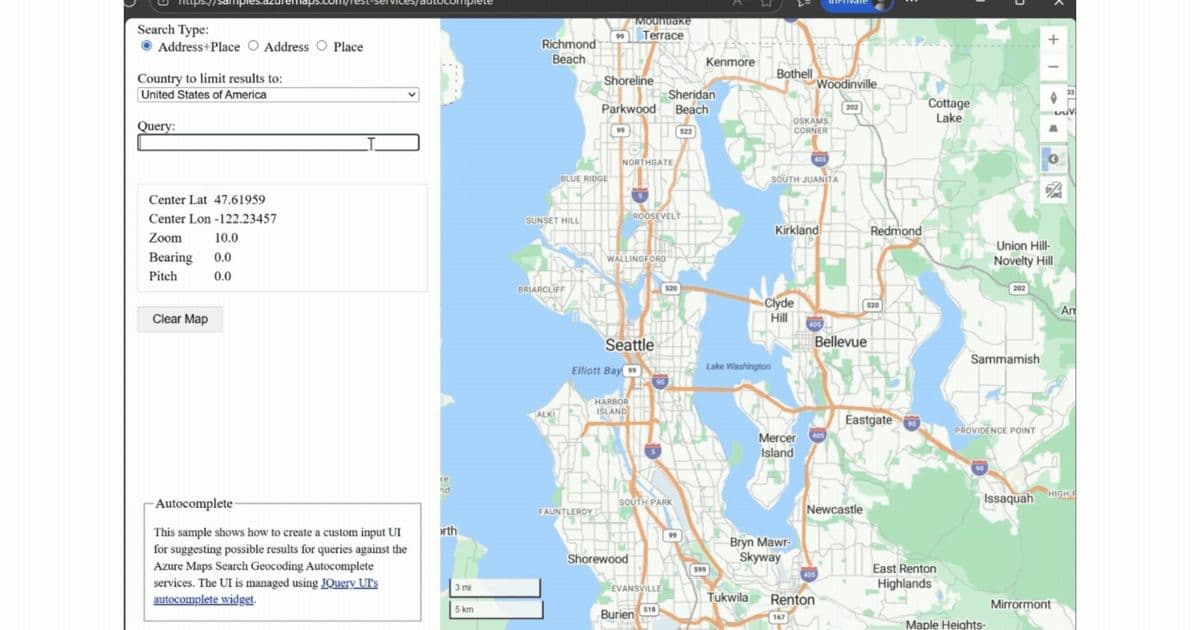
Microsoft's Azure Maps Geocode Autocomplete API has reached general availability, providing a production-ready alternative to the legacy Bing Maps Autosuggest service. This strategic move enhances Microsoft's cloud mapping capabilities while offering developers more powerful tools for location-based applications.
What Changed: Azure Maps Geocode Autocomplete API Reaches Production Readiness
Microsoft has announced the general availability of the Azure Maps Geocode Autocomplete API, transitioning the service from public preview to a fully supported, production-ready REST API. The API, which was initially introduced in September 2025, now offers a stable 2026-01-01 version designed for mission-critical workloads. This release incorporates feedback from the preview period, featuring improved suggestion ranking, enhanced language handling, and updated documentation with migration guides.
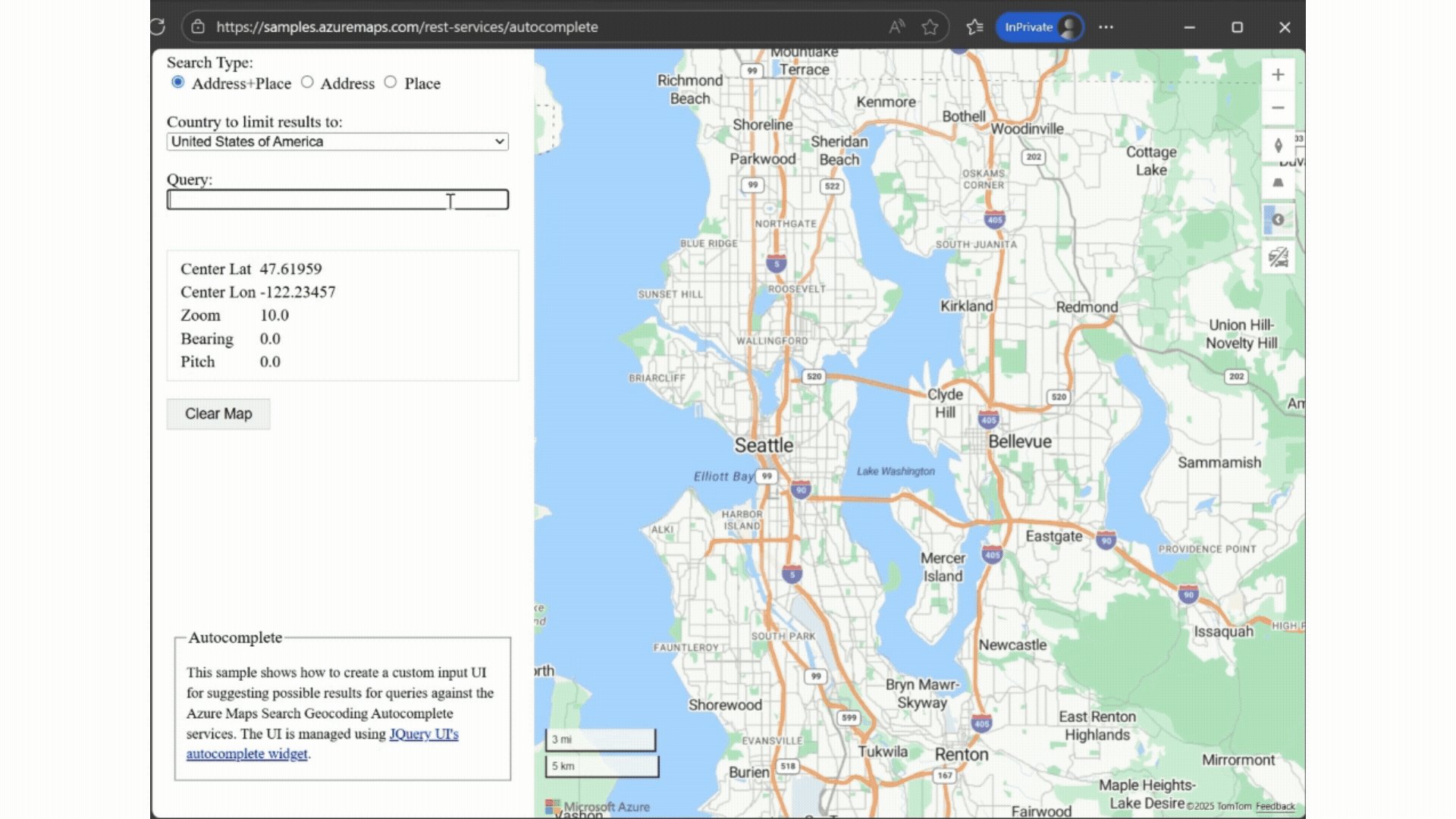
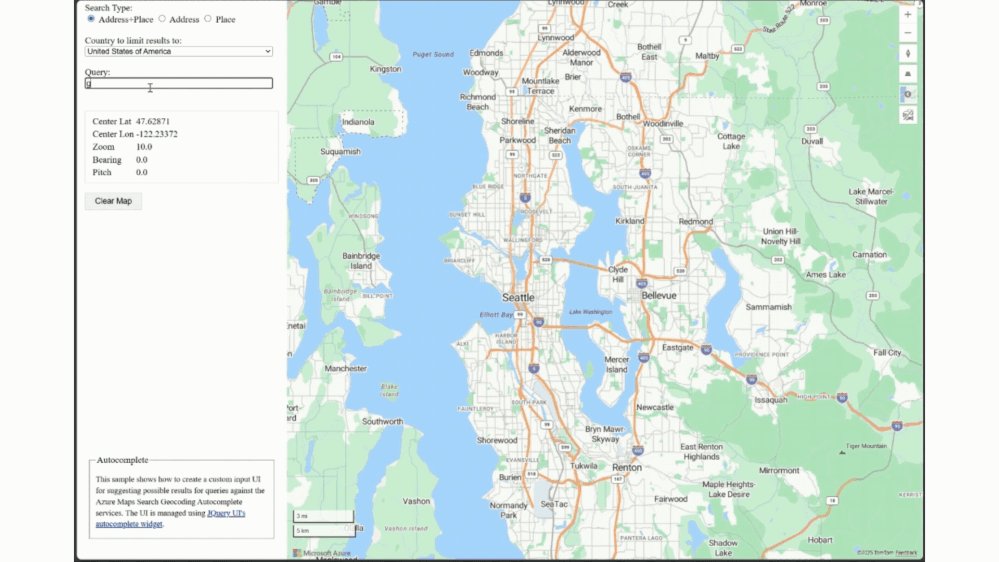
The API delivers instant, relevant, and structured location suggestions as users type, with granular filtering capabilities for place or address categories. It supports multilingual experiences, localized ranking, and provides proximity-aware results based on popularity and location context.
Provider Comparison: Azure Maps vs. Alternatives in the Location Services Market
The Azure Maps Geocode Autocomplete API serves as a modern successor to the Bing Maps Autosuggest REST API, offering several strategic advantages:
Enhanced Performance and Flexibility: Compared to the legacy Bing Maps service, the new API provides more granular filtering options, structured outputs, and improved ranking logic. The separation between place and address entity types allows for more precise targeting of suggestions.
Competitive Positioning: In the broader location services market, Azure Maps now competes with established players like Google Places API, HERE Technologies, and Mapbox. The API's strength lies in its tight integration with the Azure ecosystem, making it particularly attractive for organizations already invested in Microsoft cloud services.
Migration Path: Microsoft has provided clear documentation and samples to facilitate migration from Bing Maps, addressing a common concern for enterprises with existing implementations. This approach reduces friction for organizations considering the transition.
Pricing Structure: While the article doesn't detail specific pricing, the GA release suggests a more predictable cost model compared to the preview period, which is crucial for production deployments.
Business Impact: Strategic Considerations for Organizations
The general availability of the Azure Maps Geocode Autocomplete API presents several strategic considerations for businesses:
Modernization Opportunities: Organizations using the legacy Bing Maps Autosuggest API now have a clear path to upgrade to a more modern, feature-rich solution. The API's structured outputs and improved ranking can enhance user experiences in applications ranging from store locators to delivery routing systems.
Development Efficiency: The API's structured output format and comprehensive documentation reduce development overhead. By providing consistently formatted address components, it simplifies downstream integration with other systems.
Global Scalability: With improved language handling and localized ranking, the API is better positioned to serve global applications. Organizations with international operations can deliver more relevant location suggestions across different markets.
Competitive Differentiation: For businesses in logistics, e-commerce, or any sector dependent on location-based services, the quality of autocomplete functionality can directly impact user satisfaction and conversion rates. The Azure Maps API offers capabilities that can help create more intuitive user experiences.
Long-term Viability: By positioning this API as the successor to Bing Maps Autosuggest, Microsoft signals its long-term commitment to Azure Maps. Organizations can confidently invest in this technology without fear of premature deprecation.
Implementation Considerations
For organizations considering adoption or migration, several technical factors should be evaluated:
API Integration: The endpoint structure follows RESTful conventions, with the base URL being https://atlas.microsoft.com/search/geocode:autocomplete. The API version (2026-01-01) should be specified in all requests.
Filtering Capabilities: The API supports various parameters for refining results, including:
- coordinates: Bias suggestions near a specific location
- bbox: Restrict suggestions to a bounding box
- top: Limit the number of returned suggestions
- resultTypeGroups/resultTypes: Filter by entity type
- countryRegion: Restrict to specific countries
Workflow Integration: A typical implementation involves calling the Autocomplete API as users type, then using the selected suggestion with Azure Maps Geocoding service to retrieve complete location data.
Migration Strategy: Organizations transitioning from Bing Maps should utilize the provided migration guides, which address both technical differences and implementation considerations.
The Future of Location Services in Azure
The general availability of the Geocode Autocomplete API represents Microsoft's continued investment in Azure Maps as a core component of its cloud services portfolio. As location-based features become increasingly integral to digital experiences, having a robust, scalable API becomes a strategic differentiator for cloud providers.
For organizations evaluating location services providers, the Azure Maps offering now presents a more compelling case, particularly for those already embedded in the Microsoft ecosystem. The combination of technical capabilities, migration support, and ecosystem integration makes this API a viable option for both new implementations and modernization efforts.
As with any cloud service decision, organizations should evaluate the Azure Maps Geocode Autocomplete API against their specific requirements, considering factors such as performance needs, global coverage requirements, integration complexity, and total cost of ownership. The general availability milestone provides the stability needed for such evaluations, making it an opportune time for organizations to assess this technology against alternatives.
Resources for Further Evaluation:
Comments
Please log in or register to join the discussion