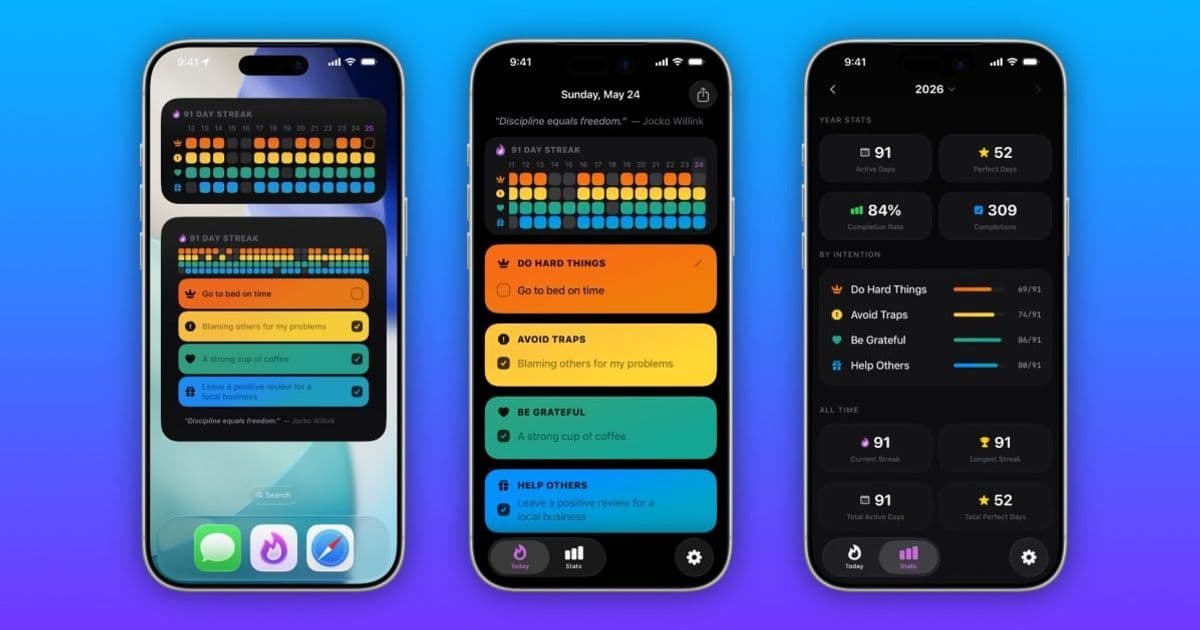
‘Grit Method’ is a new habit‑tracking app for iOS that goes beyond productivity by prompting users to tackle hard tasks, avoid traps, practice gratitude, and help others. Available for iOS 26.1+, it offers detailed stats, streaks, and a home‑screen widget, all wrapped in a subscription model with special offers for 9to5Mac readers.
A fresh take on habit tracking for iOS 26.1+
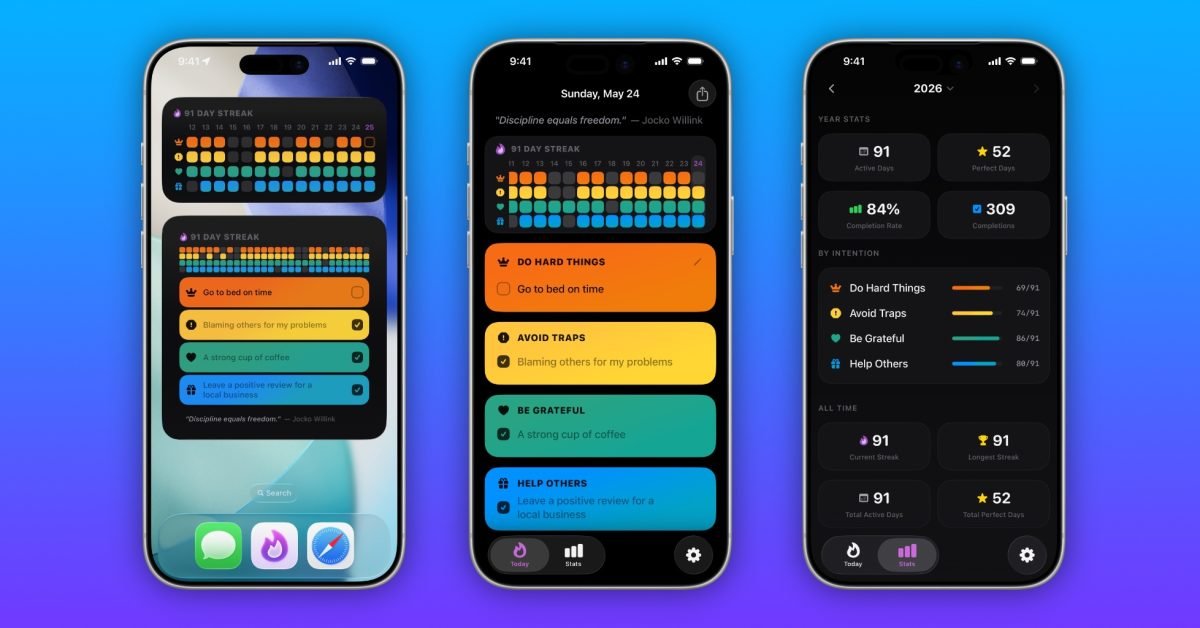
The indie scene has a new contender: Grit Method, a habit‑tracking app that asks you to reflect on four daily pillars – Do hard things, Avoid traps, Be grateful, and Help others. The app isn’t just another checklist; it tries to shape character by making each goal a conscious decision rather than an automatic routine.
What the app does differently
- Four intentional prompts appear each morning, forcing you to name a concrete action for each pillar. This turns vague intentions into specific tasks you can actually measure.
- Stat‑heavy feedback includes traditional streak counters, but also a quadrant graph that visualises consistency across the four areas. The graph can be added as a widget, letting you glance at your balance without opening the app.
- Mindful design: the UI is deliberately minimal, using iOS 16‑style system colors and SwiftUI animations that feel native while keeping battery impact low.
SDK and platform requirements
- Minimum OS: iOS 26.1 (the latest stable release as of June 2026). The app leverages the new
ActivityKitAPIs for its widget and theLiveActivityframework to surface daily prompts on the lock screen. - Xcode version: built with Xcode 15.4, targeting the iOS 26.1 SDK. The project uses Swift 6.0, taking advantage of the new
async letsyntax for background data sync. - App Store distribution: listed under the “Health & Fitness” category, with a subscription model that complies with Apple’s in‑app purchase guidelines.
Impact for developers maintaining cross‑platform codebases
If you already have a habit‑tracking app on Android, the Grit Method approach highlights a few migration considerations:
- Prompt cadence – Android’s
WorkManagercan schedule daily notifications, but iOS now offersLiveActivitywhich provides a richer, always‑visible prompt. Replicating that experience on Android may require a foreground service with a persistent notification. - Widget architecture – iOS widgets are built with
WidgetKitand SwiftUI, while Android usesAppWidgetProvider. Porting the quadrant graph means translating SwiftUI layout code into Jetpack Compose or classic XML. - Subscription handling – Apple’s
StoreKit2 simplifies receipt validation. On Android you’ll need to map those flows to Google Play Billing, keeping in mind the different renewal‑date handling. - Data privacy – The app stores only local habit data, syncing via iCloud. For Android you’d likely use Jetpack DataStore with optional backup to Google Drive, ensuring parity in user‑controlled storage.
Migration checklist for indie developers
- Update the Android min SDK to at least API 33 to use the latest
WorkManagerandComposefeatures that mirror iOS 26 capabilities. - Create a shared data model (e.g., using Kotlin Multiplatform or a Swift‑generated protobuf) so the four‑goal schema stays consistent across platforms.
- Implement platform‑specific widgets: start with a simple static widget on Android, then iterate to a dynamic graph using
GlanceAPIs. - Align subscription pricing: Apple’s $4.99 / $24.99 tiers map well to Google Play’s equivalent pricing bands; consider offering the same three‑year discount to keep the value proposition identical.
- Test on the latest OS versions: both iOS 26.1 and Android 14 have new background‑execution limits. Verify that daily prompts fire reliably under Doze mode (Android) and low‑power mode (iOS).
Why the four‑goal model matters
Most habit apps focus on frequency—"Did you meditate?"—but Grit Method adds quality by asking what you’ll do to avoid distraction, express gratitude, and help someone else. This shift aligns with recent research suggesting that purpose‑driven habits improve long‑term adherence.
Pricing and special offers
- Standard subscription: $4.99 / month or $24.99 / year.
- 9to5Mac reader discount: $14.99 / year with a 7‑day free trial (code 9to5Mac15).
- Three‑year bundle: $24.99 for three years (code 9to5Mac), a solid choice for users wary of subscription fatigue.
Final thoughts
Grit Method shows that indie developers can still innovate in a crowded habit‑tracking market by focusing on character‑building rather than pure productivity. For developers, the app serves as a case study in leveraging the latest iOS SDK features—LiveActivity, WidgetKit, and Swift 6—while offering a clear migration path to Android.
If you’re looking for a fresh way to structure daily growth, give Grit Method a try on your iPhone. And if you maintain a cross‑platform habit app, consider how the four‑goal framework and the new iOS APIs could enrich your own product.
Follow Michael Burkhardt on X/Twitter, Bluesky, and Instagram for more indie app coverage.
Comments
Please log in or register to join the discussion