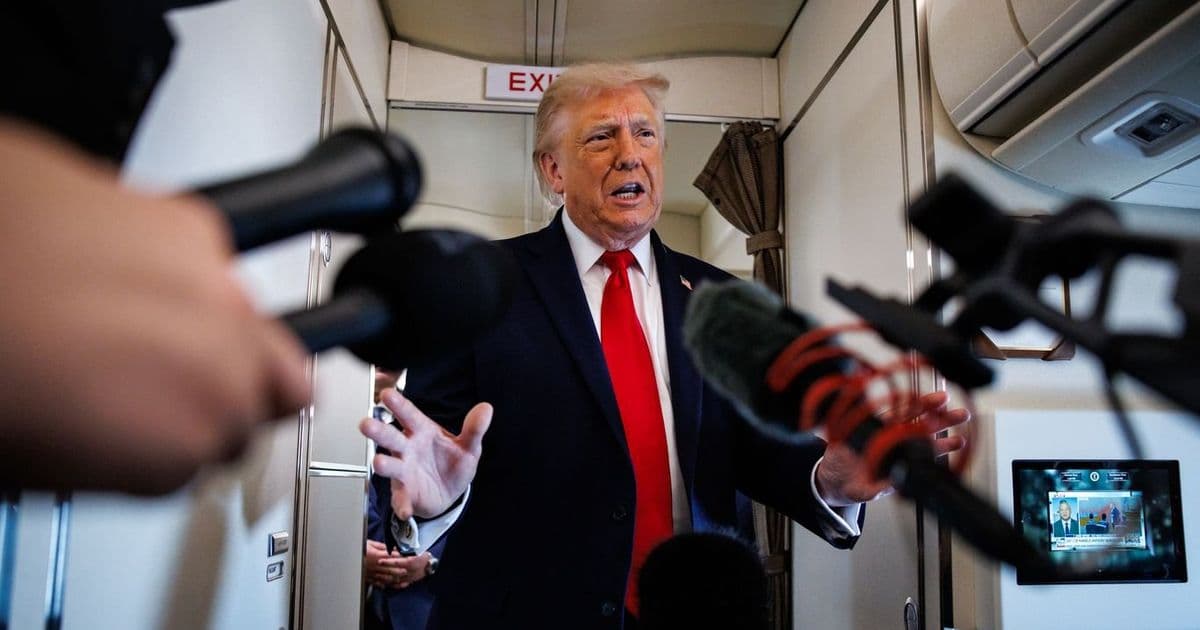
Former President Donald Trump said a U.S. ownership stake in major artificial‑intelligence firms might benefit the country, prompting analysts to weigh the financial, regulatory and strategic implications for the tech sector.
Trump Suggests U.S. Equity in AI Leaders Could Boost Innovation and Competitiveness
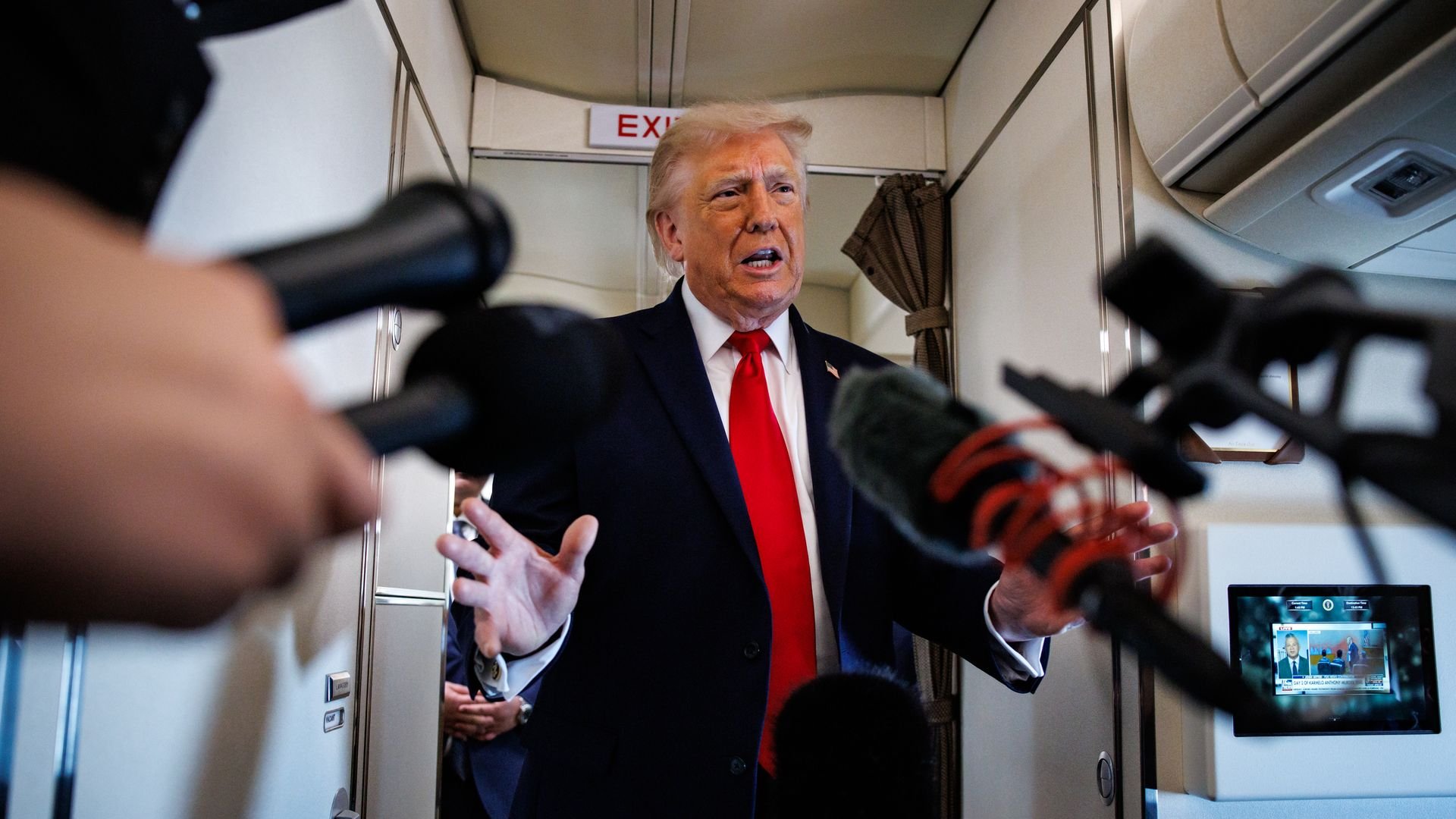
Former President Donald Trump recently remarked that a United States stake in the world’s largest AI companies “could be a beautiful thing.” The comment, made during a press briefing aboard Air Force One, has sparked a flurry of commentary from investors, policymakers and industry analysts. While the remark is political rather than policy‑driven, it raises several concrete questions about how government participation in AI firms could affect market dynamics, capital allocation and national security.
Market context
The AI market is now a $1.5 trillion opportunity, according to a recent IDC forecast, with the top five publicly traded AI‑focused firms—Nvidia, Alphabet (Google), Microsoft, Amazon and Meta—collectively valued at more than $3 trillion. In the last 12 months, these companies have seen combined revenue growth of 28 percent, driven largely by cloud‑based generative‑AI services and enterprise licensing.
Foreign governments have already taken equity positions in strategic tech firms. China’s state‑owned investment arms hold stakes in several domestic chipmakers, while the European Union’s Investment Fund has allocated €5 billion to AI‑related startups. In the United States, the Treasury’s Strategic Investment Fund, created in 2022, has deployed $1.2 billion into semiconductor and quantum‑computing projects, but it has not yet taken equity in any major AI platform provider.
What a U.S. stake could look like
If the federal government were to acquire a direct equity position in an AI giant, the transaction would likely be structured as a minority investment to avoid antitrust concerns. Assuming a 5 percent stake in a $600 billion company like Nvidia, the cost would be roughly $30 billion. Funding could come from a mix of Treasury surplus, bond issuance, or reallocation of existing research‑and‑development budgets.
A minority stake would give the government limited voting rights but could grant access to technical roadmaps, data‑usage policies and export‑control compliance frameworks. In return, the company would gain a stable, long‑term capital source and potentially preferential access to federal contracts for AI‑enabled defense and civilian applications.
Strategic implications
Innovation funding – Direct equity could lower the cost of capital for AI firms, encouraging longer‑term R&D projects that might be too risky for purely private investors. Historical precedent exists in the Defense Advanced Research Projects Agency’s (DARPA) “venture‑type” investments, which have seeded technologies later commercialized by the private sector.
National security – Government ownership would provide a clearer line of sight into how AI models are trained, what data sets are used, and how export licenses are applied. This could mitigate supply‑chain risks and reduce the likelihood of hostile actors acquiring advanced models.
Market distortion risk – Critics argue that a sovereign equity position could create an uneven playing field. Competing firms without similar backing might face higher financing costs, and the market could interpret the move as a de‑facto subsidy, inflating valuations beyond fundamentals.
Regulatory scrutiny – The Federal Trade Commission and the Department of Justice would likely review any acquisition for antitrust violations. A minority stake that does not confer control may pass muster, but the precedent of government involvement in a market dominated by a few firms could attract heightened oversight.
Financial outlook
Assuming a $30 billion investment at a 5 percent stake, the government would stand to earn dividend yields comparable to the companies’ historical payouts—approximately 0.6 percent for Nvidia and 1 percent for Microsoft. Over a ten‑year horizon, the total cash return could approach $3 billion, not accounting for capital appreciation. However, the primary value proposition for policymakers is not financial return but strategic leverage.
What it means for investors
Equity pricing – If the Treasury signals willingness to invest, market participants may price in a premium for the perceived safety net, potentially narrowing the discount to intrinsic value for the targeted firms.
Sector rotation – A government stake could trigger a shift of capital from traditional semiconductor names toward AI‑centric platforms, as investors anticipate increased demand from federal contracts.
Risk assessment – Firms that rely heavily on export markets may experience heightened scrutiny, especially if the U.S. government imposes stricter licensing to protect its equity interest.
Bottom line
Trump’s comment, while not an official policy proposal, highlights a growing conversation about the role of public capital in a sector that underpins both economic growth and national security. A measured, minority‑equity approach could provide a modest financial return while granting the United States greater insight and influence over the development of next‑generation AI. At the same time, policymakers must balance these benefits against the risk of market distortion and the need for transparent regulatory oversight.
Comments
Please log in or register to join the discussion