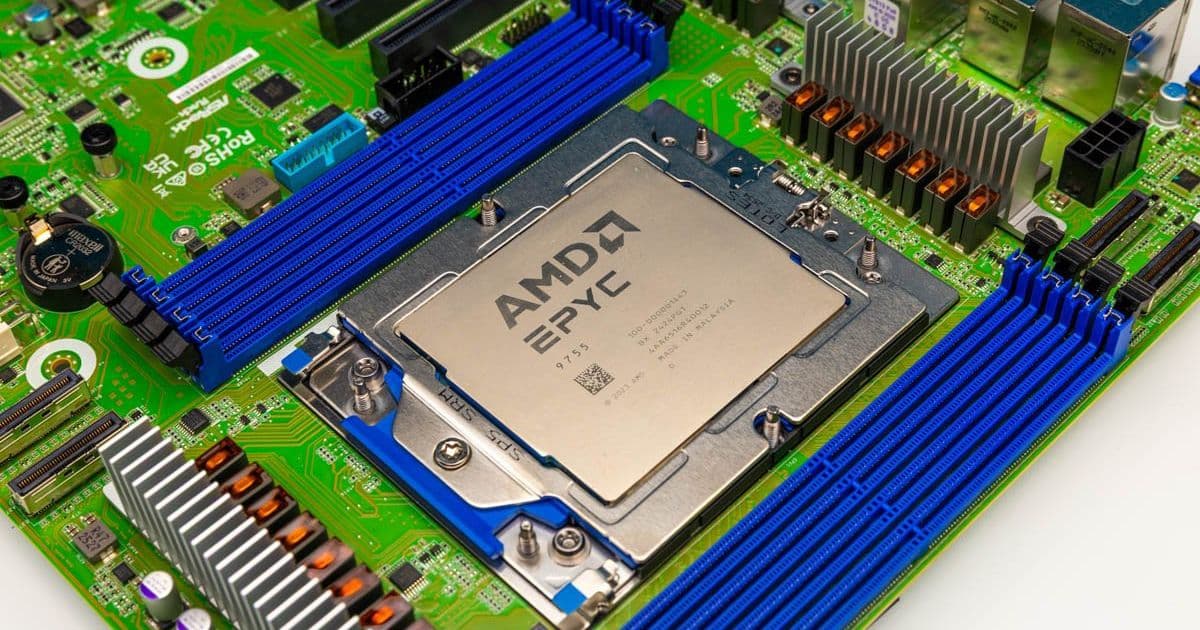
ASRock Rack's TURIND8-2L2T brings AMD EPYC SP5 support to a standard CEB form factor with 10Gbase-T, six PCIe slots, and flexible power options.
The ASRock Rack TURIND8-2L2T represents a thoughtful approach to AMD EPYC SP5 motherboard design, offering a standard CEB form factor (12" x 10.5") that balances expandability with practical deployment considerations. In an ecosystem where many modern server motherboards have adopted custom form factors, this board provides a welcome option for those seeking flexibility in their system builds.
Hardware Overview and Form Factor
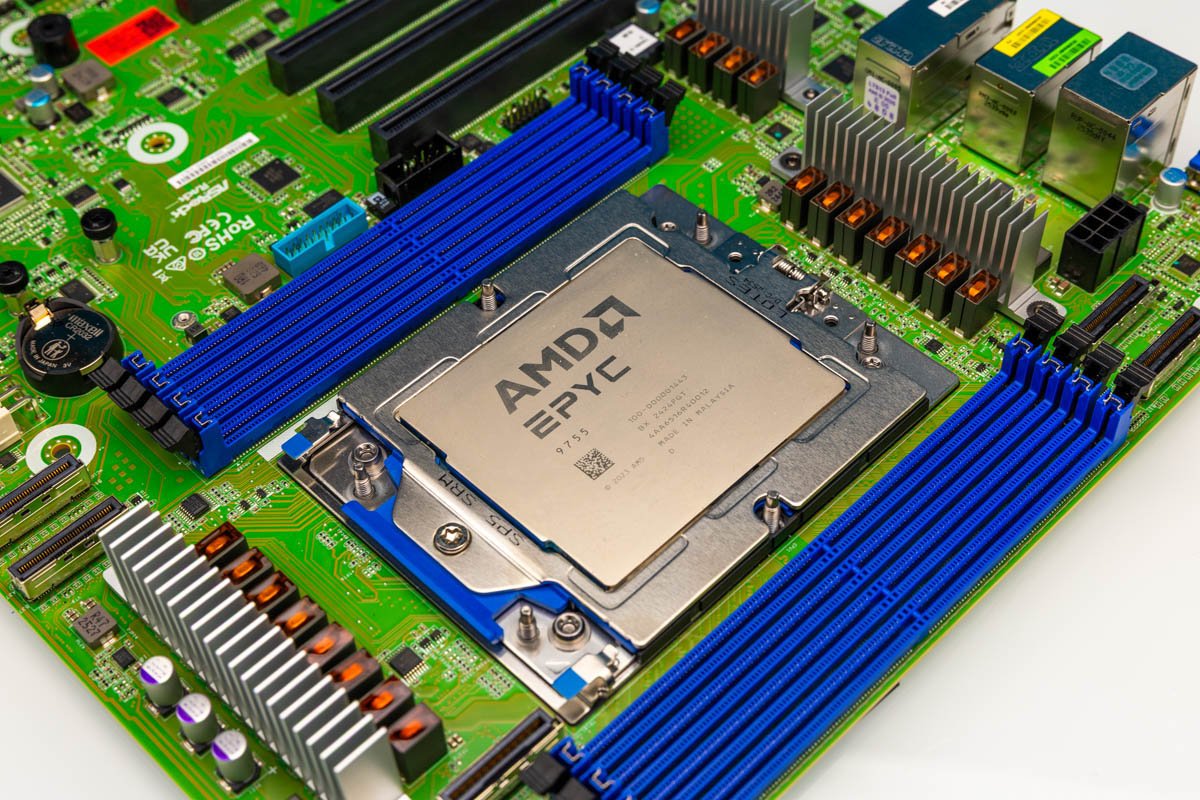
The TURIND8-2L2T's CEB size, slightly larger than ATX at 12" x 10.5", reflects the realities of modern processor packaging. The AMD SP5 socket dominates the board real estate, and while the model name suggests Turin support, the board is compatible with Genoa, Genoa-X, and Bergamo processors as well. This broad compatibility makes it a versatile platform for various EPYC 9004/9005 series CPUs.
One notable limitation is the 400W TDP ceiling, which caught us off guard during testing. We briefly ran the board with an AMD EPYC 9755 (450-500W) before verifying the specifications. While the board supports an expansive CPU list, this power constraint is worth considering for high-end deployments.
Power Delivery Architecture
The power delivery system presents both challenges and solutions. The board requires three ATX 12V connectors - two on the right side and one on the top left - which can complicate deployments with standard power supplies. We worked around this limitation using two Super Flower Leadex VII XP 1200W 80+ Platinum power supplies with universal modular ports, essentially borrowing a CPU power cable from the second PSU. While not the most efficient approach, it mirrors solutions we've seen on other ASRock Rack platforms like the AMPONED8-2T BCM.
Additionally, the board uses a 4-pin ATX-derived connector for power-control signaling instead of a traditional 24-pin connector. This space-saving measure, while initially surprising, follows a pattern established across several ASRock Rack generations. Users will need an adapter to convert a standard 24-pin PSU connector for proper signaling.
Memory Configuration Trade-offs
The memory subsystem represents a significant design decision. With only eight DDR5 DIMM slots supporting the eight memory channels of the SP5 processor, the board sacrifices maximum memory capacity for other features. A typical AMD EPYC SP5 processor can support up to 24 DDR5 DIMMs in 2-DPC mode across its 12 channels, but accommodating that many slots would consume more than half the motherboard width.
This eight-channel configuration appears primarily motivated by PCIe slot availability. Given current DDR5 pricing trends, the reduced memory capacity may be acceptable for many use cases, though high-memory applications might prefer more slots to utilize lower-capacity, less expensive DIMMs.
Expansion and Connectivity
The TURIND8-2L2T excels in expansion capabilities with six PCIe slots total. Four PCIe Gen5 x16 slots and two Gen5 x8 slots provide substantial I/O bandwidth, with the x8 slots being open-ended to accommodate longer cards. Notably, all PCIe slots except two of the x16 variants support CXL 2.0, future-proofing the platform for next-generation accelerator and memory expansion technologies.
Two MCIO x8 connectors on the top edge and two more centrally positioned offer additional expansion options, particularly useful as the industry shifts toward NVMe SSDs. While the board lacks onboard SATA ports, the AMD EPYC 9004/9005 series can operate PCIe Gen5 lanes in SATA mode when needed. ASRock Rack provides MCIO x8 to 8x SATA breakout cables for such configurations.
Storage and Networking
For boot storage, the board includes two M.2 SSD slots. The networking configuration features an Intel X710 10Gbase-T NIC with a dedicated heatsink, providing two 10Gbase-T ports. Additionally, two 1GbE ports are handled by Intel i210-AT NICs. The rear I/O panel also includes VGA and USB Type-A ports, along with an out-of-band management port.
Thermal and Airflow Considerations
Thermal design follows server-oriented principles with front-to-back airflow orientation. This design choice aligns with most server and high-end workstation chassis but may require consideration for consumer case deployments. The board includes eight fan headers strategically positioned for this airflow pattern, and even the DIMM slots are oriented to support proper air movement across components.
Design Philosophy and Platform Consistency
A notable aspect of the TURIND8-2L2T is how it fits into ASRock Rack's broader platform strategy. The design shares significant DNA with the AMPONED8-2T BCM reviewed earlier this quarter - both feature eight DDR5 DIMM slots, three ATX 12V power connectors, and similar layout philosophies. This consistency allows users to build around a general motherboard layout and then select their CPU based on specific needs.
The underside of the motherboard reveals thoughtful touches like support pads in key locations to prevent chassis contact, demonstrating attention to deployment reliability.
Target Use Cases and Final Thoughts
The ASRock Rack TURIND8-2L2T fills a specific niche in the AMD EPYC SP5 ecosystem. It's ideal for users who want:
- Standard form factor compatibility for tower or larger server chassis
- Extensive PCIe expansion with CXL 2.0 support
- Built-in 10Gbase-T networking
- Flexibility across multiple EPYC CPU generations
- A balance between memory capacity and expansion slots
While the power delivery requirements and reduced memory channels represent trade-offs, they enable the board's compact CEB form factor and extensive expansion capabilities. For many deployment scenarios - from edge computing to storage servers to general-purpose compute nodes - these compromises are well worth the benefits.
The TURIND8-2L2T demonstrates that in the world of high-performance server motherboards, there's still room for platforms that prioritize flexibility and standardization alongside raw performance.
Comments
Please log in or register to join the discussion