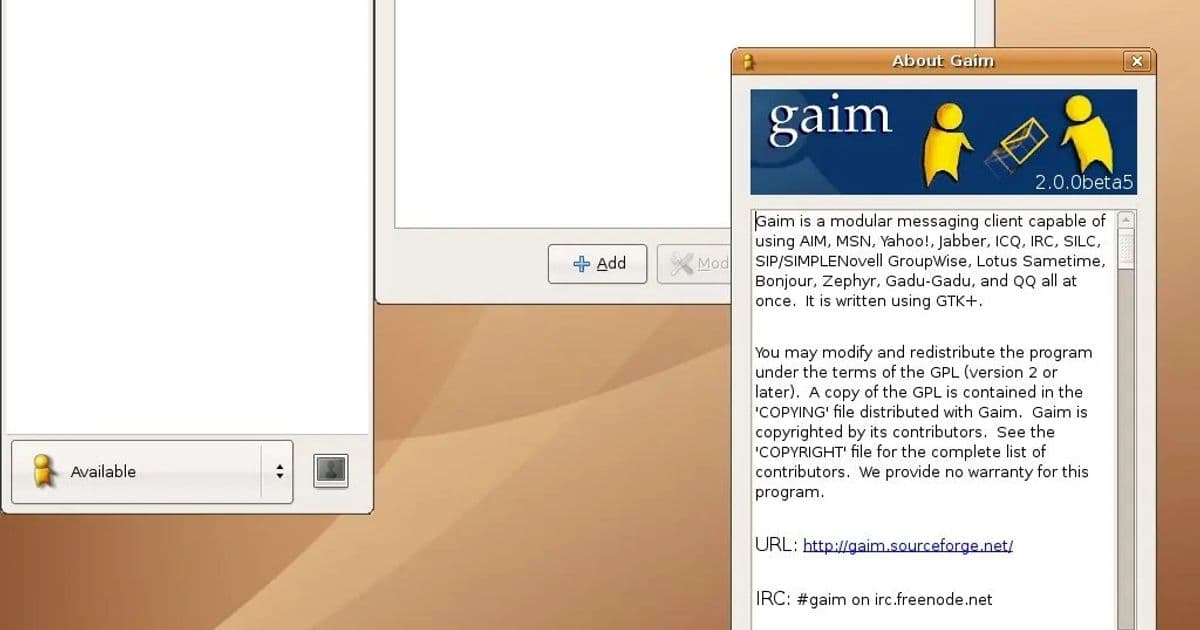
After 20 years as Pidgin, the original Gaim instant messaging app is making a comeback with a GTK4 interface, bringing back the classic look while leveraging modern libraries.
The Linux desktop landscape has seen countless applications come and go over the past two decades, but few have left as lasting an impression as Gaim. For users who cut their teeth on early 2000s desktop Linux, Gaim was the go-to solution for connecting to multiple instant messaging platforms - AIM, MSN, ICQ, and others - through a single unified interface. Today, that legacy is being revived with the announcement of Gaim 3, a modern GTK4 application that aims to restore the classic experience while building on contemporary foundations.
From Gaim to Pidgin and Back Again
The story begins in the early 2000s when Gaim emerged as one of the most popular instant messaging clients for Linux. Its ability to connect to multiple protocols through a single interface made it indispensable for users navigating the fragmented IM landscape of that era. However, in 2006, the project was forced to rename itself to Pidgin due to trademark issues with AOL's AIM service.
Fast forward twenty years, and the AIM trademark has long since expired. This legal shift, combined with user feedback about the direction of Pidgin 3, has created the perfect conditions for Gaim's return. The development team has been working on this revival for months, with discussions dating back to August 2025 about creating a GTK4 interface that would replicate the familiar Pidgin 2 experience.
The Technical Foundation
Gaim 3 represents an interesting technical approach. Rather than being a completely separate codebase, it's described as "a new from scratch GTK4 interface on top of libpurple 3 reproducing the Pidgin 2/Gaim interface." This means it leverages the same underlying messaging library that powers Pidgin while presenting a different user interface.
The choice of GTK4 is particularly noteworthy. GTK4 represents a significant modernization of the toolkit, offering improved performance, better theming capabilities, and enhanced accessibility features. By building on this foundation, Gaim 3 ensures it can remain relevant in today's desktop environment while maintaining the classic aesthetic that users remember.
Two Paths Forward: Gaim 3 and Pidgin 3
Interestingly, the development team isn't abandoning Pidgin entirely. Instead, they're pursuing parallel development tracks:
- Gaim 3: Focuses on the classic one-to-one chat interface that many users preferred in Pidgin 2
- Pidgin 3: Continues development with its more chat-room-focused interface
This dual approach allows the project to serve different user preferences while maintaining a common underlying infrastructure through libpurple 3.
What This Means for Modern Linux Users
For contemporary Linux users, Gaim 3 offers several compelling aspects:
Nostalgia with Modern Benefits: Users who remember the original Gaim can experience that familiar interface with modern performance and security improvements.
Unified Messaging: The libpurple foundation means Gaim 3 will continue to support multiple messaging protocols, though the landscape has changed significantly since the early 2000s.
GTK4 Integration: Building on GTK4 ensures better integration with modern desktop environments and improved accessibility support.
Active Development: Unlike many nostalgia projects, Gaim 3 appears to be under active, serious development with a clear roadmap and legal clearance for the name.
The Broader Context
The return of Gaim 3 is particularly interesting when viewed against the backdrop of modern messaging. While the original Gaim served a crucial role in an era before native Linux clients for major messaging platforms, today's landscape is dominated by web-based services like Slack, Discord, and various proprietary messaging apps. Gaim 3's success will likely depend on how well it can bridge this gap - providing a native Linux experience for modern messaging needs while maintaining the simplicity and elegance that made the original so beloved.
Looking Ahead
As Gaim 3 continues development, it represents more than just a nostalgic callback. It's a statement about the enduring value of well-designed, unified messaging interfaces and the Linux community's ability to preserve and modernize its heritage. For long-time Linux users, it's a welcome return of a familiar friend. For newer users, it offers a glimpse into desktop Linux history while providing a potentially useful tool for managing multiple messaging accounts.
The project's website at gaim.imfreedom.org provides the latest updates and development information for those interested in following its progress or potentially contributing to its development.
Whether Gaim 3 will achieve the same level of ubiquity as its predecessor remains to be seen, but its return is a fascinating chapter in the ongoing story of Linux desktop applications and the community's relationship with its own history.
Comments
Please log in or register to join the discussion