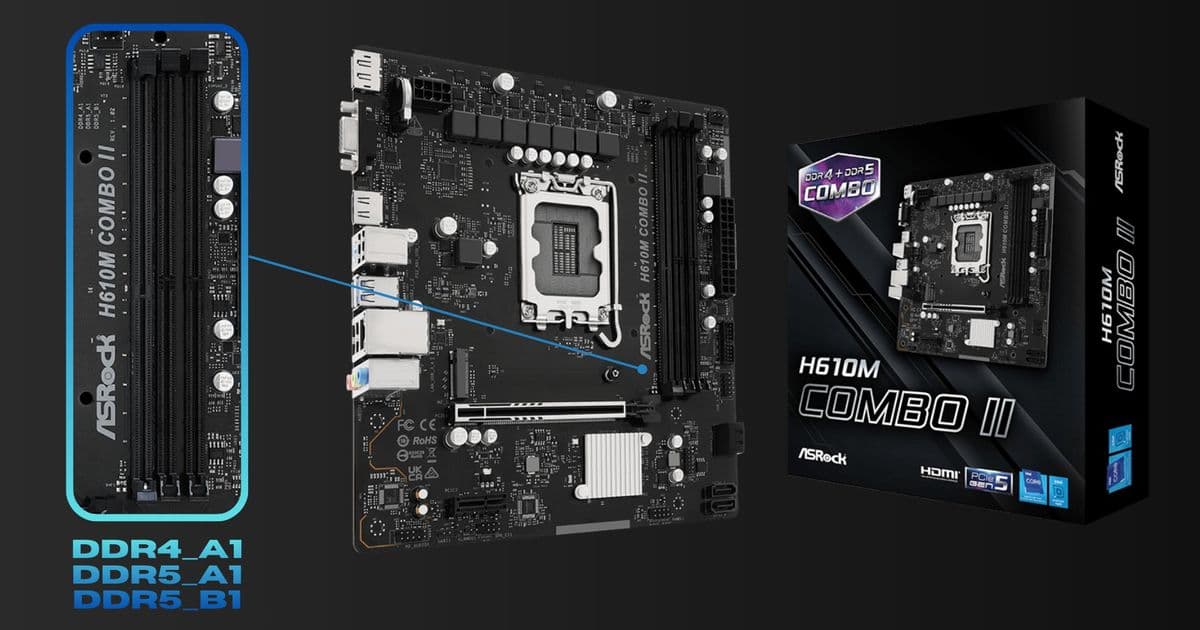
ASRock's H610M Combo II motherboard combines DDR4 and DDR5 slots to address memory shortages, offering a unique workaround for budget-conscious builders facing the ongoing RAM price crisis.
ASRock has unveiled a unique solution to the ongoing memory shortage crisis with its new H610M Combo II motherboard, featuring a hybrid design that supports both DDR4 and DDR5 memory modules. This Frankensteined approach allows users to choose whichever memory type is more readily available or affordable at the time of purchase.
A Creative Response to the RAMpocalypse
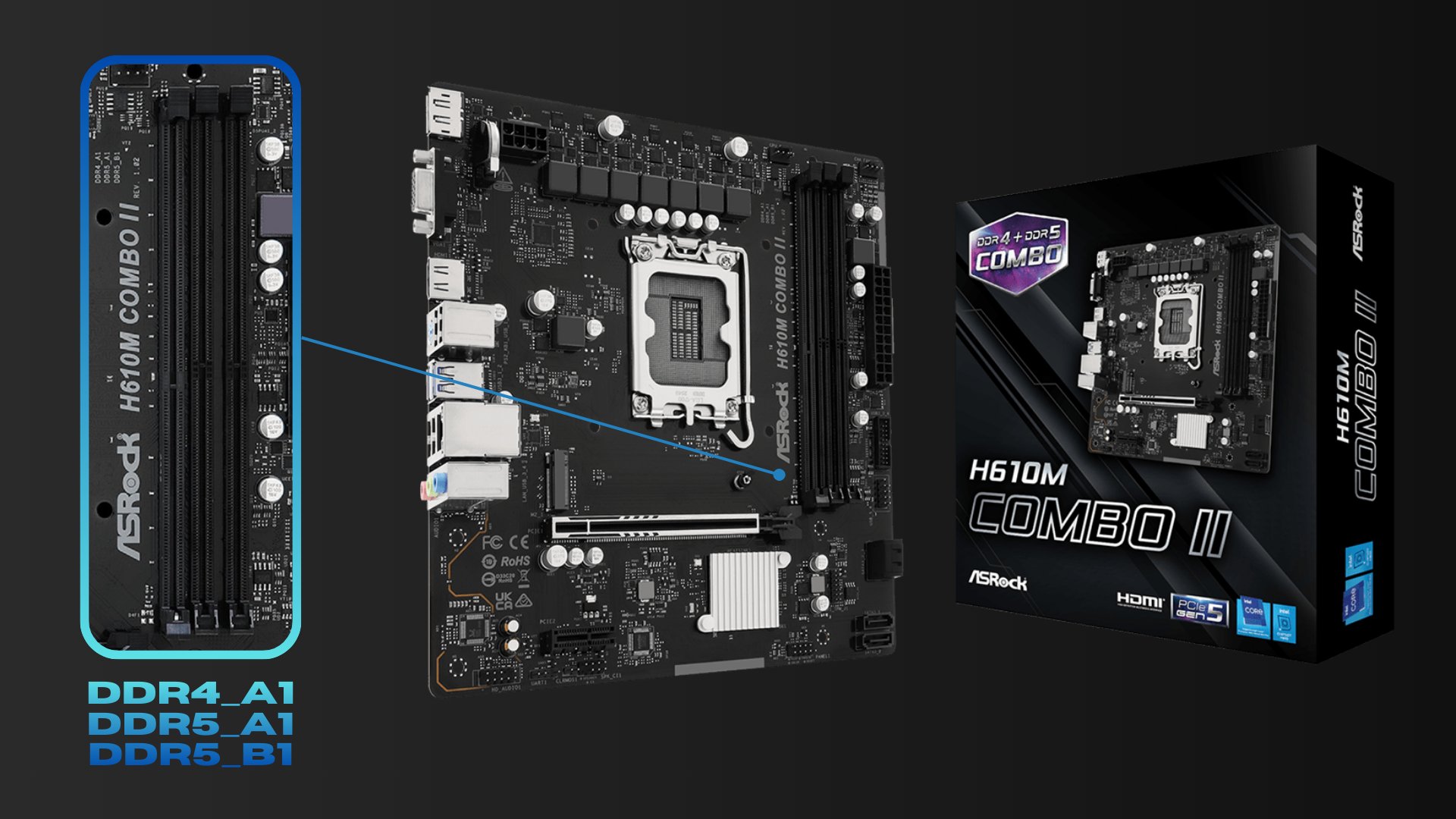
The H610M Combo II represents ASRock's second attempt at a hybrid memory motherboard, following the earlier H610 Combo ATX model. This mATX offering is specifically designed for Intel's LGA 1700 platform, supporting 12th, 13th, and 14th Gen Core processors. The board's hybrid memory configuration comes as a direct response to the current memory market conditions, where DDR4 and DDR5 prices fluctuate dramatically based on availability and demand.
Technical Specifications and Limitations
The motherboard features three DIMM slots total: two DDR5 slots and one DDR4 slot positioned closest to the CPU socket. This configuration creates some interesting technical considerations:
- The single DDR4 slot supports up to 32GB of memory at speeds up to 3,200 MT/s
- The dual DDR5 slots allow for a combined 96GB maximum capacity
- DDR5 memory runs at up to 5,600 MT/s on 14th Gen CPUs, while 12th and 13th Gen are limited to DDR5-4800
The irony of this setup isn't lost on hardware enthusiasts. DDR4 memory traditionally performs best in dual-channel configurations, while DDR5 can maintain reasonable performance even in single-channel mode. This means users opting for the DDR4 slot might experience suboptimal performance compared to a proper dual-channel DDR4 setup.
Barebones Design for Budget Builders
Beyond the memory slots, the H610M Combo II keeps things minimal. The board includes:
- One PCIe 5.0 x16 slot for graphics cards
- One PCIe 3.0 x1 slot for expansion cards
- One PCIe 3.0 x4 slot for M.2 SSDs
- A 6+1+1 phase VRM for power delivery
- Basic I/O with 2x USB 3.0 ports and the remainder being USB 2.0
- No onboard wireless connectivity
- Gigabit Ethernet for wired networking
This stripped-down approach positions the motherboard squarely at entry-level gamers and budget-conscious builders who are most affected by component shortages and price volatility.
Market Implications and Availability
ASRock has indicated that the H610M Combo II might not launch in every region, suggesting supply constraints even for this hybrid solution. The company hasn't disclosed pricing or specific availability dates, but the board's specifications and feature set indicate it will target the lower end of the motherboard market.
The hybrid memory approach raises interesting questions about the future of motherboard design. As memory technologies evolve and market conditions fluctuate, we might see more manufacturers adopt flexible approaches to component compatibility. However, the performance trade-offs and complexity of supporting multiple memory standards in a single platform remain significant challenges.
For now, the H610M Combo II stands as a creative, if somewhat inelegant, solution to a pressing problem in the PC building community. Whether it represents a viable long-term strategy or merely a stopgap measure during the ongoing memory crisis remains to be seen.
Comments
Please log in or register to join the discussion