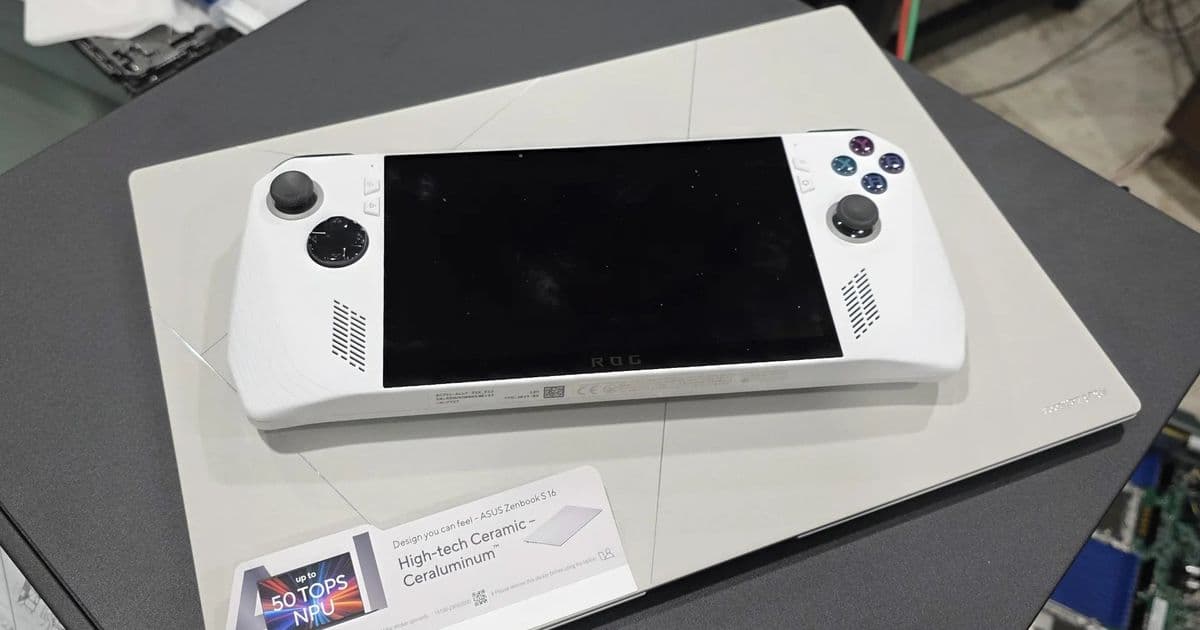
ASUS HID driver development picks up steam with support for ROG Ally handhelds and 2025 models on the horizon.
The open-source Linux driver ecosystem for ASUS devices with HID (Human Interface Device) interfaces is seeing renewed development activity after a period of relative quiet. Italian Linux developer Denis Benato, known for his work on the ASUS Armoury Linux driver, has taken the lead in advancing the hid-asus driver to support newer ASUS hardware.
In a recent message to the kernel mailing list, Benato outlined his plans to build upon the work of the previous asus-wmi maintainer and asus-linux developer, who has become less active in the project. The developer's focus is on expanding support for ASUS equipment on Linux systems, particularly for newer devices.
Benato is preparing to send a patchset that includes revised work to support ASUS ROG Ally handheld devices. This development is particularly significant given the growing popularity of ASUS ROG gaming handhelds among Linux gamers and enthusiasts. The ROG Ally, ASUS's answer to the Steam Deck, has gained traction in the handheld gaming market, making Linux compatibility crucial for many users.
The developer emphasized that this work is not just about supporting the ROG Ally but also about expanding compatibility for 2025 models. This forward-looking approach suggests that the hid-asus driver improvements will serve as a foundation for future ASUS devices, ensuring that Linux users can take full advantage of their hardware's features.
Accompanying Benato's announcement was a series of seven patches to the hid-asus driver. These patches include various fixes and add support for the XG Mobile Station 2022. The XG Mobile Station is an external graphics dock that allows users to connect their laptops to a more powerful GPU setup, enhancing gaming and content creation capabilities.
The addition of XG Mobile Station 2022 support came down to recognizing a different device ID from the 2023 model, which was already supported by the Linux kernel. This attention to detail in device identification is crucial for ensuring that users can seamlessly integrate their ASUS peripherals with Linux systems.
While the patch series itself may not seem groundbreaking, it represents an important step in maintaining and improving Linux support for ASUS devices. The renewed activity in the hid-asus driver development is welcome news for the Linux community, especially given the increasing popularity of ASUS ROG gaming handhelds, laptops, and other devices among Linux users.
This development highlights the ongoing efforts of the open-source community to ensure that Linux remains a viable and attractive option for users of diverse hardware. As ASUS continues to innovate in the gaming and hardware space, having robust Linux support will be crucial for maintaining the platform's appeal to enthusiasts and gamers alike.
The work being done on the hid-asus driver not only improves current device compatibility but also lays the groundwork for future ASUS products. This proactive approach to driver development ensures that Linux users can look forward to continued support as ASUS releases new hardware in the coming years.
For Linux gamers and ASUS hardware enthusiasts, this news signals a positive direction in hardware support. As the hid-asus driver evolves to accommodate newer devices, users can expect a more seamless experience when using ASUS peripherals with their Linux systems. This development is a testament to the collaborative nature of open-source software and the dedication of developers like Denis Benato in bridging the gap between hardware manufacturers and the Linux ecosystem.
Comments
Please log in or register to join the discussion