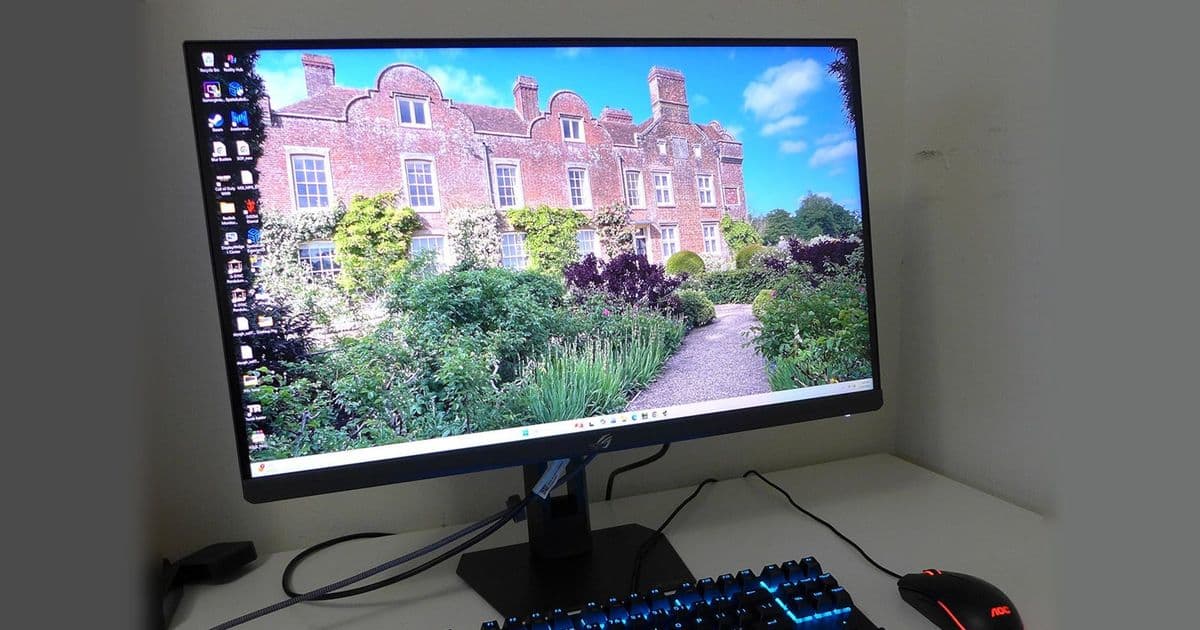
Asus delivers a 5K gaming monitor with dual-refresh capability, exceptional color accuracy, and premium video processing that sets a new standard for high-resolution gaming displays.
The Asus ROG Strix XG27JCG represents a significant leap forward in gaming monitor technology, combining unprecedented pixel density with flexible refresh rate options that challenge the traditional trade-offs between resolution and frame rates. This 27-inch 5K display delivers 5120x2880 resolution with a native 120Hz refresh rate, which can be overclocked to 180Hz when paired with GeForce 50-series or Radeon RX 7600 graphics cards. The monitor's standout feature is its dual-refresh capability, allowing users to switch to 2560x1440 resolution at an impressive 330Hz for competitive gaming scenarios.
Unprecedented Pixel Density and Image Quality
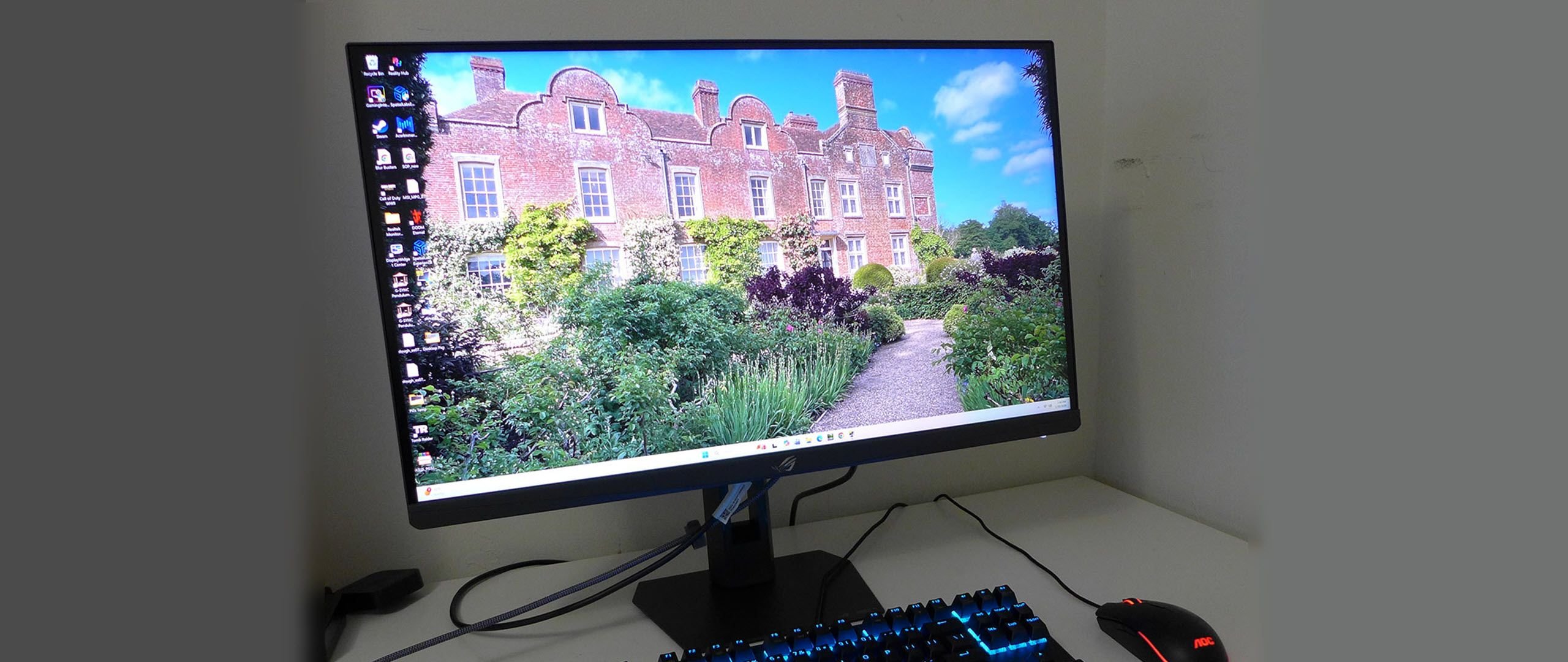
The XG27JCG achieves an incredible 218 pixels per inch density, making individual pixels virtually invisible to the naked eye. This level of sharpness creates an immersive viewing experience where textures appear remarkably detailed and realistic. During testing with games like Doom Eternal, the monitor's clarity revealed subtle details such as texture separations and tiny reflections that typically go unnoticed on lower-resolution displays.
The IPS panel delivers exceptional brightness levels, measuring over 400 nits in SDR mode and reaching an impressive 785 nits in HDR. The 10-zone horizontal dimming system contributes to this brightness while providing dynamic contrast enhancement. Color performance is equally impressive, covering approximately 93% of the DCI-P3 color gamut with rich, vibrant reproduction that doesn't require calibration out of the box.
Advanced Video Processing Technology
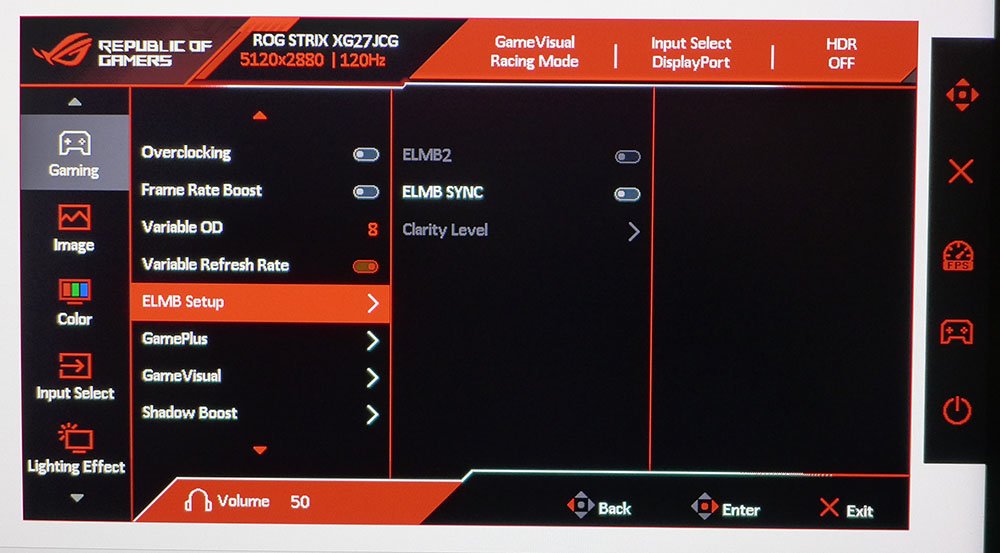
Asus has packed the XG27JCG with every premium video processing feature currently available in the market. The monitor supports both FreeSync and G-Sync Compatible Adaptive-Sync technologies, ensuring smooth gameplay across different GPU platforms. The ELMB Sync feature allows users to combine backlight strobing with Adaptive-Sync, eliminating motion blur without introducing the phasing artifacts common to most backlight strobe implementations.
For users who prefer more control over motion clarity, ELMB 2 offers five pulse width settings that balance brightness with blur reduction. The monitor's overdrive system is particularly noteworthy, featuring a 20-click adjustment range that provides precise control over response times. This system works seamlessly at all refresh rates, maintaining smooth motion even at the maximum 330Hz in QHD mode.
Dual-Mode Flexibility
The Frame Rate Boost feature represents the monitor's most innovative aspect, allowing users to switch between 5K/120Hz and QHD/330Hz modes. While setting up the dual-mode functionality requires initial configuration in the graphics control panel, switching between modes becomes straightforward once established. This flexibility addresses the common compromise between pixel density and frame rates, giving users the best of both worlds depending on their gaming needs.
For competitive gamers who prioritize frame rates, the QHD mode at 330Hz provides exceptionally smooth motion with minimal input lag. The resolution reduction to 2560x1440 maintains a respectable 109 pixels per inch, avoiding the visual compromise of stepping down to full HD on a 27-inch display.
Comprehensive Feature Set
The XG27JCG includes Asus' full suite of gaming enhancements, including GamePlus features with aiming points, sniper mode magnification, timers, and frame counters. The monitor supports Aura Sync and Aura RGB lighting effects, which can be synchronized with on-screen content when connected via USB. DisplayWidget Center software provides convenient desktop control of monitor settings, eliminating the need to navigate on-screen menus for frequent adjustments.
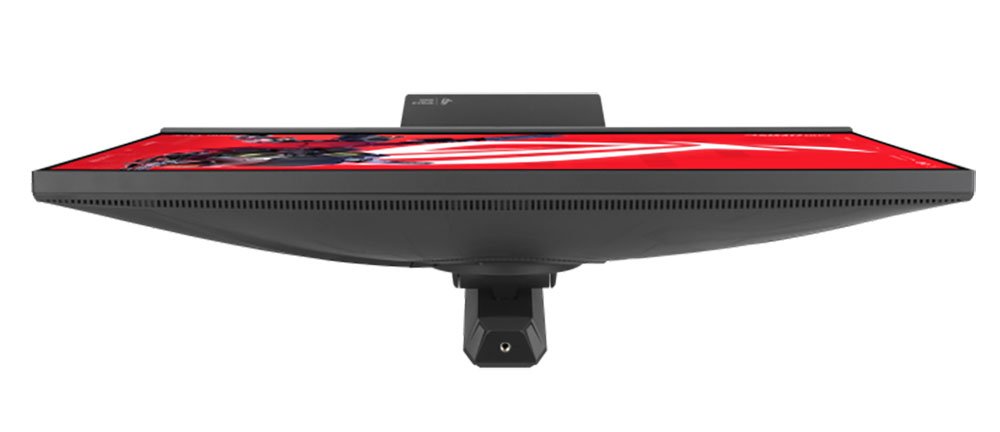
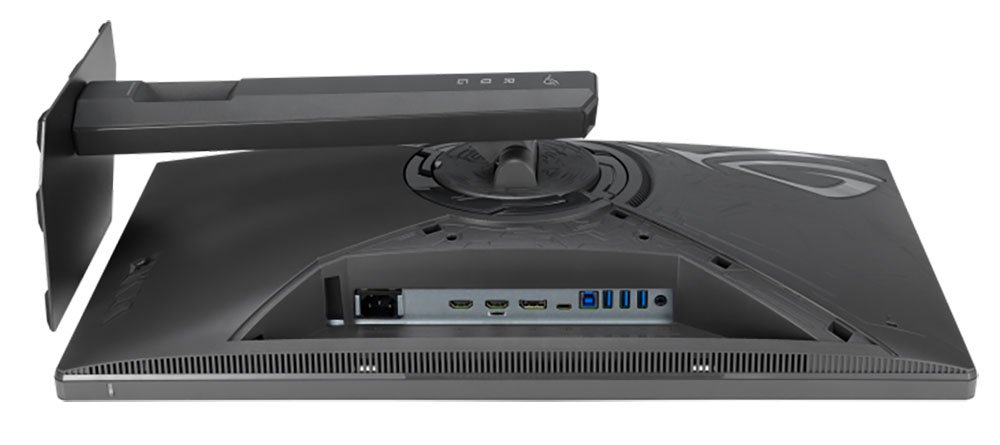
Connectivity options are comprehensive, featuring two HDMI 2.1 ports, one DisplayPort 1.4 with DSC support, and a USB-C port that supports KVM functionality. This allows users to control multiple systems using a single keyboard and mouse setup. The monitor includes three downstream and one upstream USB 3.2 port, though it notably lacks internal speakers, requiring users to rely on external audio solutions.
Build Quality and Ergonomics
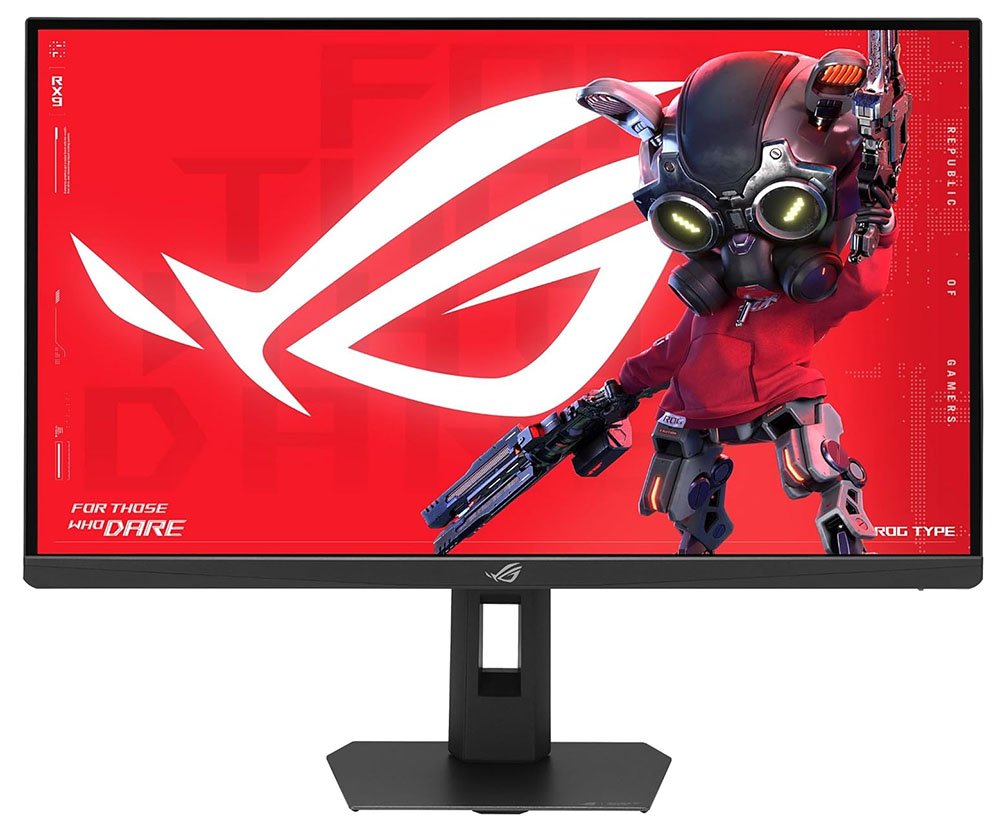
The monitor's construction reflects its premium positioning, with a solid stand anchored by a heavy metal plate that provides stability without excessive desk space consumption. The stand offers 5/20-degree tilt, 40-degree swivel, 4.4-inch height adjustment, and 90-degree portrait rotation. Movements are smooth and precise with no wobble or play in the mechanism.
The design maintains the restrained styling characteristic of the ROG Strix line, featuring thin bezels around the display area and a small ROG logo at the bottom edge. The control layout places three buttons and a joystick on the back right side for easy access. A snap-on cover protects the input panel when cables are connected.
Performance in Real-World Use
Gaming performance on the XG27JCG exceeds expectations across both resolution modes. In 5K/120Hz mode, motion handling is remarkably smooth for such a high-resolution display, with only slight jitter during fast pans over complex textures like rock or ice. The combination of precise overdrive and ELMB Sync technology effectively eliminates motion blur without introducing visual artifacts. The QHD/330Hz mode delivers the ultra-responsive experience competitive gamers demand, with frame rates that make motion appear almost perfectly smooth. The reduced resolution has less visual impact than stepping down to full HD on other dual-refresh monitors, maintaining sufficient detail for most gaming scenarios.
HDR performance is particularly impressive, with the monitor's brightness capabilities making high dynamic range content pop with vivid highlights and deep shadows. The 10-zone dimming system, while not as sophisticated as full-array local dimming, still provides noticeable improvement in contrast and HDR impact.
Value Proposition and Market Position
At $849, the XG27JCG positions itself below high-end OLED displays with comparable specifications while offering unique features that justify its premium pricing. The combination of 5K resolution, dual-refresh capability, and comprehensive video processing features creates a compelling package for users who want flexibility without compromising on image quality.
The monitor's most significant advantage lies in its practical implementation of dual-refresh technology. Unlike other monitors that force users to choose between 4K and full HD, the XG27JCG's QHD mode provides an optimal balance of resolution and refresh rate that serves both productivity and gaming needs effectively.
Considerations and Limitations
While the XG27JCG excels in most areas, there are some limitations to consider. The stand's height adjustment doesn't quite reach the level needed for perfect vertical orientation, which may be an issue for users who frequently rotate their displays. The absence of internal speakers means users must provide their own audio solution, which could be inconvenient for some setups.
Achieving the full 180Hz overclock requires relatively recent graphics hardware, limiting this feature to users with GeForce 50-series or Radeon RX 7600 cards. Users with older GPUs like the RTX 4090 are limited to 120Hz in 5K mode, though the 330Hz QHD mode remains accessible regardless of GPU generation.
Conclusion
The Asus ROG Strix XG27JCG sets a new benchmark for high-resolution gaming monitors by successfully combining unprecedented pixel density with flexible refresh rate options and premium video processing features. Its ability to deliver both incredibly sharp 5K imagery and ultra-smooth 330Hz gameplay in QHD mode makes it uniquely versatile in the current monitor market.
For users who demand the highest image quality for both gaming and productivity, the XG27JCG offers a compelling solution that doesn't force compromises between resolution and performance. While the price point is significant, the monitor's unique capabilities and exceptional image quality justify the investment for enthusiasts and professionals who require the best visual experience available.
The XG27JCG represents not just an incremental improvement in gaming monitor technology, but a genuine evolution in how high-resolution displays can serve multiple use cases without forcing users to choose between competing priorities. It's a monitor that truly raises the bar for what's possible in the high-end gaming display market.
Key Specifications:
- Panel Type: IPS with W-LED backlight
- Screen Size: 27 inches (16:9 aspect ratio)
- Resolution: 5120x2880 (5K) native, 2560x1440 (QHD) dual-mode
- Refresh Rates: 120Hz native, 180Hz overclocked (5K), 330Hz (QHD)
- Response Time: 0.03ms (GTG)
- Brightness: 350 nits SDR, 600 nits HDR
- Contrast Ratio: 1,500:1
- Color Gamut: 10-bit (8-bit+FRC), DCI-P3 coverage
- Adaptive-Sync: FreeSync and G-Sync Compatible
- Video Inputs: 1x DisplayPort 1.4, 2x HDMI 2.1, 1x USB-C
- Audio: 3.5mm headphone output (no internal speakers)
- USB Hub: 1x upstream, 3x downstream USB 3.2 ports
- VESA Mount: 100mm compatible
- Weight: 15.2 pounds (6.9kg)
- Warranty: 3 years
The XG27JCG stands as a testament to Asus' engineering capabilities and understanding of gamer needs, delivering a monitor that excels in both technical specifications and practical usability. It's a display that doesn't just meet expectations but redefines them for the high-end gaming monitor segment.
Comments
Please log in or register to join the discussion