
The mandatory shift from Java EE to Jakarta EE has created a massive migration burden for development teams. GitHub Copilot's app modernization features now offer an automated workflow to handle the namespace changes, dependency updates, and build fixes required for Jakarta EE 10.
The Java ecosystem has reached a critical inflection point. With the completion of the transition from the javax.* namespace to jakarta.*, migrating legacy Java EE applications is no longer optional—it is a requirement for maintaining security, compatibility, and access to modern features. This migration touches every layer of the application stack: Servlet APIs, JPA persistence, JAX-RS for RESTful services, and CDI for dependency injection.
For large, complex monoliths, this mechanical refactoring is a nightmare. It involves hunting down hundreds of import statements, updating build configurations, and resolving transitive dependency conflicts. Manual migration is slow, prone to human error, and creates significant downtime for development teams who would rather be building new features.
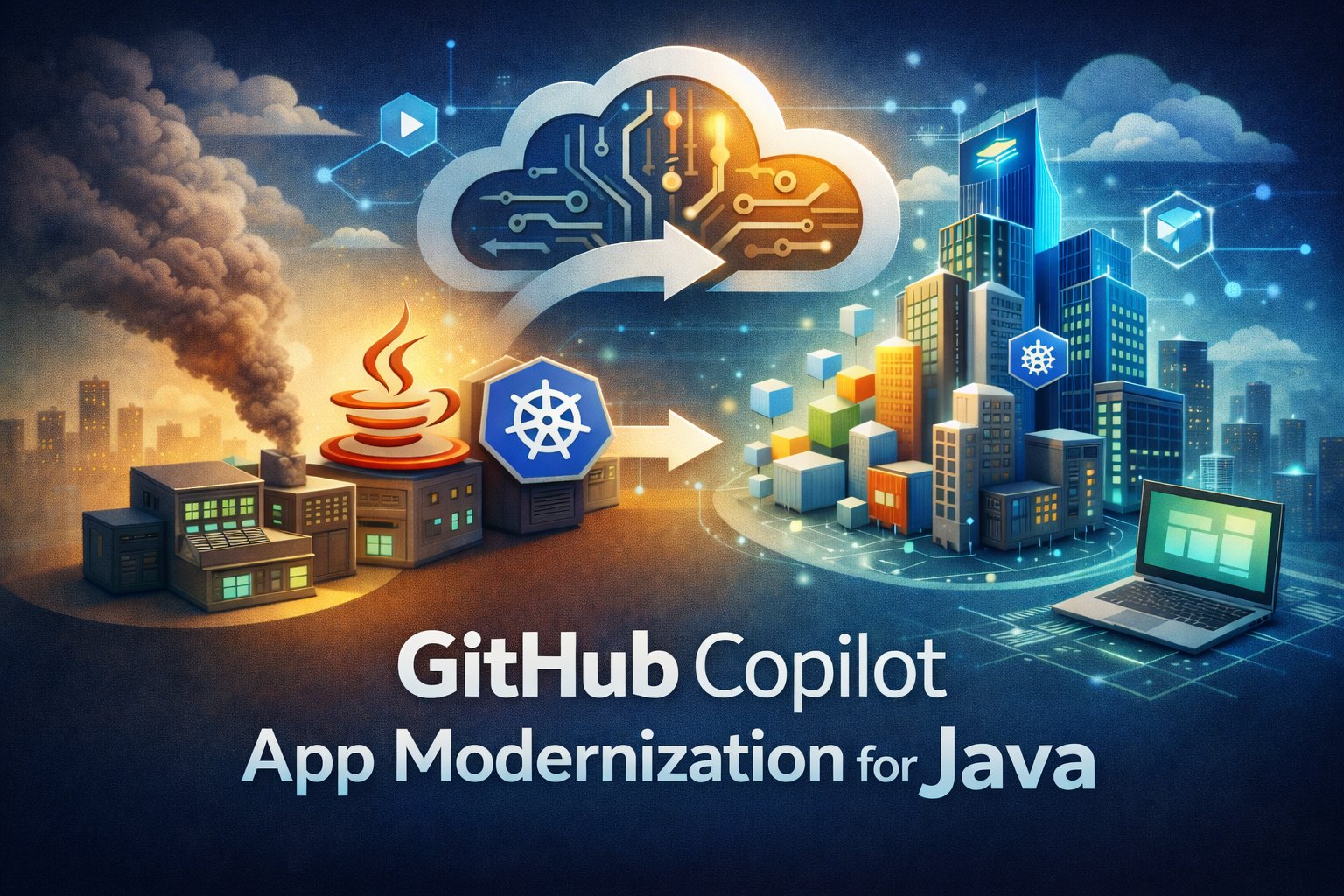
The Migration Challenge: A Namespace Avalanche
The core of the problem is the sheer volume of changes required. It is not simply a global search-and-replace. The move to Jakarta EE 10 involves:
- Namespace Updates: Every
javax.persistence.*,javax.servlet.*, andjavax.validation.*import must be changed tojakarta.*equivalents. - Dependency Coordinates: Maven and Gradle artifacts have shifted from
javaxgroup IDs tojakartagroup IDs. For example,javax.servlet-apibecomesjakarta.servlet-api. - Application Server Compatibility: The target runtime (like Tomcat, Jetty, or WildFly) must support the Jakarta EE 10 specifications.
- Framework Upgrades: Libraries built on top of Java EE, such as Spring Framework 6+, require Jakarta EE as a baseline.
Attempting to do this manually across a large codebase often results in compilation errors that take days to untangle.
GitHub Copilot App Modernization: The Automated Path
GitHub Copilot app modernization introduces a structured, AI-assisted workflow to handle this transition. It moves beyond simple code completion to perform project-wide analysis and transformation.
1. Project Analysis and Strategy
When you open a Java EE project in Visual Studio Code or IntelliJ IDEA with the extension enabled, Copilot performs a comprehensive scan. It identifies:
- All
javax.*libraries currently in use. - Frameworks dependent on legacy EE APIs (e.g., Hibernate Validator, Jersey).
- The current build configuration (Maven
pom.xmlor Gradlebuild.gradle). - JDK constraints, as Jakarta EE 10 typically requires Java 11 or 17.
This analysis generates a migration plan that details exactly what needs to change.
2. Automated Transformations via OpenRewrite
Once the plan is approved, Copilot executes the changes using underlying rules similar to OpenRewrite. This is not a naive text replacement. It handles:
- Import Rewriting: Systematically changing
javaxtojakarta. - Dependency Management: Updating
pom.xmlorbuild.gradlefiles to point to the correct Jakarta EE 10 coordinates. - Plugin Updates: Aligning Maven plugins (like the Surefire plugin) with the new ecosystem.
3. The Build-Fix Loop
Migration rarely succeeds on the first attempt. Copilot automates the tedious iteration process:
- Run Build: Attempts to compile the project.
- Capture Errors: Identifies compilation failures resulting from the migration.
- Suggest Fixes: Proposes specific code changes to resolve API incompatibilities or missing dependencies.
- Apply and Rebuild: Repeats until the project compiles successfully.
This loop can save days of manual debugging.
4. Security and Behavior Validation
After the build succeeds, the work isn't done. Copilot scans the updated dependencies for new Common Vulnerabilities and Exposures (CVEs). It also flags potential behavioral changes—for example, if a validation rule behaves differently in Jakarta EE 10 than it did in Java EE 8.
The Developer's Role: Validation over Mechanics
While GitHub Copilot handles the mechanical heavy lifting, the developer remains the architect of the system. Responsibilities shift to higher-value tasks:
- Test Execution: Running the full integration and unit test suite to ensure business logic remains intact.
- Runtime Verification: Checking that the application deploys correctly to the Jakarta EE 10-compatible server.
- Configuration Review: Updating
web.xmlor other deployment descriptors if necessary. - Integration Testing: Verifying connections to external databases, message queues, and REST APIs.
Summary of Output
A successful migration using this tool results in:
- A codebase fully converted to
jakarta.*namespaces. - Dependencies aligned with Jakarta EE 10.
- Updated build files and plugins.
- A summary report detailing versions changed, code edits applied, and any remaining manual review items.
Conclusion
The transition to Jakarta EE is a mandatory step for the longevity of Java applications, but it does not have to be a productivity killer. By automating the namespace refactoring, dependency updates, and build error resolution, GitHub Copilot app modernization allows teams to complete migrations in hours rather than weeks. This shifts the focus from tedious syntax updates back to validating application behavior and delivering value.
For a detailed walkthrough of the setup and workflow, refer to the Microsoft Learn guide for upgrading Java projects with GitHub Copilot app modernization.
Comments
Please log in or register to join the discussion