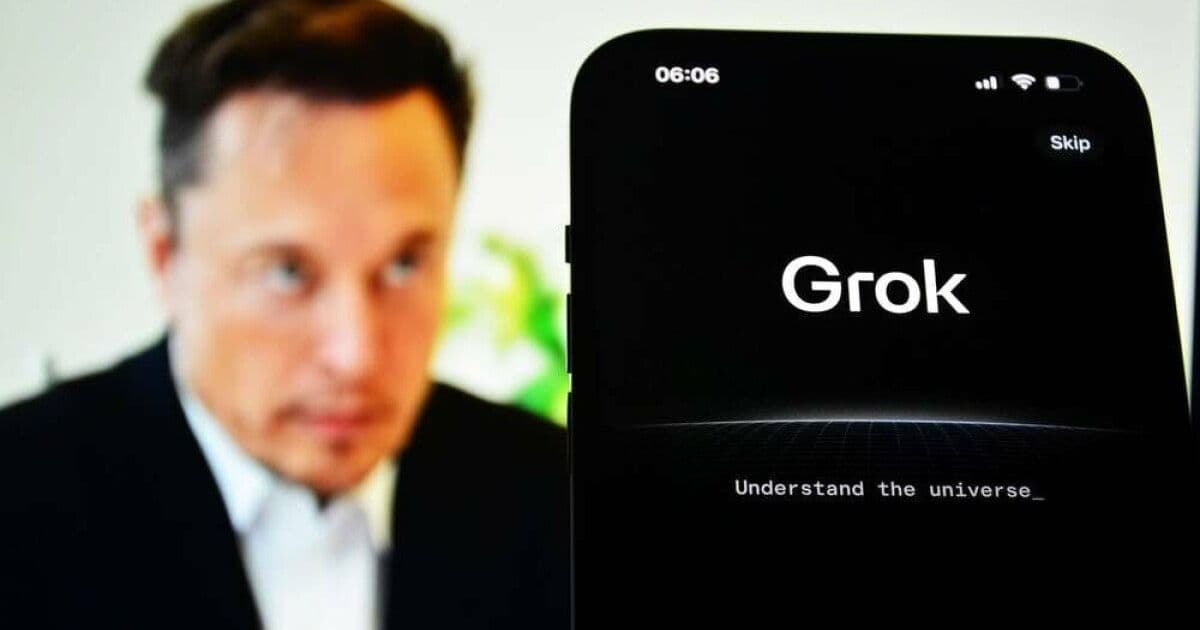
Amazon Web Services is reportedly preparing to list Elon Musk’s Grok model on its Bedrock marketplace. The move appears driven by strategic hardware commitments rather than genuine customer demand, raising concerns about governance, compliance and the practicality of integrating a model that enterprises have actively rejected.
Regulatory Action → What It Requires → Compliance Timeline
AWS decision: Amazon Web Services is said to be negotiating the inclusion of SpaceX‑owned Grok models in the Bedrock managed‑service marketplace.
Why it matters: Bedrock is marketed as a governed environment that provides IAM controls, PrivateLink, CloudTrail logging, encryption at rest and in transit, and audit‑ready guardrails. Enterprises adopt Bedrock primarily for these compliance features, not for the underlying model itself. Interviews with senior security leads at large banks reveal a unanimous refusal to use Grok, citing reputational risk and lack of trust in the model’s provenance.
Compliance implications:
- Model provenance verification – Before a model can be listed, AWS must confirm that the provider supplies a signed attestation of the training data sources, licensing terms and any third‑party content restrictions. This is required under the EU AI Act (Article 9) and the U.S. Executive Order on Safe AI Development (EO 14073). Failure to provide a verifiable chain of custody could block the model from the regulated marketplace.
- Data protection safeguards – Grok will process customer prompts that may contain personal data. Under GDPR Art. 32, AWS must ensure that any data leaving the Bedrock environment is encrypted with at least AES‑256 and that the model does not retain prompt content beyond the session. A Data Processing Addendum (DPA) must be signed with SpaceXAI before the model is made available.
- Export‑control compliance – The model’s underlying architecture is classified as a “high‑risk AI system” by the U.S. Department of Commerce’s Export Administration Regulations (EAR). AWS will need an end‑user licence (EUL) and must screen all Bedrock customers against the Entity List before granting access to Grok.
- Audit‑trail integration – Bedrock’s logging must capture every invocation of Grok, including request metadata, model version, and response latency. These logs must be retained for a minimum of 12 months to satisfy SOX Section 404 and the NIST CSF Identify/Detect functions.
Compliance timeline:
- Q3 2026: AWS completes provenance attestation and signs a DPA with SpaceXAI. Initial internal security review finishes.
- Q4 2026: Export‑control screening framework is deployed; Bedrock logging schema is updated to include Grok‑specific fields.
- Q1 2027: Public beta of Grok on Bedrock is launched for a limited set of AWS‑verified enterprise customers. All audit logs are streamed to Amazon CloudWatch and archived in Amazon S3 with Object Lock enabled.
- Q2 2027: Full production rollout, contingent on successful completion of a third‑party security assessment (e.g., SOC 2 Type II) and receipt of any required regulatory clearances.
Why Enterprise Demand Is Absent
Security leads at several multinational banks described Grok as “the revenge‑porn edgelord LLM” and said their institutions would not sign a cloud contract that referenced it. The primary objections are:
- Reputational risk: Grok has been linked to the generation of sexualised images of real people, prompting injunctions in the Netherlands and investigations in more than a dozen jurisdictions.
- Governance mismatch: Enterprises that value Bedrock’s governance features do not want a model that is already available via a public, unauthenticated endpoint. Adding Grok to Bedrock would provide little incremental security.
- Organisational instability: The model’s ownership chain (X → xAI → SpaceX → SpaceXAI) has changed multiple times in the past year, raising concerns about future API stability and contractual continuity.
The Strategic Angle Behind AWS’s Move
AWS has previously paired Bedrock listings with large hardware commitments from model providers:
- Anthropic: $100 billion spend commitment, plus up to five gigawatts of Trainium ASIC capacity.
- OpenAI: $138 billion total commitment, with a similar Trainium allocation.
The pattern suggests that AWS may be using Bedrock as a conduit to secure Trainium silicon utilisation from emerging AI labs, regardless of immediate market demand for the models themselves. By listing Grok, AWS can lock in a future Trainium commitment from SpaceXAI, which is reportedly training Grok on a massive GPU farm in Memphis. Even if Grok never sees significant production traffic, the hardware revenue stream would justify the marketplace entry.
Compliance Checklist for Enterprises Considering Grok on Bedrock
| Step | Action | Deadline |
|---|---|---|
| 1 | Review SpaceXAI’s AI‑system attestation for data provenance and licensing. | Before Q4 2026 |
| 2 | Ensure your DPA includes clauses for model‑prompt retention limits (no longer than session). | Before Q4 2026 |
| 3 | Run an internal export‑control screening against the intended user base. | Before Q1 2027 |
| 4 | Validate that Bedrock logging meets your internal SOX and GDPR audit requirements. | Before Q1 2027 |
| 5 | Conduct a pilot test with a restricted user group and document any policy violations. | Q1 2027 |
Enterprises that follow this checklist can mitigate the regulatory exposure associated with an otherwise low‑demand model.
Featured image: AWS data‑center infrastructure, illustrating the underlying hardware that powers Bedrock.
Bottom line: AWS’s plan to host Grok on Bedrock appears to be driven more by a desire to secure Trainium silicon utilisation than by genuine customer demand. For regulated enterprises, the key compliance tasks revolve around provenance verification, data‑protection safeguards, export‑control screening, and audit‑trail integration. Organizations that decide to experiment with Grok should treat the Bedrock listing as a pilot platform rather than a production‑grade solution.
Comments
Please log in or register to join the discussion