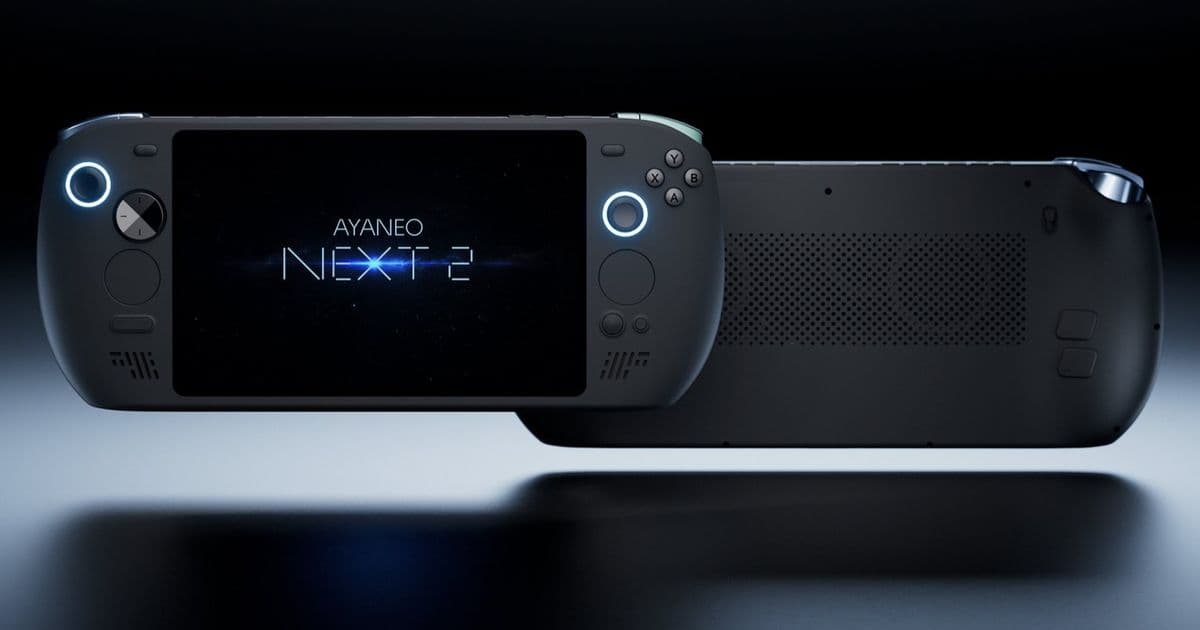
AYANEO's flagship handheld gaming PC enters crowdfunding with configurations reaching $4299, featuring AMD Strix Halo processors and workstation-level RAM options that challenge traditional gaming laptop paradigms.
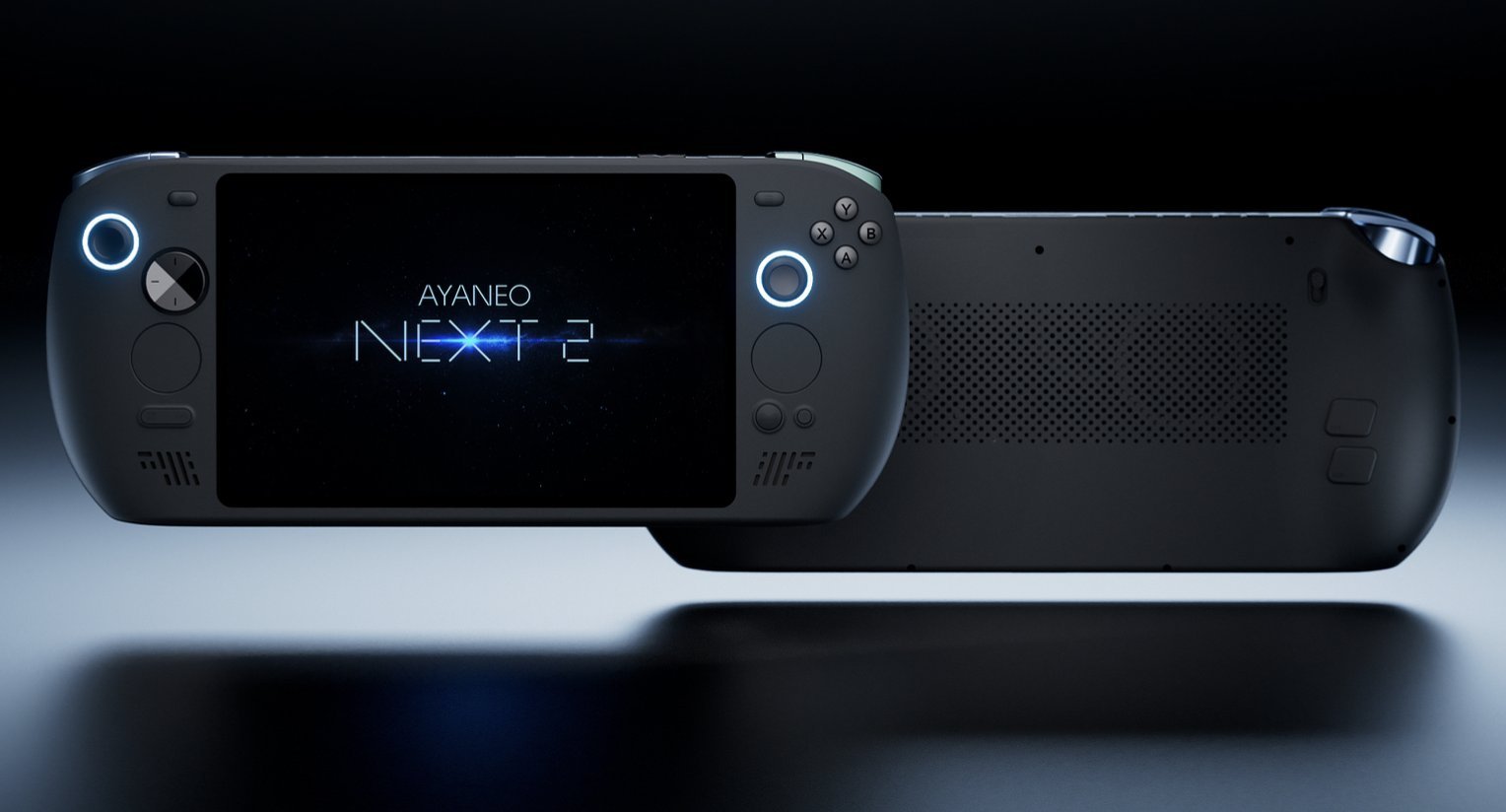
The AYANEO NEXT 2 handheld gaming PC has launched on Indiegogo with Early Bird pricing starting at $1,799, positioning itself as a premium alternative to gaming laptops with specifications rarely seen in portable form factors. Announced last November and now available for pre-order, the device features AMD's upcoming Strix Halo processors, OLED display technology, and configurations targeting both gamers and AI developers.
Core specifications redefine handheld limits
- Display: 9.06" OLED panel (2400×1500) with variable refresh rates (60-165Hz) and 1100 nits peak brightness
- Processors: Choice between Ryzen AI Max+ 385 (8-core Zen5/Radeon 8050S) or 395 (16-core Zen5/Radeon 8060S) with up to 85W TDP
- Memory/Storage: Configurations from 32GB/1TB to 128GB/2TB LPDDR5x-8000 RAM
- Battery: Massive 116Wh capacity (exceeding FAA flight limits)
- Controls: Dual trackpads, adjustable TMR joysticks, Hall effect triggers, and four rear macro buttons
Pricing structure highlights market positioning
AYANEO's tiered pricing strategy reveals its dual-audience approach:
| Configuration | Early Bird | Retail |
|---|---|---|
| 385/32GB/1TB | $1,799 | $1,999 |
| 395/64GB/1TB | $2,299 | $2,699 |
| 395/128GB/2TB | $3,499 | $4,299 |
The Ryzen AI Max+ 395 models particularly stand out with their 40-core RDNA 3.5 GPU and 126 TOPS NPU performance—capable of running 70B+ parameter LLMs locally. This positions the higher-end NEXT 2 as a compact AI workstation, though the 128GB RAM configuration raises questions about thermal constraints in a 3.22-pound chassis.
Developer implications
For game creators, this device signals shifting hardware expectations:
- Performance targets: GPU capabilities approaching RTX 4060/4070 levels enable more demanding titles on handhelds
- Control schemes: Dual trackpads and macro buttons create new input paradigms requiring optimization
- Display considerations: High-resolution OLED with variable refresh rates demands adaptive rendering techniques
However, the absence of mid-tier configurations (like 395 chip with 32GB RAM) creates a gap for gamers seeking maximum graphics without AI-focused memory overhead. Alternatives like the Framework Laptop 16 with Ryzen AI Max+ 395 offer similar AI capabilities without handheld constraints at lower prices.
Practical constraints
The 116Wh battery enables extended sessions but exceeds FAA's 100Wh limit for air travel. At 26.2mm thick and 1.46kg, it approaches tablet dimensions rather than traditional handhelds. Shipping begins June 2026, though crowdfunding carries inherent risks for complex hardware.
For mobile developers, the NEXT 2 represents both opportunity and challenge. Its Windows architecture simplifies porting, but optimizing for its hybrid control scheme and managing thermal output across performance tiers will require specialized profiles. As handheld PCs continue converging with workstation capabilities, cross-platform developers must increasingly account for these high-performance mobile form factors in their minimum specs and control schemes.

The NEXT 2 ultimately serves two distinct audiences: gamers seeking uncompromised performance in portable form, and developers needing mobile AI capabilities. Whether these use cases justify its premium pricing over traditional laptops remains a key consideration for potential backers.
Comments
Please log in or register to join the discussion