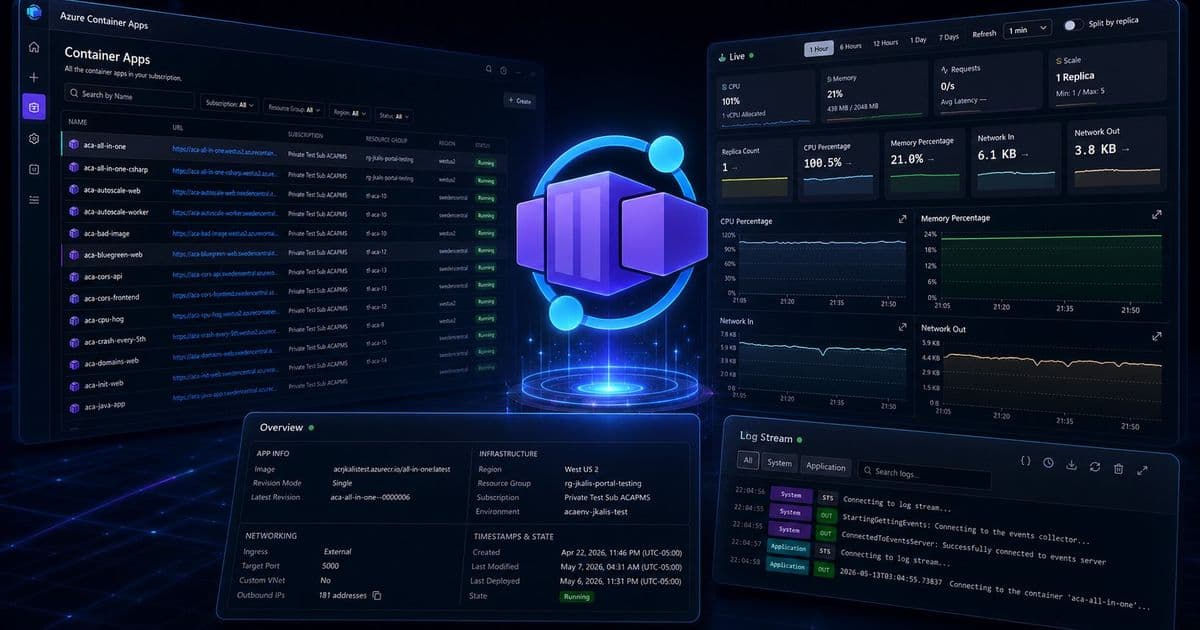
Microsoft launches Azure Container Apps Express, a simplified serverless container service that eliminates infrastructure decisions while maintaining production-ready defaults, targeting both developers and AI agent workloads with instant provisioning and sub-second cold starts.
Three years ago, a 15-second cold start was considered industry-leading for serverless container platforms. Today, developers and AI agents expect sub-second response times. This shift in expectations has created demand for more streamlined deployment options that eliminate unnecessary infrastructure decisions without sacrificing production capabilities.
Microsoft has responded with Azure Container Apps Express (ACA Express), now in Public Preview. This new offering represents a significant evolution from the original Azure Container Apps (ACA) service, designed specifically for workloads that need to go from container image to internet-reachable application in seconds rather than minutes.
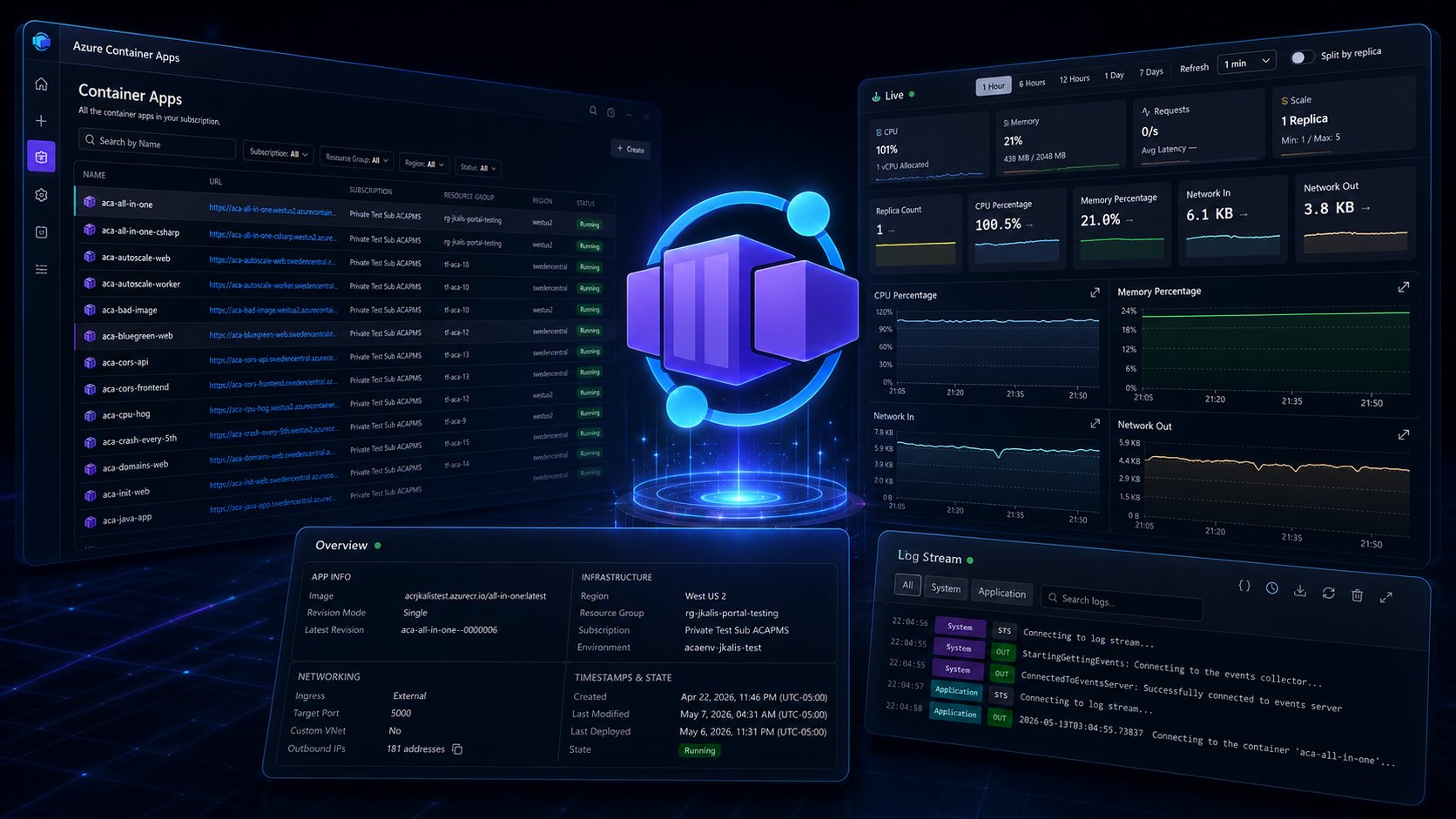
What Is Azure Container Apps Express?
ACA Express removes the traditional environment construct that has been a core part of Azure Container Apps since its inception. In the original ACA model, developers needed to provision an environment first, then configure networking, scaling rules, and other operational aspects. This added provisioning time, expanded configuration surface, and increased cognitive overhead.
Express simplifies this entire process by:
- Eliminating the need to provision environments
- Providing sensible defaults for ingress, secrets, environment variables, and observability
- Running containers on pre-provisioned capacity to skip environment setup
- Maintaining the serverless model with automatic scaling to and from zero
The result is a service that allows developers to focus purely on their application code while the platform handles all operational concerns behind the scenes. This approach particularly benefits two key audiences:
- Traditional developers building SaaS applications, APIs, web dashboards, or prototypes who want to ship fast without infrastructure planning
- AI agent platforms that need to deploy endpoints on demand, spin up tool-use APIs, and tear them down when work is complete
Provider Comparison: Express vs. Traditional ACA
The most significant difference between ACA Express and traditional Azure Container Apps lies in the abstraction of infrastructure decisions. While both services use the same underlying Kubelet and container runtime technology, Express provides a much higher level of abstraction.
| Feature | Azure Container Apps | Azure Container Apps Express |
|---|---|---|
| Environment Provisioning | Required | Eliminated |
| Initial Setup Time | Minutes | Seconds |
| Configuration Surface | Extensive | Minimal with sensible defaults |
| Scaling Control | Full manual control | Automatic (with full controls coming soon) |
| Cold Start Performance | 1-3 seconds | Sub-second |
| Ideal For | Complex microservice architectures | Simple APIs, agent endpoints, prototypes |
When compared to other major cloud providers' serverless container offerings, ACA Express positions itself as the fastest option for deployment and cold starts. AWS Fargate requires task definitions and VPC configuration, while Google Cloud Run, though simpler than Fargate, still requires more setup than Express.
The trade-off, at least initially, is reduced configuration flexibility. Express provides production-ready defaults but doesn't expose the full range of configuration options available in traditional ACA. Microsoft acknowledges this feature gap and has committed to rapid enhancement throughout the preview period, with plans to be close to feature-complete by Microsoft Build in June.
Business Impact and Use Cases
The introduction of Azure Container Apps Express addresses several pain points in modern application development:
For Developer Productivity:
- Reduced cognitive overhead allows developers to focus on application logic rather than infrastructure configuration
- Instant provisioning means faster feedback loops during development
- Sub-second cold starts enable more responsive user experiences
For AI Agent Workloads:
- Agent-first platforms can deploy endpoints on demand with minimal delay
- Every second saved in provisioning translates directly to improved agent productivity
- The ability to spin up and tear down endpoints efficiently supports cost-effective scaling
For Cost Optimization:
- Per-second billing ensures organizations only pay for actual compute time
- Automatic scaling to zero eliminates costs during idle periods
- Reduced operational overhead translates to lower management costs
Current Limitations and Roadmap
ACA Express is currently available only in the West Central US region, though Microsoft plans to expand to additional regions in the coming days. The service is deliberately shipped in early preview to gather feedback and iterate quickly.
According to Microsoft, the current feature list represents only a subset of what will eventually be available. Key capabilities on the roadmap include:
- Full scaling controls beyond automatic to/from zero scaling
- Expanded regional availability
- Additional networking options
- Enhanced observability features
The development team is building Express in the open, encouraging feedback through the Azure Container Apps GitHub repository and community forums.
Getting Started with ACA Express
For organizations looking to evaluate Express, Microsoft provides several entry points:
- Azure Container Apps Express overview - Documentation covering concepts, capabilities, and the current feature support matrix
- Azure CLI quickstart - Step-by-step instructions for deploying your first Express application
- Azure Container Apps Portal - Create and manage Express apps alongside existing Container Apps resources
The FAQ section addresses common questions about pricing, limits, regions, and the path to general availability. Microsoft emphasizes that they prefer to put valuable technology in developers' hands early and iterate based on feedback rather than waiting for perfection.
Strategic Implications
The launch of Azure Container Apps Express reflects Microsoft's recognition of evolving developer needs, particularly in the AI space. By simplifying the deployment process while maintaining production-ready capabilities, Microsoft is positioning itself to capture workloads that require both speed and reliability.
This offering also demonstrates a strategic shift toward more opinionated cloud services that make infrastructure decisions easier for developers. As organizations continue to accelerate cloud adoption, services like Express that reduce operational complexity while maintaining performance will likely see strong adoption.
For enterprises evaluating container orchestration options, Express provides an interesting middle ground between full Kubernetes control and simplified PaaS offerings. The sub-second cold starts and instant provisioning address specific performance requirements that are increasingly common in modern application architectures.
Comments
Please log in or register to join the discussion