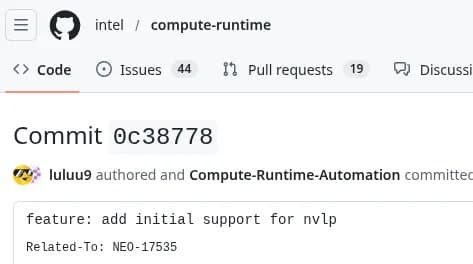
Intel's latest Compute Runtime release focuses on next-generation Xe3P hardware enablement, adds Nova Lake P support, and delivers performance optimizations for their GPU ecosystem.
Intel has released version 26.18.38308.1 of their open-source Compute Runtime, marking another significant step in their software support strategy for upcoming graphics hardware. This update, which follows the Intel Graphics Compiler 2.34.4 release from earlier in the week, demonstrates Intel's continued investment in software enablement for their next-generation Xe3P architecture. The release brings substantial improvements for developers and enthusiasts working with Intel's GPU ecosystem, particularly those looking to prepare for Nova Lake and Crescent Island AI accelerator hardware.
The Intel Compute Runtime serves as critical software infrastructure that provides OpenCL and Level Zero (oneAPI) support across Intel's integrated and discrete graphics products. This open-source implementation enables applications to leverage the computational power of Intel GPUs efficiently. With version 26.18.38308.1, Intel continues their commitment to open-source drivers while preparing for their upcoming hardware generations.

The most significant aspect of this release is the extensive Xe3P enablement work. Xe3P represents Intel's next-generation graphics architecture, set to power both Nova Lake integrated graphics and the Crescent Island AI accelerator. This Compute Runtime version includes a variety of features and fixes specifically targeting this architecture:
- Implementation of Xe3P-specific execution units and memory management
- Enhanced shader compilation pipeline for Xe3P architecture
- Improved hardware resource allocation algorithms
- Better error handling and reporting for Xe3P-specific operations
This enablement work is crucial as it allows developers to begin optimizing applications for upcoming hardware before it reaches market. The early availability of software support typically results in better driver quality at launch and gives application developers a head start in optimization.
A notable addition in this release is initial support for Nova Lake P, Intel's upcoming integrated graphics solution. Nova Lake represents a significant evolution from current Meteor Lake and Arrow Lake architectures, promising improved performance and efficiency for integrated graphics workloads.
The initial support in this Compute Runtime version includes:
- Basic hardware recognition and initialization
- Fundamental rendering pipeline support
- Memory management integration
- Power state management
While this is just the beginning of support, it indicates that Intel is on track with their development timeline for Nova Lake. Early software support typically means better stability and performance when the hardware eventually launches.
The Compute Runtime 26.18.38308.1 introduces several performance optimizations that will benefit current and future Intel GPU users:
Memory Pool Optimization:
- Reduced default pool size from 16MB to 2MB
- Implementation of a dynamic pool manager that can grow as needed
- This change significantly reduces memory overhead for applications with smaller workloads while maintaining flexibility for larger ones
IOH Alignment Improvements:
- Reduced IOH (Input/Output Hub) alignment for discrete GPUs
- This optimization improves memory access efficiency, particularly for discrete GPU workloads
- The reduced alignment overhead translates to better performance in memory-intensive applications
Additional Optimizations:
- Improved scheduling algorithms for GPU compute tasks
- Enhanced context switching efficiency
- Better handling of multi-GPU configurations
These optimizations collectively improve the performance of Intel GPUs across various workloads, from gaming to professional applications and AI inference.
Beyond Xe3P enablement and performance optimizations, this release includes several other significant improvements:
Code Cleanup:
- Removal of deprecated DG1 device code
- Streamlined driver codebase for better maintainability
- Reduced binary size through code elimination
Enhanced Feature Support:
- Added support for sRGB images in Level Zero API
- Support for importing physical memory, enabling better integration with specialized applications
- Support for printf() in indirect functions, improving debugging capabilities
Developer Experience:
- Extension interface for reading current usable memory
- Fixes for GCC 16 compiler build issues
- Improved error reporting and diagnostics
Official Branding:
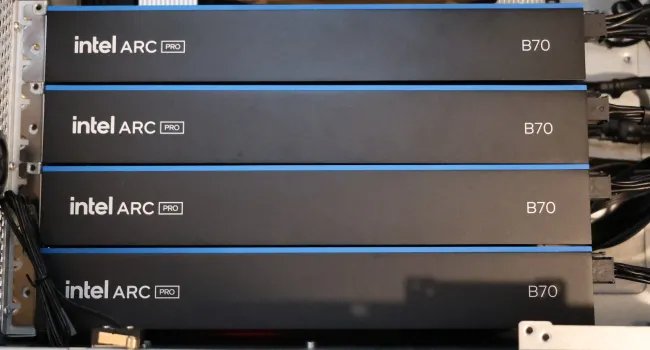
- Official branding now implemented for Arc Pro B65 and Arc Pro B70 graphics hardware
- This consistency in branding helps with product identification and marketing
For users looking to leverage the improvements in this Compute Runtime release:
Development Environments:
- Install the latest version for Xe3P development work
- Use with compatible Intel Graphics Compiler (2.34.4 or newer)
- Test applications with the new memory pool behavior for optimal performance
Current Hardware Users:
- Arc A-series users will benefit from IOH alignment improvements
- Users of integrated graphics will see performance gains from general optimizations
- Developers working with sRGB content can leverage new Level Zero features
Future Preparation:
- Begin testing applications with Nova Lake P support where possible
- Prepare for Crescent Island AI accelerator integration
- Update build environments to address GCC 16 compatibility
Intel Compute Runtime 26.18.38308.1 represents a significant step forward in software support for Intel's GPU ecosystem. The extensive Xe3P enablement work demonstrates Intel's commitment to their next-generation architecture, while the Nova Lake P support shows progress on their upcoming integrated graphics solution. The performance optimizations, particularly the memory pool changes and IOH alignment improvements, will benefit current users and prepare the ecosystem for future hardware.
As Intel continues to invest in their software stack, users can expect better performance, improved compatibility, and enhanced features across their product lines. This release, along with the companion Intel Graphics Compiler update, positions Intel well for the upcoming hardware launches in the latter half of 2026.
The open-source nature of the Compute Runtime allows the community to contribute to and benefit from these improvements, fostering a collaborative development environment that ultimately benefits end users through better driver quality and performance.
Relevant resources:
- Intel Compute Runtime on GitHub: https://github.com/intel/compute-runtime
- Intel Graphics Compiler: https://github.com/intel/intel-graphics-compiler
- Intel oneAPI documentation: https://www.intel.com/content/www/us/en/developer/tools/oneapi/overview.html
Comments
Please log in or register to join the discussion