
Microsoft's Azure Virtual Desktop now offers regional host pools in public preview, replacing the legacy geographical model to eliminate cross-region dependencies and enhance resiliency—a critical shift for enterprises managing distributed workforces.
Microsoft has fundamentally redesigned Azure Virtual Desktop's (AVD) infrastructure architecture with the introduction of regional host pools, now in public preview. This architectural pivot addresses critical limitations in AVD's original geographical model and delivers tangible improvements in resiliency and data sovereignty—key considerations for enterprises operating in multi-cloud environments.
The Problem with Geographical Host Pools
Previously, AVD stored metadata in geographical databases spanning multiple Azure regions within a geography (e.g., "Europe"). While these databases included intra-region replicas and cross-region failover to paired regions, they created a single point of failure: an outage in the region hosting the database could disrupt host pools across unrelated regions within the same geography. This design introduced unnecessary risk for organizations requiring high availability across distributed locations.
How Regional Host Pools Work
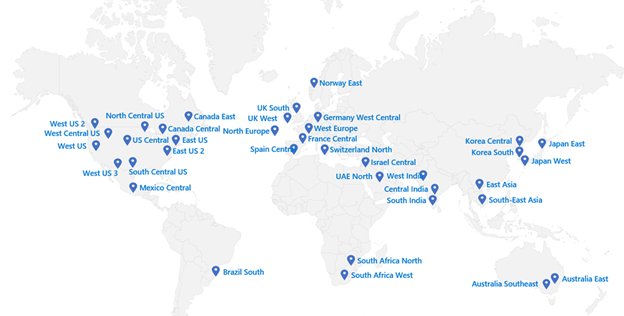
Regional host pools deploy dedicated AVD infrastructure and metadata databases in every supported Azure region (eventually ~40 regions). This eliminates cross-region dependencies:
- Metadata now resides exclusively in the user-selected Azure region.
- Failover remains robust with local replicas across availability zones and replication to a paired region (typically within the same geography).
- No functional differences exist between regional and geographical host pools beyond the underlying infrastructure.
Strategic Advantages
- Enhanced Resiliency: Incidents are contained within a single region. If East US 2 fails, Central US remains unaffected—unlike the geographical model where both could be compromised by a database issue in a third region.
- Data Sovereignty Compliance: Metadata stays within designated regions, easing adherence to regulations like GDPR or country-specific data residency laws.
- Reduced Operational Risk: Decoupling regions minimizes blast radius during outages, directly improving business continuity.
Migration Imperatives
Microsoft will sunset geographical host pools in phases:
- New geographical host pools will eventually be blocked (date TBD).
- Existing geographical infrastructure will be fully retired later.
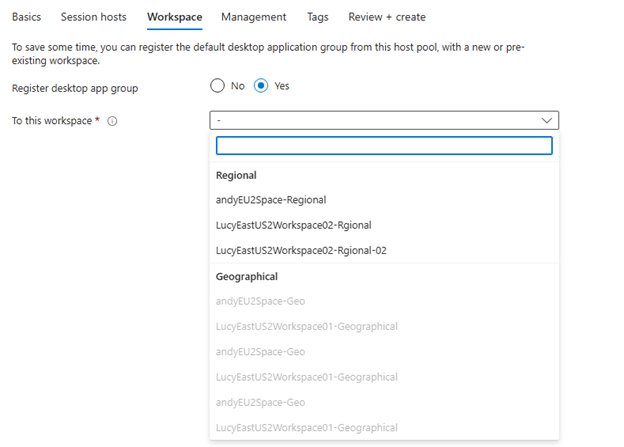
Action required: Deploy new host pools as regional (available in East US 2 and Central US during preview). Begin planning migration for existing geographical pools—Microsoft will provide tools, but manual reconfiguration is also an option. Incompatibilities exist between regional and geographical objects (e.g., a regional application group can't join a geographical workspace).
Implementation Guide (Public Preview)
- Enable Preview Feature:
- PowerShell:
Register-AzProviderFeature -ProviderNamespace Microsoft.DesktopVirtualization -FeatureName AVDRegionalResourcesPublicPreview - Azure Portal: Enable under Subscriptions > Preview Features
- PowerShell:
- Create Regional Host Pools:
- Use Az.DesktopVirtualization module v5.4.5-preview+
- Add
-DeploymentScope Regionalto PowerShell commands (e.g.,New-AzWvdHostPool -DeploymentScope Regional) - In Azure Portal, select "Regional" in the "Deployment Scope" dropdown (visible only in supported regions)
{{IMAGE:5}}
Current Limitations
- No support for automated host pools, Private Link, dynamic autoscaling, or App Attach
- Log Analytics integration for regional session hosts lacks error reporting
- Portal support lags behind PowerShell during preview
Strategic Recommendation
Adopt regional host pools immediately for new deployments. The architectural shift reduces systemic risk and aligns with modern cloud resilience patterns. For organizations with strict compliance needs, this update transforms AVD into a viable solution for regionally segmented workloads. Monitor Microsoft's Azure Virtual Desktop Tech Community for region expansion timelines beyond East US 2 and Central US.
Key Takeaway: Regional host pools represent Azure's commitment to infrastructure modernization. While AWS WorkSpaces and Google Cloud's Virtual Desktops offer zone-level resiliency, Microsoft now provides region-level fault isolation—a strategic differentiator for global enterprises.
Comments
Please log in or register to join the discussion