Bangladesh's national election marks a potential turning point after 17 years of flawed democracy, with the BNP's victory offering hope for reform but facing significant economic and governance hurdles.
Bangladesh has taken a significant step toward democratic renewal with its national election on February 12, 2026, ending 17 years of flawed electoral processes and offering a potential reset for the nation's political and economic trajectory.
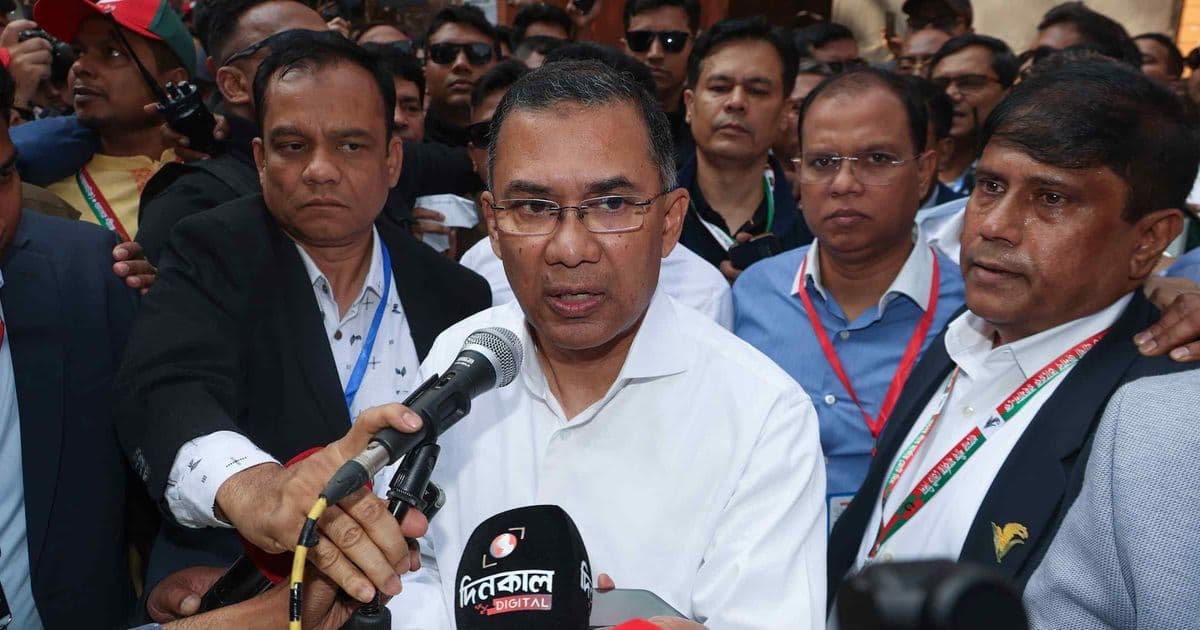
The election, which saw the Bangladesh Nationalist Party (BNP) led by Tarique Rahman secure a sweeping victory, represents more than just a change in leadership. It marks an attempt to restore the fundamental contract between the state and its citizens after years of democratic erosion under Sheikh Hasina's Awami League government.
The Context of Change
For nearly two decades, Bangladesh's electoral process was marred by allegations of vote rigging and limited opposition participation. The 2014, 2018, and 2024 elections were particularly criticized for their lack of credibility. This political dysfunction culminated in the ouster of Hasina through a student-led uprising, leading to an interim government headed by Nobel laureate Mohammad Yunus.
The BNP's victory is significant not only for its political implications but also for what it represents to a population weary of authoritarian rule. The party, positioning itself as a liberal, centrist alternative, defeated Jamaat-e-Islami, a right-wing conservative party with controversial historical associations.
Economic Achievements and Costs
Hasina's long tenure, despite its democratic shortcomings, delivered notable economic progress. GDP growth peaked above 8% in 2019, and by 2021, per capita income reached $2,227, briefly surpassing India's figures. This economic expansion was driven primarily by the ready-made garment sector, which also contributed to increased female labor participation (reaching 36.3% by 2017) and significant reduction in the gender pay gap.
However, these economic gains came at a steep price. The country experienced widespread human rights violations, restricted press freedom, and systematic harassment of opposition figures. Most notably, former Prime Minister Khaleda Zia, Rahman's mother, died while imprisoned after prolonged illness. The period also saw thousands of activists jailed, disappeared, or found dead, alongside industrial-scale corruption with an estimated $234 billion siphoned from the country.
The Youth Factor
The election held particular significance for Bangladesh's young voters, who comprise approximately 25% of the electorate. For many under 30, this represented their first opportunity to vote in a credible election. Free from inherited party loyalties, this generation prioritizes jobs, digital freedom, and genuine accountability.
A landmark referendum on the "July Charter," a package of political reforms initiated by the interim government, was on track to pass, adding pressure on the incoming administration to deliver on promised changes.
Economic Challenges Ahead
Despite Bangladesh's underlying economic strengths, the new government faces immediate and structural challenges:
Inflation and Banking Sector: Double-digit inflation requires urgent attention, while the banking sector struggles with nonperforming loans exceeding 35%.
Youth Unemployment: With youth unemployment twice the national average, job creation and skills training must become immediate priorities. The student uprising that helped oust Hasina was fundamentally about employment opportunities.
Merit-Based Reforms: While announced, merit-based hiring reforms in government positions remain unfulfilled, representing a critical area for institutional strengthening.
Export Diversification: While remittances and garment exports provide economic stability, structural weaknesses prevent long-term investment. A credible diversification strategy focused on productivity is urgently needed.
Geopolitical Balancing Act
Bangladesh's strategic location and large population (exceeding the combined populations of Thailand, Malaysia, Myanmar, and Cambodia) give it outsized regional importance. The new government must navigate complex relationships with major powers:
India Relations: While India enjoyed close ties with Hasina's government, relations have cooled since her ouster. The new administration will need to rebuild this crucial relationship while maintaining independence.
China Partnership: China remains vital as Bangladesh's second-largest source of military equipment and infrastructure partner. Recent agreements include Chinese financing for infrastructure projects and military cooperation.
United States Engagement: A new U.S. trade deal signed February 9, 2026, has significantly reduced tariffs on Bangladeshi exports and includes substantial commercial agreements, including aircraft purchases and agricultural trade.
The Path Forward
The election represents a critical juncture for Bangladesh. After years of concentrated power and weakened institutions, the country faces the challenge of building a functional democracy that delivers both governance and economic prosperity.
Tarique Rahman, likely to become the next prime minister, faces the formidable task of rebuilding state institutions hollowed out by authoritarian rule, addressing systemic corruption, and delivering on the economic promises that fueled the opposition's victory.
While a single election cannot resolve deep-seated political and economic fractures, it offers Bangladesh an opportunity to reclaim democratic legitimacy and economic stability. The success of this transition will determine whether the country can break free from cycles of political instability and economic uncertainty that have characterized recent decades.
The international community will be watching closely as Bangladesh attempts this democratic renewal, recognizing that the country's stability and prosperity have implications far beyond its borders in an increasingly interconnected South Asian region.
Comments
Please log in or register to join the discussion