A deep dive into the fascinating world of Eastern Bloc electric guitars, focusing on how Soviet-era instruments like the Tonika and Jolana Special shaped Azerbaijani music and continue to influence musicians today.
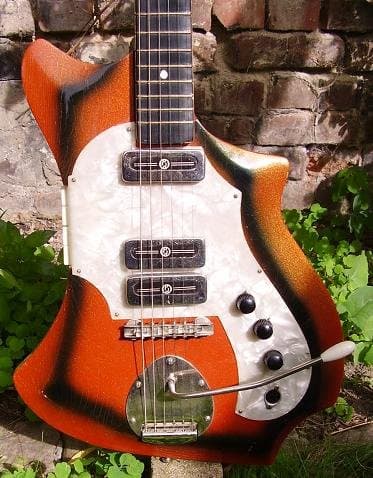
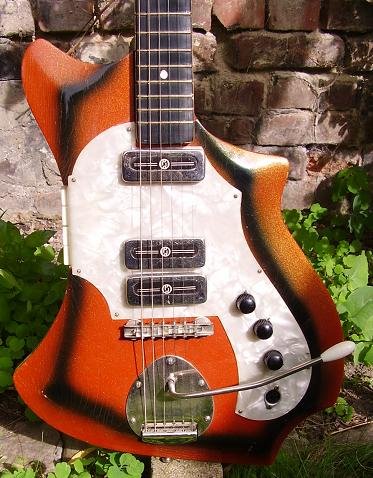
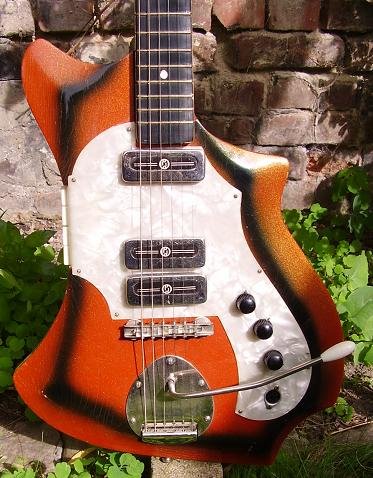
During my first trip to Eastern Europe, I found an "Orpheus" electric guitar leaning against a wall in the basement of a music shop in Plovdiv, Bulgaria. Half of its parts were missing and dust was gathering on its sparkly-orange plywood body. I bought it for the equivalent of $20 and carried it around in two pieces in my bag for the rest of my trip. Ever since, I've been obsessed with discovering, collecting, and playing electric guitars from the Eastern Bloc.
This fascination with Soviet-era instruments isn't just about collecting vintage gear—it's about understanding how political and economic systems shaped musical expression in unexpected ways. The story of guitars in the USSR is particularly revealing, as it demonstrates how central planning and isolation from Western markets created a unique musical ecosystem.
The Soviet Guitar Paradox
Most noticeably, the shape of the guitar is unlike any other in the world. This wasn't an accident or the result of a particularly creative guitar designer. The alien shape of this guitar was a result of the direction and specifications of Central Planning. Because this was the first model of electric guitar to ever be made in the USSR, it could not appear to be a copy of a American Strat or Gibson. It had to be a distinctly Soviet production.
The direction given to those in charge of the production of the first Leningrad Tonikas must have been something like "I don't care what it looks like, I just don't want to recognize it." The resulting guitar was indeed something "Soviet." It was unreasonably heavy and made of cheap wood, with a neck like a carved baseball bat. The guitars were nearly impossible to play, with frets that could cut your hand and intonation that created sounds half and whole steps away from the intended tone.
And, just for the sake of contradiction inherent in just about anything produced in the USSR, the guitars had fairly complex and often very well made pickups. It was like filming something in high definition that you didn't want to see up-close.
The Czechoslovakian Solution
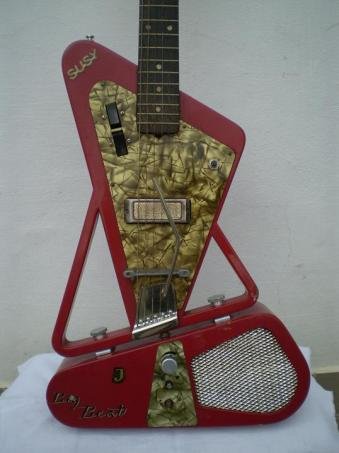
Luckily for musicians in Leningrad, the guitar makers in Czechoslovakia were doing a fine job of making decent, playable guitars which quickly became the choice of musicians throughout the Soviet Union. This site has a long list of most of the guitars made in Czechoslovakia, including some really strange ones: Jolana Big Beat, complete with short wave radio.
Czechoslovakia's position as a more open satellite state allowed for better manufacturing techniques and access to Western design influences, even if indirectly. The Jolana brand became particularly significant in the Eastern Bloc music scene, producing instruments that were actually playable and reliable.
Azerbaijani Virtuosos and the Jolana Special
While doing some research on Azerbaijani music, I found a couple of really incredible guitarists playing what seemed like a "modern" take on traditional Azeri music. My personal favorite was Remish. I couldn't find much information in English or that was comprehensible when translated from Azerbaijani, just that he had attended a musical school and was a famous musician still living in Azerbaijan.
Remish's performance style is particularly fascinating because it bridges traditional Azerbaijani musical forms with Western rock instrumentation. Throughout his performances, he does amazing things with trills and mimics vocal ornamentation by using bends with the left hand along with bends with the whammy bar. He is also using some heavy analog delay and overdrive.
What's particularly interesting is his pick grip, which is identical to that of a tar player. This leads me to believe that he studied this traditional instrument as well, demonstrating how Azerbaijani musicians integrated their cultural heritage with new technologies.
The Jolana Special's Dominance
Take a good look at his guitar in the video below: This is the Jolana special—it seems that every famous Azeri guitarist uses this Czechoslovakian model. This kind of virtuosic performance would have been impossible using a Tonika or Orpheus guitar.
Even though western guitars, Strats and Les Pauls, are now available in all of the Caucasus, the Jolana special continues to be the favored model. I've found a few schematics of the Jolana Tornado, essentially the same guitar with a few minor changes:
{{IMAGE:3}}
And just in case you had any doubts as to the popularity of the Jolana with Azerbaijani guitarists, I also found this picture of a Jolana with the colors of the national flag painted over the red finish. This guitar is everywhere.
The Cultural Significance
The persistence of the Jolana Special in Azerbaijani music speaks to something deeper than mere availability or cost. These guitars became embedded in the cultural identity of a generation of musicians who came of age during the late Soviet period and the early years of independence.
For these musicians, the Jolana wasn't just an instrument—it was a tool that allowed them to express both their connection to traditional Azerbaijani music and their engagement with global rock and pop culture. The guitar's unique characteristics, including its pickups and tremolo system, lent themselves particularly well to the microtonal inflections and complex rhythmic patterns of Azerbaijani music.
A Living Legacy
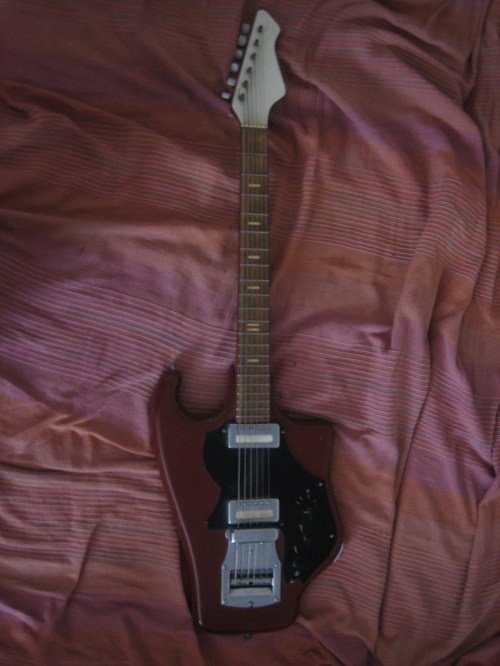
I've had the opportunity to travel around the Caucasus making field recordings as a member of the Sayat Nova Project. While visiting the city of Quba in north-eastern Azerbaijan I was finally able to get my hands on a Jolana Tornado! Here are a few pictures:
The story of Soviet-era guitars and their role in Azerbaijani music is a reminder that technological limitations and political constraints often lead to creative innovations. The strange shapes, questionable materials, and sometimes bizarre features of these instruments forced musicians to develop unique playing techniques and musical approaches.
Today, as vintage Eastern Bloc guitars gain recognition among collectors and musicians worldwide, the legacy of instruments like the Jolana Special continues to resonate. They represent not just a bygone era of manufacturing, but a unique chapter in the global history of popular music—one where Central Planning, cultural tradition, and musical innovation intersected in unexpected and fascinating ways.
The next time you hear an Azerbaijani guitarist producing sounds that seem to bridge centuries of musical tradition, remember that their instrument might have been designed by committee in a Soviet factory, but it's being played with the passion and creativity of a musician who helped create something entirely new from the materials at hand.
Comments
Please log in or register to join the discussion