The sixth annual Interop initiative brings together Apple, Google, Igalia, Microsoft, and Mozilla to tackle cross-browser compatibility challenges, with Cross-document View Transitions and WebAssembly Promise Integration as headline features for 2026.
The web platform's fragmentation has long been a thorn in developers' sides, but the Interop initiative continues to make significant strides toward standardization. Now in its sixth year, Interop 2026 unites Apple, Google, Igalia, Microsoft, and Mozilla in a collaborative effort to ensure a targeted set of web platform features reach cross-browser parity by year's end.
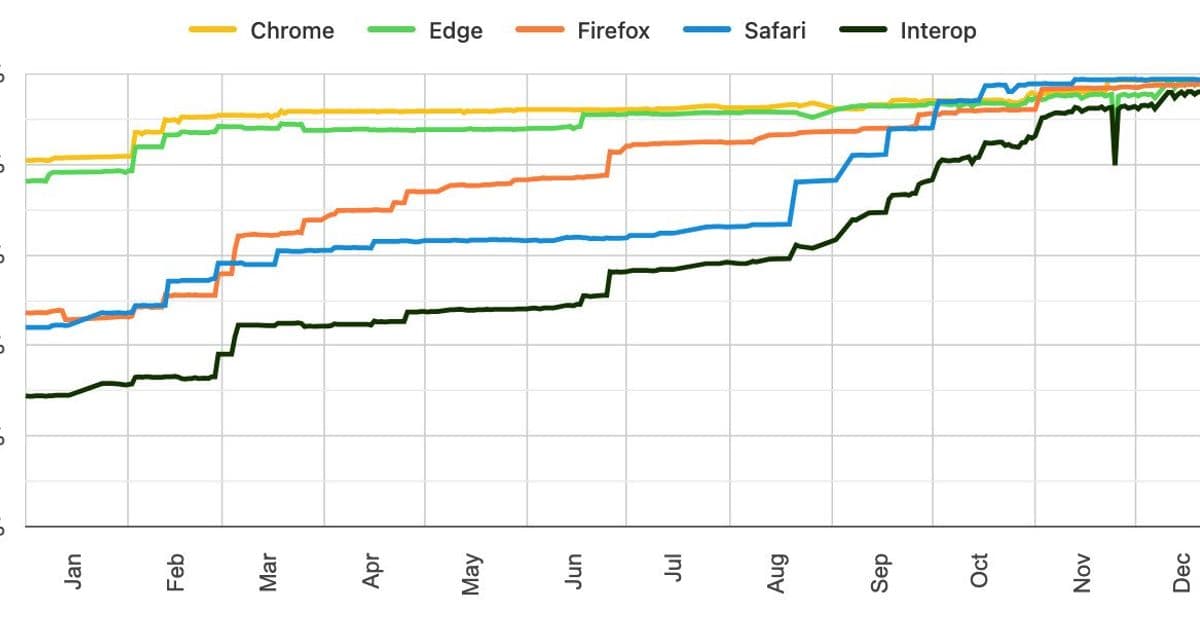
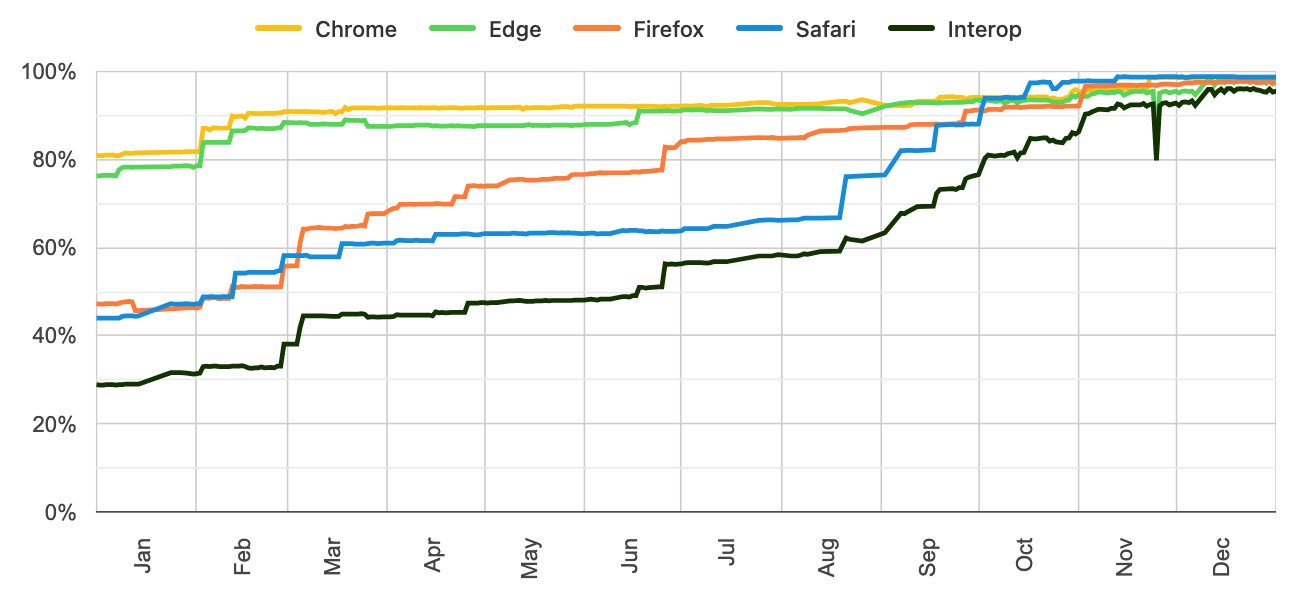
What started as Compat 2021 has evolved into one of the most successful cross-industry collaborations in web standards history. The annual dashboards tell a compelling story of progress: 2021, 2022, 2023, 2024, 2025, and now 2026. Each year, browser vendors race toward a 95%+ compatibility score, and the results speak for themselves.
Cross-document View Transitions: The SPA Killer Feature
The headline feature for 2026 is Cross-document View Transitions, building on the successful 2025 target of Same-Document View Transitions. This feature promises to deliver single-page application-style transitions between pages without requiring any JavaScript.
Currently, view transitions work only within a single document—useful for tabbed interfaces or content swaps within a page. The 2026 expansion allows these smooth, animated transitions to work when navigating between different pages entirely. Imagine clicking a link and watching the content gracefully morph and transition to the new page's content, all handled natively by the browser.
This represents a fundamental shift in how we think about web navigation. For years, developers have been forced to choose between the SEO benefits and accessibility of traditional multi-page applications versus the slick user experience of SPAs. Cross-document View Transitions effectively eliminate that trade-off, allowing traditional websites to offer SPA-like experiences with none of the complexity.
The implementation is remarkably straightforward. Developers can use the existing view-transition API with minimal changes to their markup. The browser handles the heavy lifting of capturing the current page state, loading the new page, and orchestrating the transition—all while maintaining accessibility and progressive enhancement.
WebAssembly Promise Integration: Simplifying Language Compilation
For WebAssembly enthusiasts, the 2026 initiative includes a feature that addresses a long-standing pain point: JavaScript Promise Integration for Wasm. This allows WebAssembly modules to asynchronously 'suspend' while waiting on the result of an external promise.
The significance here can't be overstated. Languages like C and C++ traditionally expect APIs to run synchronously. When compiling these languages to WebAssembly, developers have had to work around JavaScript's asynchronous nature through complex patterns and manual state management.
With Promise Integration, WebAssembly can now natively await JavaScript promises, simplifying the compilation process dramatically. This means cleaner bindings for existing C/C++ libraries, easier integration with browser APIs, and ultimately better performance and developer experience.
The technical implementation involves extending the WebAssembly specification to include suspend/resume semantics that interoperate seamlessly with JavaScript's event loop. This isn't just a convenience feature—it's a fundamental enhancement to how WebAssembly modules can interact with the broader web platform.
The Interop Methodology
What makes Interop successful isn't just the features it tackles, but how it approaches the work. Each year, the participating vendors collaborate on selecting focus areas based on developer feedback, usage data, and strategic importance. They then establish clear metrics and scoring systems, tracked publicly through the Web Platform Tests dashboard.
The competitive yet collaborative nature of the initiative drives rapid progress. Browser vendors can see each other's scores in real-time, creating a friendly race toward the 95% target. This transparency ensures accountability and maintains momentum throughout the year.
Beyond the headline features, Interop 2026 addresses numerous other pain points: CSS containment improvements, better form control styling, enhanced animation performance, and more predictable layout behavior across engines.
Why This Matters
The web's strength has always been its universality—the idea that anyone can publish content that anyone else can access, regardless of their choice of browser or device. Fragmentation threatens this core promise.
Interop represents a pragmatic approach to standardization. Rather than waiting for slow-moving standards bodies to reach consensus on every detail, browser vendors identify the most pressing compatibility issues and work together to solve them. The results are measurable, the progress is visible, and developers benefit almost immediately.
As we move through 2026, the impact of these initiatives will become increasingly apparent in the tools and frameworks developers use daily. The gap between what's possible with cutting-edge JavaScript frameworks and what's achievable with vanilla web technologies continues to narrow—and that's good news for everyone who builds for the web.
For developers eager to track progress or contribute, the Web Platform Tests dashboard provides real-time visibility into each vendor's progress. The initiative also welcomes community input on which features should be prioritized in future years, ensuring that Interop remains responsive to actual developer needs rather than theoretical concerns.
Comments
Please log in or register to join the discussion