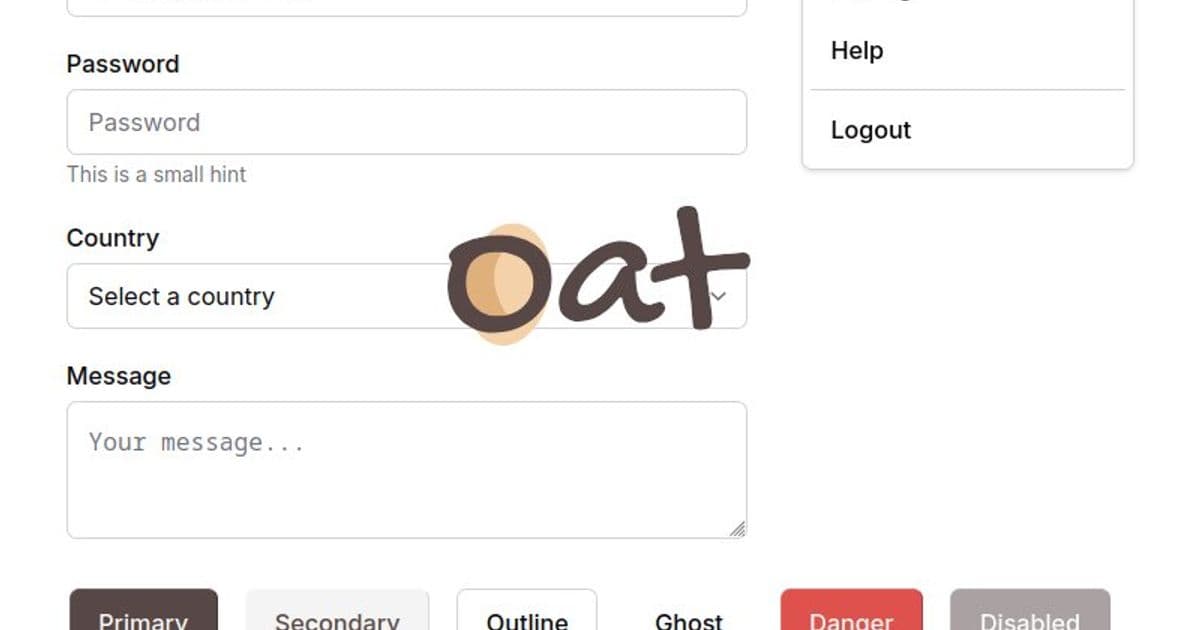
Oat delivers a complete UI component library in just 8KB total, using semantic HTML and native browser features instead of bloated frameworks and class-heavy markup.
The web development world has become increasingly complex, with modern UI frameworks often requiring extensive build setups, massive dependency trees, and significant learning curves. Enter Oat, an ultra-lightweight HTML + CSS UI component library that takes a radically different approach: zero dependencies, semantic HTML, and a total footprint of just 8KB minified and gzipped.
The Philosophy Behind Oat
Oat was born from frustration with the current state of UI libraries. The creator describes it as a response to "the over-engineered bloat, complexity, and dependency-hell of pretty much every Javascript UI library and framework out there." This isn't just another component library—it's a deliberate rejection of the Node.js ecosystem's complexity.
The core philosophy is simple: use semantic HTML and ARIA roles throughout, style native elements directly, and avoid class-based styling entirely. This approach forces best practices while reducing markup pollution. Instead of adding classes to every element, Oat styles elements like <button>, <input>, <dialog> and semantic attributes like role="button" directly.
What Makes Oat Different
Zero Dependencies
Unlike virtually every modern UI library, Oat has no dependencies on JavaScript or CSS frameworks. There's no Node.js ecosystem garbage, no build tools required, and no dependency management headaches. You simply include the tiny CSS and JS files, and you're ready to build.
Semantic-First Approach
Oat embraces semantic HTML as a first-class citizen. Native elements are styled contextually out of the box, and semantic attributes are used (and often required) throughout. This isn't just about clean code—it's about accessibility and maintainability. By forcing semantic markup, Oat ensures that applications built with it are inherently more accessible and SEO-friendly.
Minimal Footprint
At just 6KB for CSS and 2.2KB for JavaScript (minified + gzipped), Oat is remarkably small. This isn't achieved through feature-stripping but through intelligent use of native browser capabilities and CSS custom properties. The entire library is fully standalone, requiring no external dependencies whatsoever.
Built-in Theming
Customization is straightforward with Oat. The library uses CSS custom properties for theming, allowing you to override a handful of variables to change the overall look. A data-theme="dark" attribute on the body element automatically applies the bundled dark theme, demonstrating how simple theming can be without complex configuration systems.
Features and Components
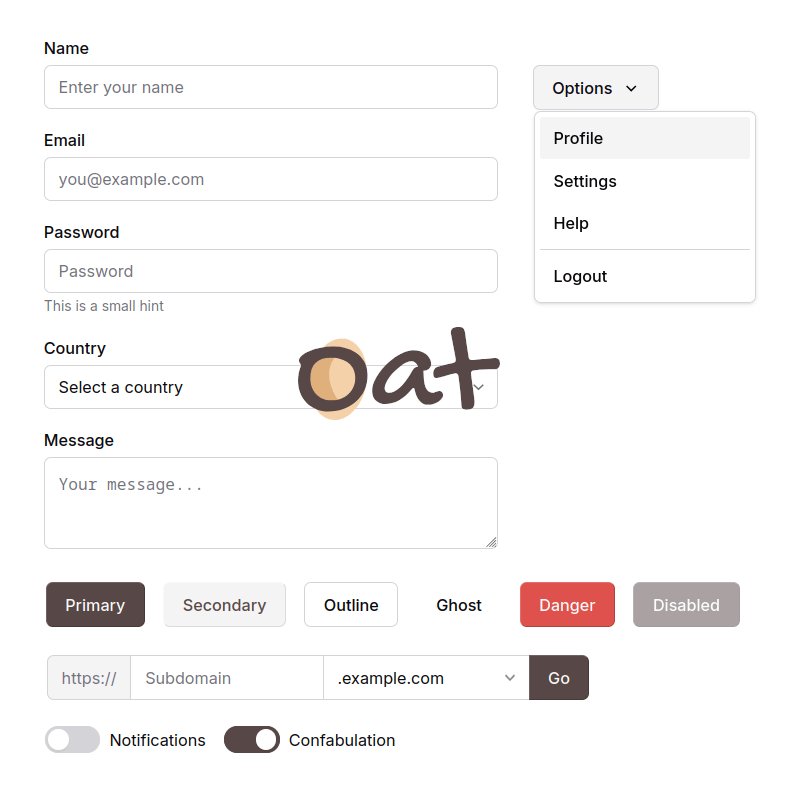
Oat includes most commonly needed components and elements, all styled using the semantic approach. The library provides proper keyboard navigation support for all components, ensuring accessibility isn't an afterthought.
Some components are implemented as Web Components, using minimal JavaScript to add dynamic behavior where needed. This hybrid approach—using native semantic HTML for static styling and lightweight Web Components for dynamic functionality—keeps the library both powerful and minimal.
The aesthetic is influenced by the popular shadcn/ui design system, offering a modern, clean look without the complexity of a full framework.
Who Is Oat For?
Oat is ideal for developers who:
- Want to avoid the complexity of modern JavaScript frameworks
- Prefer semantic HTML and accessibility-first development
- Need a simple, maintainable UI solution for long-term projects
- Are frustrated with dependency management and build tool complexity
- Want to ship minimal, fast-loading web applications
It's particularly well-suited for smaller projects, prototypes, or as a lightweight alternative to heavier frameworks in larger applications where you only need basic UI components.
The Long-Term Vision
The creator's goal is clear: "a simple, minimal, vanilla, standards-based UI library that I can use in my own projects for the long term without having to worry about Javascript ecosystem trash." This focus on longevity and simplicity over feature creep is refreshing in an industry obsessed with constant change and complexity.
By building on web standards rather than framework abstractions, Oat aims to be a stable foundation that won't become obsolete when the next big framework emerges. It's CSS and JavaScript that will work today, tomorrow, and for years to come without requiring updates to keep up with framework churn.
Getting Started
Using Oat is straightforward. Simply include the CSS and JavaScript files in your HTML, and start building with semantic HTML. The library's documentation provides examples of how to use each component, though the semantic approach means many elements work intuitively without additional classes or configuration.
For developers who have experienced "Node.js ecosystem trauma" or simply want a simpler way to build web interfaces, Oat offers a compelling alternative that prioritizes simplicity, standards, and long-term maintainability over feature lists and framework complexity.
Comments
Please log in or register to join the discussion