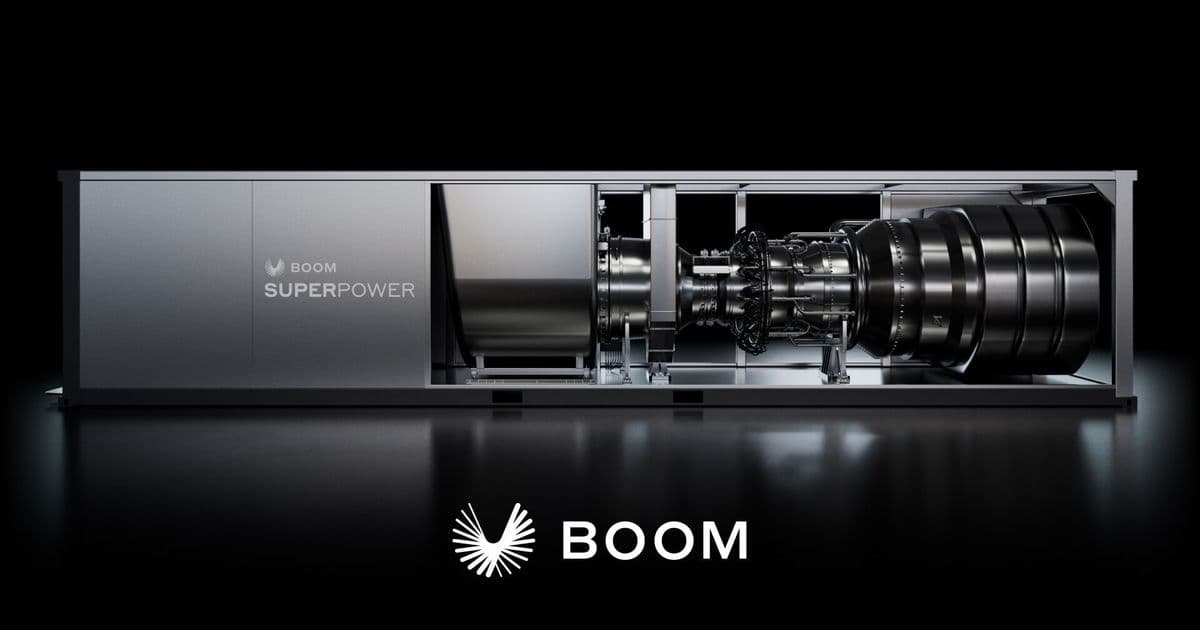
Boom Supersonic’s new Superpower turbine combines supersonic engine technology with a compact, high‑efficiency design to deliver 42 MW of clean power for AI data centers. With a 14‑day deployment window and hot‑temperature resilience, the unit promises to address the growing power bottleneck that hampers hyperscaler growth.
The Power Problem Behind AI’s Growth
Hyperscalers are racing to add GPUs and accelerators, but the electricity that powers those chips is catching up. Traditional utility feed and large‑scale power plants often lag behind the rapid deployment cycles of AI workloads, forcing operators to seek on‑site generation that is both fast and efficient.
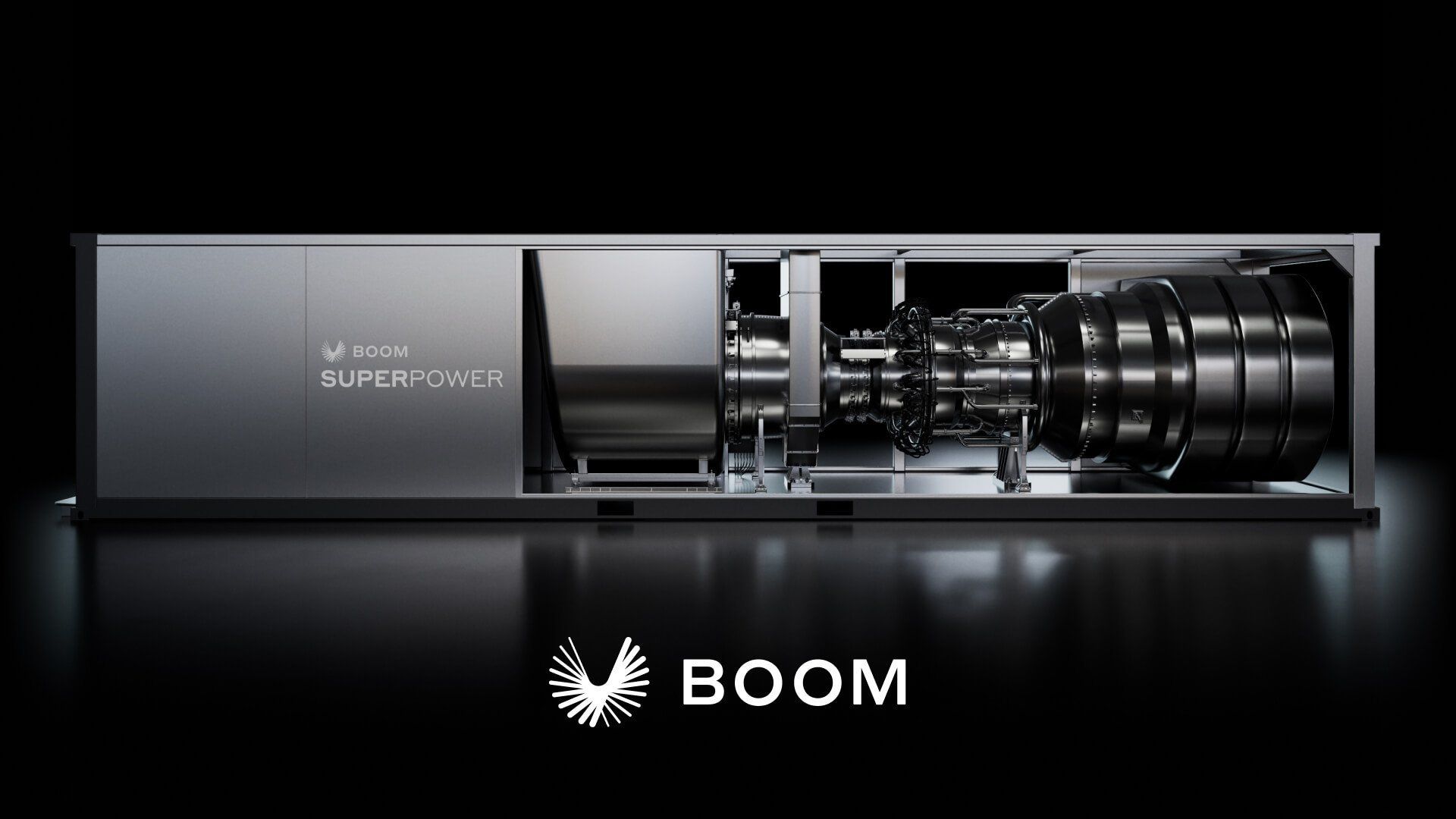
Boom Supersonic’s Superpower turbine tackles this mismatch head‑on. By re‑engineering the core of its Symphony supersonic jet engine for stationary use, the company delivers a 42 MW natural‑gas turbine that fits into a 40‑foot ISO shipping container and can be online in just 14 days.
Design Meets Deployment
- Compact Footprint – 42 MW of ISO‑rated power in a container‑sized package.
- Fast Turn‑around – 14‑day installation and commissioning.
- Hot‑Temperature Resilience – Maintains full output above 110 °F without water cooling, a critical advantage for data centers in arid regions.
- Digital‑First Control – Out‑of‑the‑box cloud connectivity, programmatic control, real‑time telemetry, and predictive maintenance.
The turbine runs in a simple‑cycle configuration by default but can be integrated into a combined‑cycle plant for higher overall efficiency.
Powering AI, Accelerating Supersonic Flight
Boom’s strategy is two‑fold:
- Solve a real power problem for hyperscalers and large industrial users.
- Accelerate the Symphony engine by adding operating hours and shared hardware improvements.
Every Superpower unit shares roughly 80 % of its hardware with Symphony, the engine that will power the company’s Overture supersonic airliner. The ground‑based turbines therefore act as a high‑volume testbed, shortening the learning curve for the jet engine and speeding the path to commercial supersonic flight.
Market Impact
Crusoe, an energy‑first AI infrastructure leader, has ordered 29 units—1.21 GW of new capacity—set to go live in 2027. Boom plans to ramp production to over 4 GW annually by 2030, adding roughly 10 % to the mid‑size turbine market and expanding options for large‑scale, behind‑the‑meter generation.
For hyperscalers, the combination of high power, rapid deployment, and tight integration with software‑centric energy management systems means fewer units are needed to meet peak demand, especially in hot climates where traditional turbines falter.
A Look Inside the Turbine
• 42 MW power output
• 39 % overall efficiency (simple‑cycle)
• Dual‑fuel capability (natural gas primary, diesel backup)
• 14‑day installation
• Digital telemetry and predictive maintenance
The Bigger Picture
As AI workloads continue to grow, the need for reliable, high‑density power will only intensify. Superpower’s design—compact, efficient, and digitally integrated—positions it as a key enabler for the next wave of data‑center expansion. At the same time, the technology transfer to the Overture program illustrates a rare synergy between commercial power generation and aerospace innovation.
Final Thoughts
Boom Supersonic’s Superpower turbine exemplifies how cross‑industry technology can solve pressing infrastructure challenges. By marrying supersonic engine expertise with the demands of AI compute, the company offers a scalable, resilient power solution that could become a staple in the hyperscaler toolkit—and a stepping stone toward the skies.
Source: Boom Supersonic, https://boomsupersonic.com/superpower
Comments
Please log in or register to join the discussion