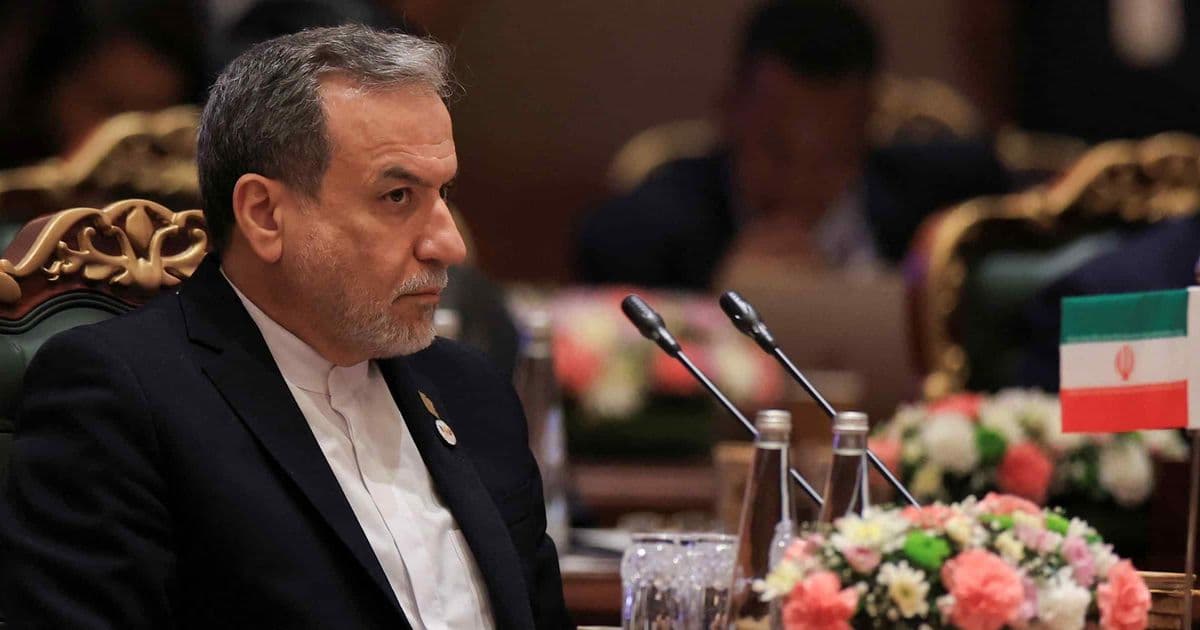
The BRICS foreign ministers' meeting ended without a consensus statement, highlighting divergent positions on the Iran‑UAE conflict. The split underscores growing strategic rifts within the bloc and may affect coordinated economic initiatives, trade flows, and future diplomatic outreach, especially as India balances its chairmanship with regional security concerns.
BRICS foreign ministers finish in New Delhi without a joint statement
India hosted the BRICS foreign ministers’ gathering on May 14‑15, 2026, under its rotating chairmanship. The summit concluded without a collective communiqué, a rare outcome for the bloc. New Delhi cited “differing views among some members” over the escalating tensions in the Middle East, specifically Iran’s accusation that the United Arab Emirates was complicit in recent U.S.–Israeli strikes against Iranian targets.
Market context and the stakes for the bloc
Trade exposure: BRICS nations account for roughly $4.2 trillion in bilateral trade annually, with India, Russia, and China together handling more than 60 % of intra‑bloc commerce. A failure to align on geopolitical issues can disrupt supply‑chain coordination, especially in energy and commodities.
Currency cooperation: The group has been piloting a BRICS Reserve Currency to reduce reliance on the U.S. dollar. Divergent foreign‑policy stances risk slowing the technical integration of payment systems that depend on political trust.
Investment flows: In the past year, foreign direct investment (FDI) into BRICS economies fell 4.3 % YoY, partly attributed to uncertainty around sanctions regimes linked to the Iran‑UAE dispute. A unified diplomatic front could have mitigated some of that outflow.
What the impasse means for the members
India
- As chair, New Delhi is trying to position itself as a mediator while safeguarding its own strategic partnership with the United States and its growing energy ties with the Gulf. The inability to produce a joint statement may weaken India’s credibility as a consensus‑builder within BRICS.
- Domestically, the Indian government is emphasizing its "energy security" agenda, highlighted by recent visits to the UAE and European nations. A fragmented BRICS stance could push India to deepen bilateral energy deals outside the bloc, potentially accelerating its $150 billion renewable‑energy target for 2030.
Russia and China
- Both Moscow and Beijing have historically backed Tehran against Western pressure. Their reluctance to temper language on the Iran issue suggests a willingness to accept diplomatic friction within BRICS to preserve their strategic alliance with Iran.
- This posture may complicate the BRICS Development Bank’s pipeline of infrastructure projects in the Middle East, where financing terms are already under scrutiny due to sanction‑risk premiums.
Brazil, South Africa, and the UAE
- Brazil and South Africa, whose economies are more sensitive to commodity price swings, expressed concern that the dispute could destabilize oil markets. Their statements hinted at a preference for a neutral wording that would not alienate either side.
- The UAE, though not a BRICS member, is a critical energy supplier to India and China. Its involvement in the controversy places it in a delicate position, potentially prompting it to seek separate diplomatic channels with Tehran.
Strategic implications moving forward
- Reduced coordination on sanctions policy – The lack of a joint statement signals that future BRICS discussions on sanction‑evasion mechanisms, such as the proposed digital trade platform, may face procedural delays.
- Potential realignment of trade routes – With Iran’s ports under threat, countries like Pakistan and Oman could see increased traffic as alternative corridors, reshaping regional logistics.
- Impact on the BRICS Reserve Currency project – Trust is a core component of any shared monetary framework. Divergent geopolitical stances could push the rollout timeline from the planned Q4 2026 to mid‑2027.
- India’s diplomatic balancing act – New Delhi may double‑down on bilateral security pacts, such as the recent India‑Russia defence agreement, to offset any perceived loss of influence within the group.
Bottom line
The New Delhi foreign‑ministers’ meeting ended without a unified communiqué, reflecting deep‑seated differences over the Iran‑UAE dispute. While the immediate diplomatic fallout is limited, the episode raises questions about the bloc’s ability to present a coordinated front on security and economic initiatives. Investors and policymakers should monitor subsequent BRICS summits for signs of either a renewed push for consensus or a gradual drift toward more fragmented, bilateral engagements.
Comments
Please log in or register to join the discussion