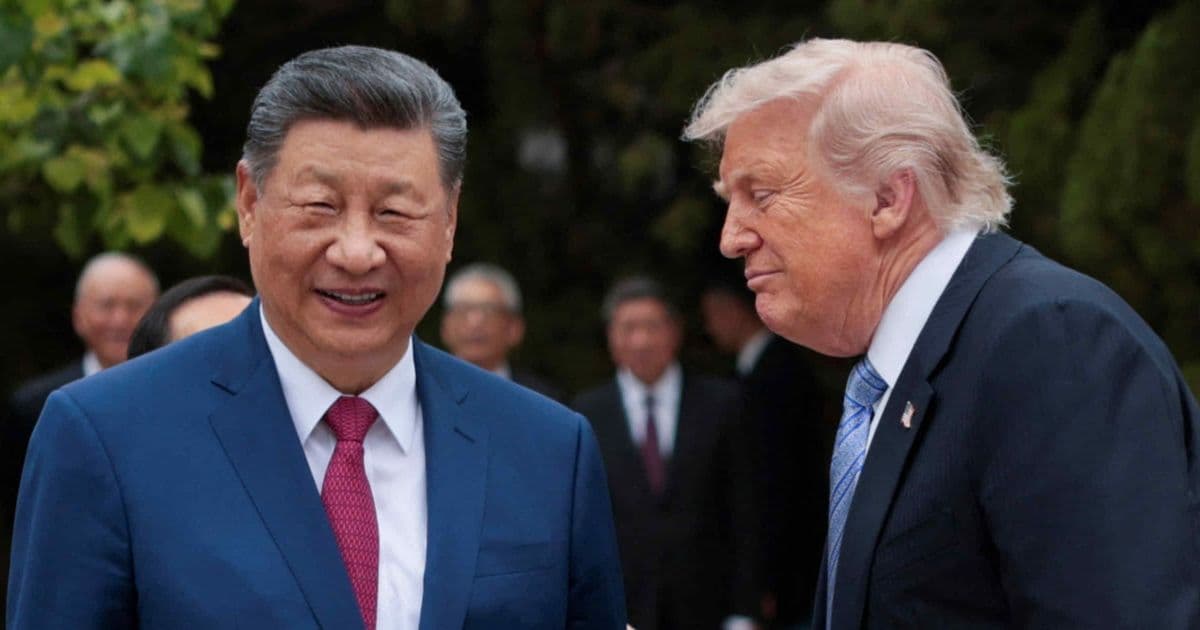
President Donald Trump told reporters after his meeting with Xi Jinping that he gave “no commitment” on Taiwan and will decide on a new arms package for Taipei within a “fairly short period.” The statement adds uncertainty to an already volatile cross‑strait environment and raises questions about U.S. defense spending, semiconductor supply chains, and the strategic calculus of regional allies.
Business news
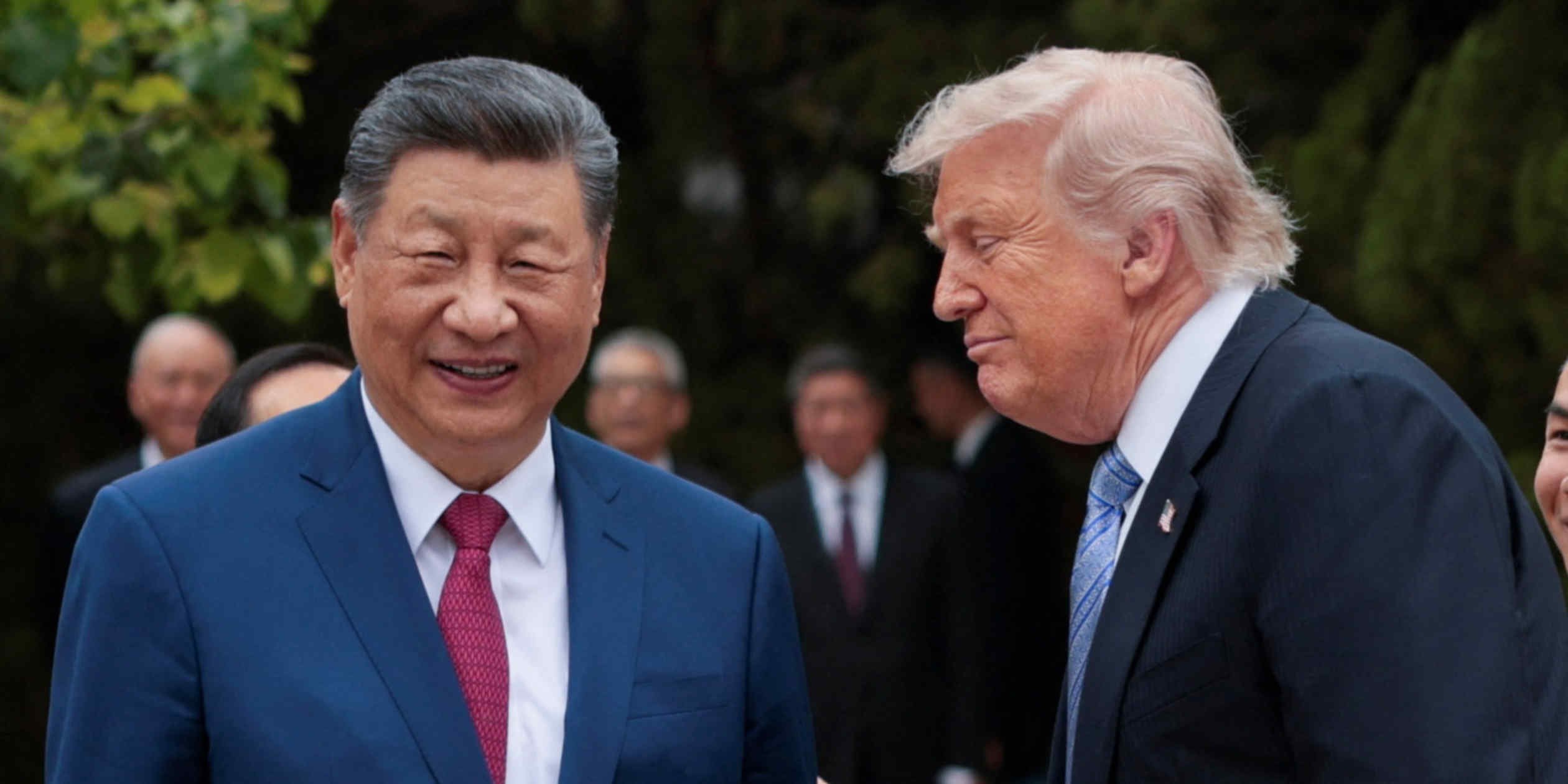
U.S. President Donald Trump told reporters on Friday that he left the Beijing summit with Chinese President Xi Jinping without making any pledge regarding Taiwan. He added that a decision on a new arms sale to Taipei will come “in the next fairly short period.” The comment was made during a press briefing aboard Air Force One as the presidential aircraft left China’s capital.
Market context
- U.S. defense budget: The Pentagon’s FY 2027 budget request, released last month, earmarked $12.1 billion for Taiwan‑related security assistance, up 18 % from the previous year. A delay or reduction would affect major defense contractors such as Lockheed Martin, Raytheon and Boeing, whose combined revenue from Asia‑Pacific sales exceeds $8 billion annually.
- Semiconductor supply chain: Taiwan’s TSMC accounts for roughly 55 % of global advanced‑node wafer capacity. Any perception of reduced U.S. backing could accelerate Chinese efforts to develop domestic alternatives, a sector already drawing $15 billion in state subsidies.
- Regional equities: Following the summit, the HSI slipped 0.7 % and the Taiwan Weighted Index fell 1.2 %. In the U.S., defense‑related ETFs (e.g., ITA) traded flat, reflecting market uncertainty about the timing of the arms package.
- Geopolitical risk premiums: Bloomberg’s sovereign risk index showed a 12‑basis‑point rise for Taiwan’s sovereign CDS spreads, indicating higher perceived default risk tied to political instability.
What it means
- U.S. leverage remains ambiguous – By stating there was “no commitment,” Trump keeps diplomatic flexibility but also signals to Beijing that Washington is not ready to lock in a hardline stance. For U.S. allies, the message is mixed: they can count on a future sale, but the timing and scale are uncertain.
- Defense contractors must brace for timing risk – Companies that rely on multi‑year contracts for F‑16 upgrades, Patriot missiles, and naval systems may need to adjust production schedules. A delayed award could push back revenue recognition by 12‑18 months, affecting quarterly earnings guidance.
- Supply‑chain implications for chips – If Chinese authorities interpret the U.S. stance as a softening of support for Taiwan, they may intensify subsidies for domestic fabs, accelerating the “China‑chip” roadmap that aims to capture 30 % of the global market by 2030. This could pressure TSMC’s pricing power and spur further investment in alternative nodes.
- Regional security calculations shift – Japan and South Korea, both hosting U.S. forces, may reassess their own defense postures. Japan’s 2025 defense budget already allocates ¥12 trillion for missile‑defence upgrades; a delayed U.S. Taiwan package could prompt Tokyo to accelerate indigenous capability development.
- Investor sentiment – The lack of a concrete arms‑sale timeline introduces a risk premium for equities tied to Taiwan’s defense sector and for broader Asia‑Pacific exposure. Asset managers are likely to increase holdings in “defense‑hedge” assets while trimming exposure to high‑beta semiconductor stocks.
Bottom line: Trump’s “no commitment” remark injects short‑term uncertainty into a market already sensitive to cross‑strait tensions. The next few weeks will be critical as the administration finalises the arms package, and investors should monitor Pentagon procurement updates, TSMC earnings guidance, and any further diplomatic signals from Beijing.
Comments
Please log in or register to join the discussion