
A two‑hour town hall in Pennsylvania saw residents denounce Governor Josh Shapiro’s data‑center incentives, citing rising electricity rates, water stress and noise. The outcry highlights growing tension between AI‑driven compute demand, chip‑fabrication supply chains and local infrastructure capacity.
Announcement
A heated town‑hall in East Whiteland Township turned into a de‑facto referendum on Pennsylvania’s aggressive AI data‑center recruitment strategy. More than 20 speakers, many of them long‑time residents, accused Governor Josh Shapiro of ignoring community impacts while courting hyperscale operators. Their grievances—higher electric bills, massive water draw, and persistent noise—mirror complaints emerging in other states that host AI‑focused compute farms.
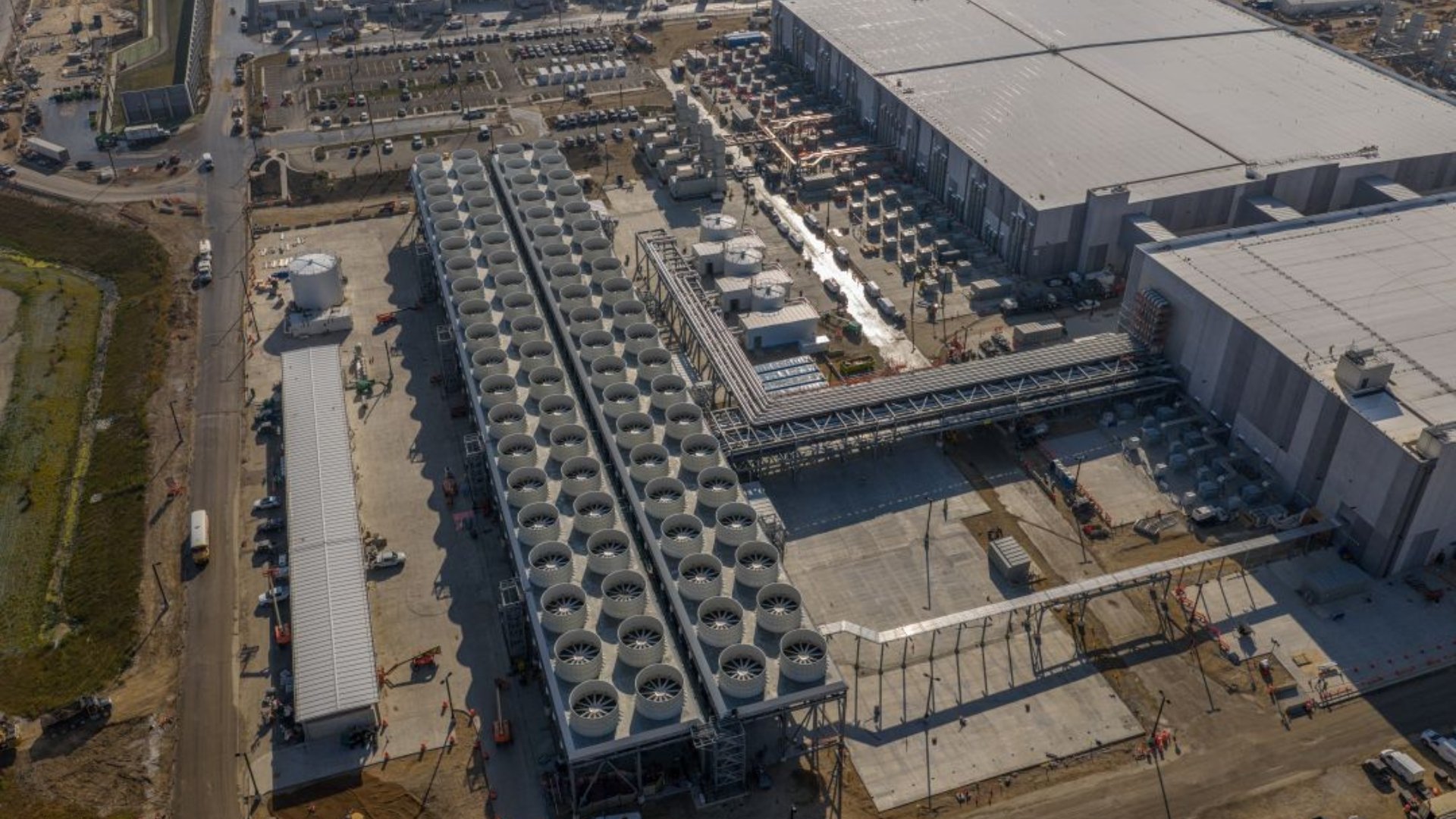 Microsoft’s Mount Pleasant data center illustrates the scale of power and cooling infrastructure required for modern AI workloads.
Technical Context: What Powers an AI Data Center?
| Metric | Typical Value for a Large‑Scale AI Facility | Source |
|---|---|---|
| Compute density | 1–2 kW per rack (up to 5 kW in cutting‑edge installations) | Intel AI‑Optimized Xeon |
| GPU node | 8 × NVIDIA H100 (400 W each) → 3.2 MW per 100‑rack pod | NVIDIA H100 spec sheet |
| Process node | 5 nm (TSMC N5) or 4 nm (Samsung) for most AI accelerators | TSMC Process Roadmap |
| Water usage for evaporative cooling | 1.5–2.5 L/kWh; a 10 MW pod can consume >30 M gal/yr | U.S. DOE Data Center Energy Report 2023 |
| Network bandwidth | 400 Gbps per rack (Ultra‑Ethernet) to support model‑training traffic | IEEE Ultra‑Ethernet Overview |
Chip‑Level Drivers of Power Demand
The surge in AI workloads is tied directly to the rollout of GPU‑centric accelerators built on sub‑5 nm processes. The NVIDIA H100, for example, delivers up to 1 PFLOP of FP16 performance while drawing 400 W per GPU. AMD’s MI300X, fabricated on TSMC’s 5 nm node, pushes similar compute levels with a slightly lower power envelope (≈350 W). These chips enable large language model training that can consume hundreds of megawatt‑hours per month—a scale that strains regional grids.
Cooling and Water Footprint
Because AI chips operate near their thermal limits, most hyperscale sites rely on direct‑evaporative cooling or liquid immersion. Direct‑evaporative systems recirculate water, evaporating roughly 1.8 L per kWh. A 10 MW pod therefore uses ≈18 M gal per year. The Fayette County, Georgia case cited in the original report—29 M gal over 15 months—fits this order of magnitude and illustrates why water‑stress complaints are surfacing in drought‑prone regions.
Market Implications and Supply‑Chain Ripple Effects
Utility‑Scale Grid Upgrades – Pennsylvania’s Public Utility Commission (PUC) now mandates that data‑center developers fund high‑voltage transmission upgrades. This shifts capital costs from utilities to the operators, but the upfront CAPEX can be prohibitive for smaller players, potentially consolidating the market around the largest hyperscalers (e.g., Microsoft, Amazon, Google).
Tax‑Incentive Competition – The 2021 state law offering up to 25 % tax credits for AI‑related data‑center projects has already attracted $3.2 B in announced investments. However, the backlash may prompt legislators to tighten eligibility criteria, mirroring moratoriums in states like New York and Ohio. A three‑year pause, as suggested by Senator Katie Muth, could slow the pipeline and give utilities time to modernize.
Chip Fabrication Pressure – As AI demand spikes, fabs in Taiwan, South Korea, and the U.S. are running at >90 % capacity. Any slowdown in data‑center construction would modestly relieve wafer demand, but the overall trend remains upward. Companies such as TSMC and Samsung are expanding 3‑nm and 2‑nm lines to support next‑gen AI accelerators, meaning the supply‑chain pressure will likely outlast the current political debate.
Community‑Driven Standards – Residents are demanding real‑time transparency dashboards that show power draw, water usage, and noise levels. If adopted, such dashboards could become a de‑facto industry standard, influencing how cloud providers design edge‑located AI clusters that sit closer to end users while consuming less bulk power.
Outlook
Pennsylvania sits at a crossroads: the state can capitalize on the multi‑billion‑dollar AI data‑center boom or risk a political backlash that stalls future projects. The technical reality is clear—AI chips built on 5 nm and smaller nodes demand dense power and cooling, which in turn pressures local grids and water supplies. Policymakers who align tax incentives with infrastructure readiness and community safeguards will likely retain both industry investment and voter support.
For a deeper dive into the chip‑level power characteristics of AI accelerators, see the NVIDIA H100 whitepaper.
Comments
Please log in or register to join the discussion