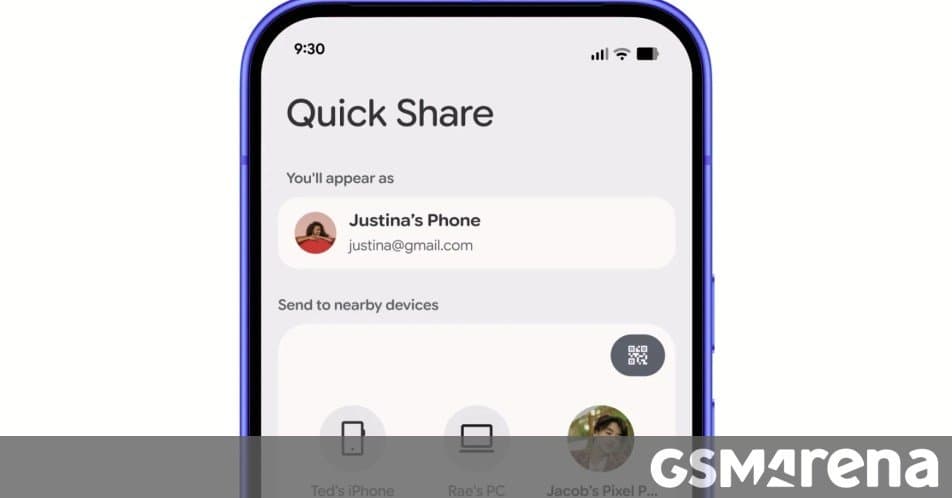
Google expands its Quick Share‑AirDrop bridge to include OnePlus, Oppo and Honor devices, while confirming upcoming support for a wide range of Samsung models, tightening the Android‑iOS file‑sharing gap.
Quick Share now talks to AirDrop on a broader set of Android phones
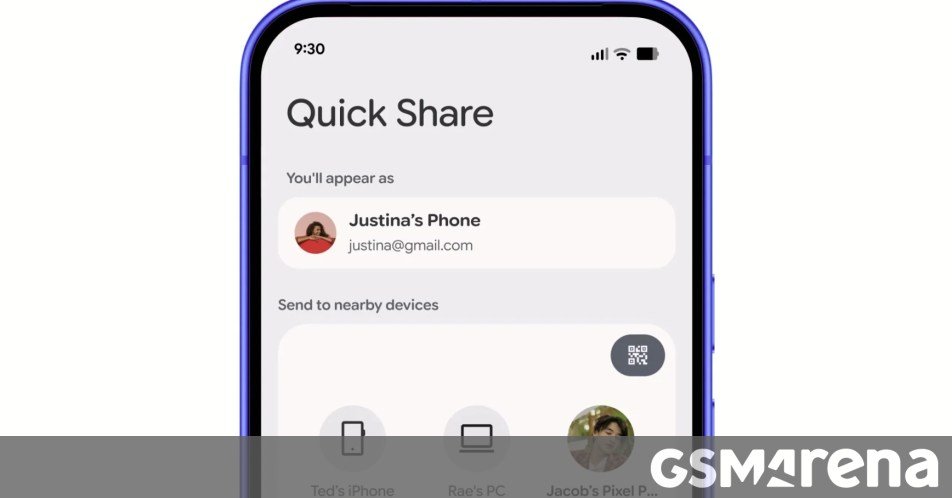 During the Android Show: I/O Edition Google revealed that its cross‑platform sharing layer – Quick Share with AirDrop interoperability – will soon be enabled on devices from OnePlus, Oppo and Honor. The move follows a rollout that began with the Pixel 10 series last year and has since trickled down to older Pixels, Samsung’s Galaxy S26 line‑up, and premium devices such as the Oppo Find X9 Ultra and vivo X300 Ultra.
What the feature actually does
Quick Share is Samsung’s native Android‑to‑Android file‑transfer protocol, while AirDrop is Apple’s equivalent for iOS and macOS. Google’s bridge sits between the two, translating the Bluetooth‑LE discovery and Wi‑Fi‑direct data streams so that an Android phone can appear as an AirDrop target on an iPhone, and vice‑versa. In practice, a user can select Share → Quick Share → AirDrop on an Android device, choose a nearby iPhone, and the two phones will negotiate a direct Wi‑Fi link for the file transfer, bypassing cloud services entirely.
Devices joining the list
| Brand / Series | Confirmed for Quick Share‑AirDrop |
|---|---|
| OnePlus | 15 (launch Q3 2026) |
| Oppo | Find X8 series, Find X9 Ultra (already live), upcoming Find X9 Pro |
| Honor | Magic V6, Magic 8 Pro |
| Samsung | Galaxy S25 series, Galaxy S24 line‑up, Galaxy Z Fold 7, Z Flip 7, Z Fold 6, Z TriFold |
| vivo | X300 Ultra (already live) |
| Pixel | 8a (already live), 9 series (future rollout) |
Google has not supplied exact dates, but the company hinted that the feature will be pushed via regular OTA updates over the next few months, following the same cadence used for the Pixel 9 launch.
Why this matters for Android users
- Reduced friction when swapping files with iPhone owners – Previously, the only reliable way to move photos, videos or documents between the two ecosystems was via third‑party apps or cloud links, which added steps and often required a data connection.
- Battery‑friendly transfers – Direct Wi‑Fi‑direct links consume less power than uploading to a cloud service and then downloading on the other device.
- Privacy benefits – Because the data never leaves the local network, there is no intermediate server that could log the transfer.
Ecosystem lock‑in considerations
While the feature narrows the gap, it does not eliminate the broader lock‑in dynamics of the Android and iOS ecosystems. Quick Share still relies on Samsung’s implementation, meaning that non‑Samsung Android phones need Google’s compatibility layer to act as an AirDrop target. The upcoming support for OnePlus, Oppo and Honor shows that Google is willing to extend the bridge beyond Samsung’s hardware, but the underlying protocol remains proprietary to each side.
For power users, the practical impact will be felt in mixed‑family households or workplaces where Android and iPhone devices coexist. The ability to hand off a presentation file or a set of vacation photos without pulling out a laptop or opening a cloud folder streamlines everyday workflows.
Looking ahead
Google’s roadmap suggests that the Quick Share‑AirDrop bridge will become a standard feature on most high‑end Android phones released in 2026. If the rollout proceeds smoothly, we may see a future where cross‑platform sharing is a baseline expectation rather than a novelty. Developers are already experimenting with APIs that expose the bridge to third‑party apps, which could enable new use cases such as instant QR‑code‑free pairing for multiplayer games.
For the full list of devices and the latest update schedule, check Google’s official Quick Share documentation.
Comments
Please log in or register to join the discussion