
U.S. regulators have approved Nvidia’s H200 AI accelerators for ten Chinese firms, but Beijing is refusing orders, citing a push for domestic silicon. The standoff threatens $3‑4 billion of potential revenue and highlights the fragility of the export‑control supply chain for advanced nodes.
Announcement
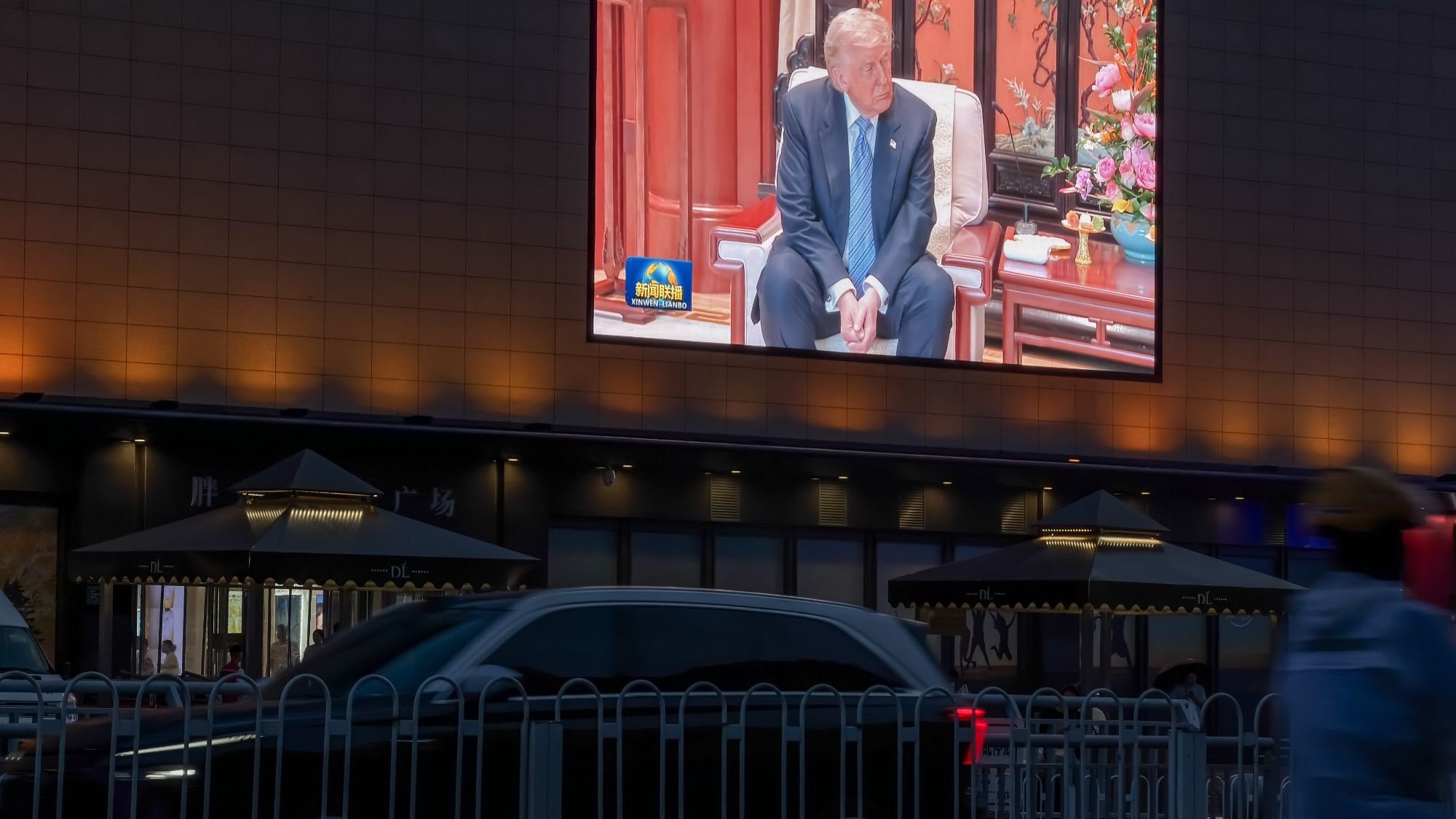
President Donald Trump told reporters aboard Air Force One that Chinese authorities are deliberately preventing domestic firms from purchasing Nvidia’s H200 AI chips, even though the U.S. Commerce Department has granted export licenses to ten companies, including Alibaba, Tencent, ByteDance and JD.com. The comment followed a two‑day summit with President Xi Jinping, where the topic of AI guardrails was also raised. Nvidia’s CEO Jensen Huang was present on the trip, but the anticipated breakthrough on H200 sales did not materialize.
Technical specifications of the H200
- Process node: 4 nm custom Samsung Foundry (N2) – the same node used for Nvidia’s Hopper‑based H100, but with a denser tensor core array.
- Peak FP16 performance: 1.2 PFLOPS (single‑precision), 2.4 PFLOPS (FP16 Tensor), roughly 30 % higher than the H100 due to an expanded matrix‑multiply engine.
- Memory subsystem: 80 GB of HBM3, 2 TB/s memory bandwidth, enabling training of models with over 1 trillion parameters without off‑chip paging.
- Power envelope: 600 W TDP, requiring liquid‑cooling solutions and a dedicated power delivery board.
- Security features: Integrated hardware root of trust and encrypted memory channels, designed to satisfy U.S. export‑control requirements for AI‑critical hardware.
The H200 is positioned as the flagship accelerator for large‑scale foundation model training, competing directly with Google’s TPU v5 and AMD’s MI300X. Its higher density tensor cores and expanded HBM3 stack give it a clear performance edge for transformer‑based workloads, which dominate current AI research.
Supply‑chain and licensing framework
- U.S. export licensing – The Commerce Department’s Bureau of Industry and Security (BIS) issued individual licenses to the ten Chinese firms. Each license mandates that the H200 physically traverse U.S. territory for a third‑party inspection before re‑export to China. Nvidia must remit a 25 % fee on the transaction to the U.S. Treasury.
- Distributor approvals – Lenovo and Foxconn received parallel approvals, allowing them to act as downstream logistics partners for any Chinese order that clears the inspection stage.
- Chinese internal controls – Beijing’s Ministry of Industry and Information Technology (MIIT) has signaled that any import of high‑end AI chips will be blocked unless the buyer can demonstrate a clear domestic value‑add. The policy aligns with the “self‑reliance” push for semiconductor manufacturing, which has accelerated funding for projects such as the 14 nm and 7 nm fabs under the National Integrated Circuit Industry Investment Fund.
Market implications
- Revenue outlook – Nvidia’s FY2025 guidance assumes zero H200 sales to China. Analysts at Wedbush and Jefferies model a $3.5 billion‑$4 billion revenue gap if the export pipeline remains idle, representing roughly 5 % of Nvidia’s projected $78 billion top line.
- Market share erosion – Prior to the licensing approvals, Nvidia held an estimated 95 % share of the high‑end AI accelerator market in China. After the blockage, internal estimates from Nvidia’s sales team suggest the share has fallen to near zero, with domestic alternatives (Huawei’s Ascend 910 B, Baidu’s Kunlun X) capturing the residual demand.
- Supply‑chain ripple effects – The H200’s 4 nm node relies on Samsung’s N2 fab capacity, which is already booked for memory and consumer‑grade SoCs. A sudden drop in Chinese orders frees up wafer slots, potentially lowering the per‑chip cost for other customers but also reducing Samsung’s exposure to the high‑margin AI segment.
- Geopolitical risk premium – Investors are now pricing a higher risk premium into Nvidia’s stock, as the company’s exposure to export‑control volatility has become more explicit. The situation also raises the likelihood of a “dual‑track” strategy: continued sales to U.S. and allied markets, while developing a separate product line (e.g., a lower‑performance, non‑restricted accelerator) for customers in jurisdictions where licensing is unlikely.
- Domestic Chinese response – Beijing’s refusal to import H200s is expected to accelerate its own chiplet‑based AI accelerator programs. The upcoming 5 nm “Kunlun X2” roadmap, slated for 2027, aims to match the H200’s FP16 throughput while integrating on‑chip security modules that bypass U.S. inspection requirements.
Outlook
If Beijing maintains its stance, the immediate effect will be a $3‑4 billion revenue shortfall for Nvidia and a modest price pressure on Samsung’s N2 fab utilization. In the medium term, the blockage could catalyze a bifurcation of the global AI hardware market: a U.S.–led ecosystem centered on Nvidia’s Hopper/H200 family, and a Chinese ecosystem built around homegrown ASICs and emerging 7 nm/5 nm processes. Analysts will watch for any policy shift from the MIIT, especially any indication that a “trusted‑partner” exemption could be granted for firms that commit to joint R&D with Chinese fabs.
For further details on Nvidia’s H200 specifications, see the official product brief. The U.S. export‑license framework is described in the BIS Entity List guidance.
Comments
Please log in or register to join the discussion