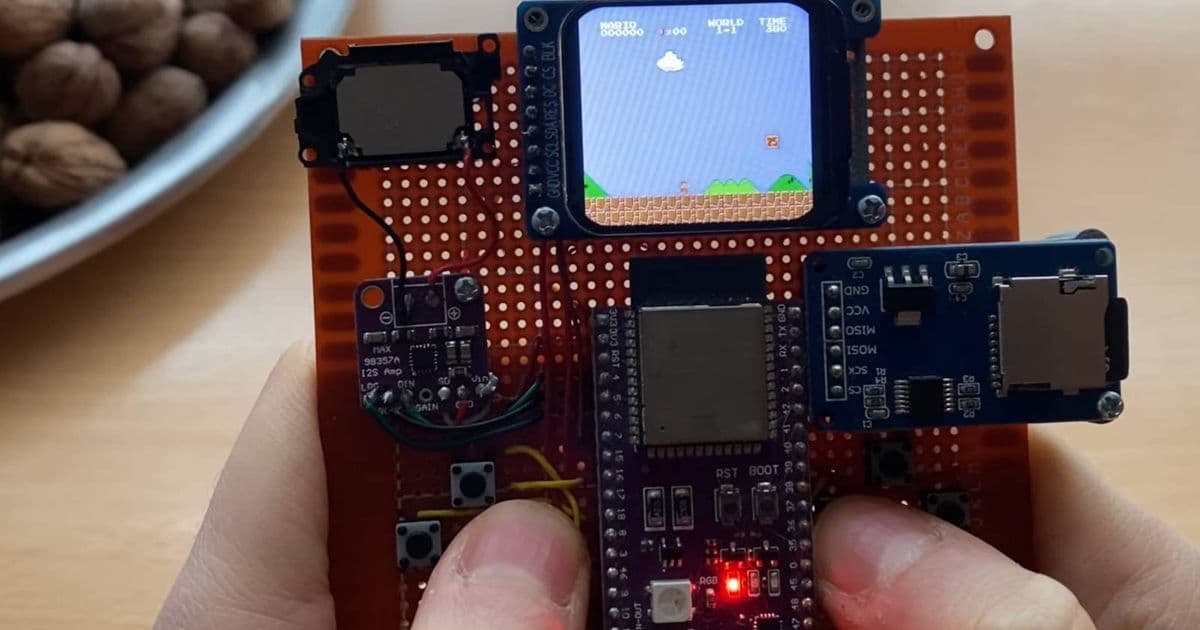
This DIY handheld NES emulator combines ESP32-S3 power with a vibrant display and authentic controls for classic gaming on the go.
If you've ever wanted to relive the glory days of 8-bit gaming but wished you could do it on something smaller than your phone, this ESP32-based NES emulator project might be exactly what you're looking for. One clever tinkerer has created a fully functional handheld NES console that fits in the palm of your hand, complete with authentic controls and crystal-clear audio.
The Hardware That Makes It Work
The heart of this miniature gaming machine is the ESP32-S3 microcontroller, which provides more than enough power to run NES games at full speed. The dual-core processor handles the emulation workload smoothly, ensuring your favorite classics play without lag or stuttering.
For the display, the project uses a ST7789 IPS TFT screen that delivers vibrant colors and wide viewing angles. At just a few inches across, it's perfectly sized for the compact form factor while still providing a clear view of your games. The IPS technology means you won't lose image quality when viewing from different angles - perfect for sharing your gaming sessions with friends.
Audio quality gets a significant upgrade thanks to the MAX98357A I2S amplifier. Unlike basic piezo buzzers or low-quality speakers that often plague DIY electronics projects, this amplifier delivers crystal-clear game sounds that capture the distinctive chiptune audio of the NES era. Whether you're listening to the iconic Super Mario Bros. theme or the pulse-pounding beats of Castlevania, the audio reproduction is impressively faithful.
Storage comes in the form of a standard MicroSD card, which means you can load hundreds of NES ROMs onto a single card. This approach offers tremendous flexibility - you can swap games easily, back up your collection, or even expand your library without any hardware modifications.
Authentic Controls for the Full Experience
One of the standout features of this build is the complete 8-button control scheme. The D-Pad provides precise directional control, while the A and B buttons handle your primary actions. Start and Select buttons round out the classic NES controller layout, ensuring compatibility with all your favorite games.
The button layout has been carefully considered to provide a comfortable gaming experience despite the compact size. The tactile feedback from the buttons gives you that satisfying click you'd expect from quality gaming hardware, making long gaming sessions enjoyable rather than frustrating.
Getting Started with Your Own Build
If you're interested in creating your own version of this handheld NES emulator, the creator has generously shared everything you need on GitHub. The repository includes a comprehensive parts list, detailed wiring diagrams, and all the necessary code to get your emulator up and running.
For those new to electronics projects, this could be an excellent first embedded systems project. The ESP32-S3 is beginner-friendly, and the modular nature of the components means you can build confidence as you assemble each section. The creator even provides a build video that walks you through the entire process step by step.
Why This Project Matters
Beyond just being a fun way to play classic games, this project demonstrates the incredible capabilities of modern microcontrollers. The ESP32-S3, a chip that costs just a few dollars, can now handle full-speed NES emulation - something that would have required dedicated hardware just a few years ago.
This kind of project also serves as an excellent entry point into the world of embedded systems and DIY electronics. You'll learn about microcontroller programming, hardware interfacing, audio amplification, and display technology - all while creating something genuinely fun and useful.
Whether you're a retro gaming enthusiast, a hobbyist looking for your next project, or someone interested in learning more about embedded systems, this ESP32 NES emulator offers a perfect blend of nostalgia, education, and hands-on fun. And who knows? Once you've mastered this build, you might find yourself inspired to tackle even more ambitious DIY electronics projects.
The best part is that you don't need to be an expert to get started. With the comprehensive documentation provided and the forgiving nature of the ESP32 platform, even beginners can create a working handheld NES console that would make any 8-bit fan proud.
Comments
Please log in or register to join the discussion