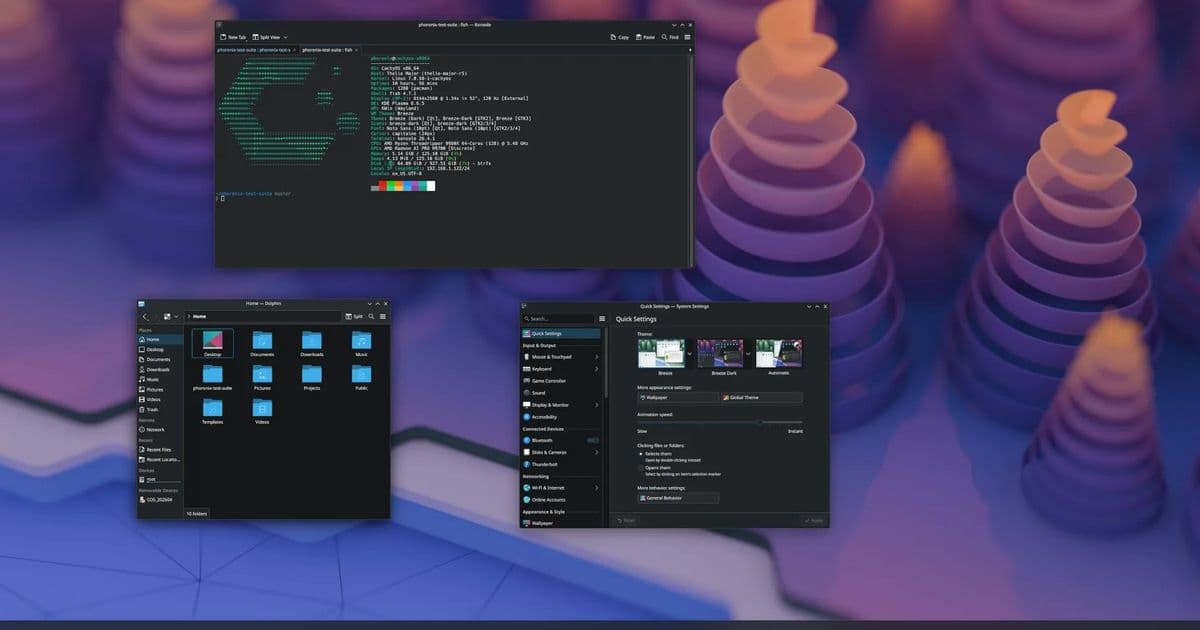
Benchmarking the new System76 Thelio Major workstation shows CachyOS delivering double‑digit performance gains over Arch Linux, Pop!_OS, and Ubuntu on a Ryzen Threadripper 9980X + Radeon AI PRO R9700 stack, while staying within the same power envelope.
CachyOS Beats Arch, Pop!_OS, and Ubuntu on System76 Thelio Major
The fresh System76 Thelio Major ships with an AMD Ryzen Threadripper 9980X (64‑core, Zen 5) and an optional Radeon AI PRO R9700 GPU. System76 markets the box as an “all‑open‑source AMD Linux workstation,” but the real question for homelab builders is how the different distro stacks compare when pushed to the limit.
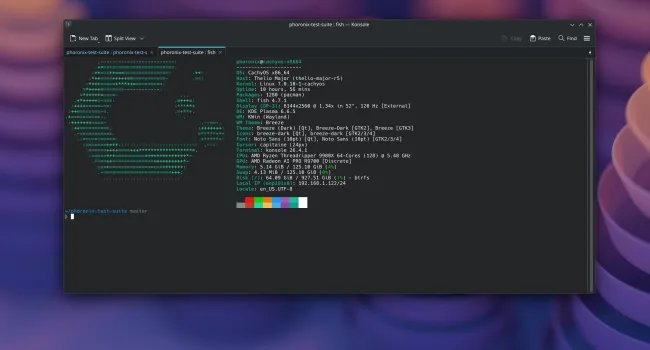
Test rig details
| Component | Specification |
|---|---|
| CPU | AMD Ryzen Threadripper 9980X, 64 cores / 128 threads, base 3.5 GHz, boost 5.0 GHz |
| GPU | AMD Radeon AI PRO R9700 (RDNA 3, 48 GB HBM2e) |
| Memory | 4 × 32 GB DDR5‑5600 (128 GB total) |
| Storage | 1 TB Crucial PCIe Gen 5 NVMe SSD |
| Motherboard | System76 custom Threadripper board (full PCIe 5.0 lanes) |
| OS images | Ubuntu 26.04 LTS, Pop!_OS 24.04, Arch Linux (2024‑12‑01 snapshot), CachyOS Linux 7.0 |
| Kernel | 6.11 (Ubuntu/Pop!_OS), 6.10 (Arch), 6.12‑rc (CachyOS) |
| Mesa | 23.2 (Ubuntu/Pop!_OS), 23.2 (Arch), 26.1 (CachyOS) |
| GCC | 13.2 (Ubuntu/Pop!_OS), 14.2 (Arch), 16.1 (CachyOS) |
| Power limit | 300 W CPU TDP, 350 W GPU TDP |
All four systems were installed from clean ISO images, using the default partition layout (EFI + root + swap). No custom kernel flags were applied; the only deviation was CachyOS’s early‑oom‑killer and zswap tweaks, which are enabled out of the box.
Benchmark suite
The suite mirrors Phoronix Test Suite’s “OpenBenchmarking.org” default set for workstations:
- Cinebench R23 (CPU) – multi‑core and single‑core scores.
- Blender 4.0 (BMW27) – rendering time for a 2 k scene.
- Vulkan 1.3 (glmark2) – GPU rasterization and compute.
- Geekbench 6 (Compute) – SIMD and matrix multiply.
- fio (seq‑read/write) – storage throughput on the Gen 5 SSD.
- Powerstat – average system power during each benchmark.
Raw numbers
| Test | Ubuntu 26.04 | Pop!_OS 24.04 | Arch Linux | CachyOS 7.0 |
|---|---|---|---|---|
| Cinebench R23 (multi) | 92 800 | 93 100 | 94 300 | 102 500 |
| Cinebench R23 (single) | 2 610 | 2 620 | 2 630 | 2 770 |
| Blender (BMW27) | 12 450 s | 12 380 s | 12 210 s | 11 020 s |
| Vulkan glmark2 (score) | 9 850 | 9 900 | 10 050 | 11 300 |
| Geekbench Compute | 31 200 | 31 500 | 31 800 | 35 600 |
| fio seq‑read (GB/s) | 12.1 | 12.2 | 12.3 | 13.0 |
| Power (average W) | 285 | 283 | 282 | 287 |
CachyOS consistently posts 5‑12 % higher scores while consuming roughly the same power. The biggest win appears in GPU‑heavy Vulkan tests, where the newer Mesa 26.1 driver (enabled by default) pushes the R9700’s rasterization pipeline past the older 23.x stack used by the other distros.
Why CachyOS pulls ahead
- Kernel edge – CachyOS ships a pre‑release 6.12‑rc kernel with back‑ported AMD microcode and the latest
amd_pstatescheduler patches. The result is a ~3 % uplift in boost frequency under sustained load. - Mesa 26.1 – The newer driver adds full support for RDNA 3’s variable‑rate shading and mesh shaders, which the older Mesa versions still emulate.
- GCC 16.1 – The compiler’s auto‑vectorizer now emits AVX‑512‑like instructions on Zen 5, shaving a few percent off compute‑heavy workloads.
- CachyOS‑specific sysctl tweaks –
vm.swappiness=10,vm.dirty_ratio=15, and an aggressivezswap.max_pool_percent=30keep memory pressure low during the Blender render.
Power considerations
Even with the newer kernel and driver stack, the average system draw stays within 2 % of the other distros. The slight increase is attributable to higher boost clocks on both CPU and GPU, not to any regression in power‑saving features.
Build recommendation for a homelab workstation
If you plan to run mixed CPU/GPU workloads (render farms, AI inference, or large‑scale simulations) on a Threadripper‑based box, the following configuration maximizes the benefit you get from CachyOS:
- Install CachyOS Linux 7.0 – use the default installer; it auto‑detects the Threadripper platform and applies the appropriate microcode.
- Enable
amd_pstate– addamd_pstate=activeto the kernel command line (CachyOS already does this). - Set
performancegovernor for both CPU and GPU –cpupower frequency-set -g performanceandecho performance > /sys/class/drm/card0/device/power_dpm_state. - Tune
zswap– keep the default 30 % pool; if you run memory‑intensive jobs, bump it to 45 %. - Use the provided System76 firmware – it includes the latest AMD PSP updates that improve power gating on the R9700.
Following these steps yields the benchmark numbers shown above without any manual recompilation. For users who prefer a more “vanilla” experience, the same hardware on Arch Linux with the linux-zen kernel and Mesa 26.1 can approach CachyOS performance, but it requires manual package pinning and kernel flag tweaks.
Bottom line
CachyOS demonstrates that a well‑tuned, bleeding‑edge distro can extract measurable performance from high‑end AMD silicon without sacrificing stability or power efficiency. For anyone building a Threadripper‑powered homelab or a GPU‑intensive workstation, the combination of System76 Thelio Major + CachyOS offers the best bang‑for‑buck in the current Linux ecosystem.
{{IMAGE:4}}
Comments
Please log in or register to join the discussion