
An open-source project challenges SaaS data silos by transforming your existing file system into a powerful productivity hub. Calystone enables note-taking and task management using your current folder structure without proprietary formats, prioritizing privacy and user control. This developer-led initiative offers a compelling alternative to app-locked data while embracing open standards for longevity.

For decades, our digital lives have increasingly migrated into walled gardens—SaaS platforms like Notion or Google Photos that centralize data but lock it behind proprietary formats and subscription models. This shift comes at a cost: fragmentation across apps, vendor lock-in, and the looming threat of data loss when services sunset. Developer João Melo's Calystone project offers a radical counterproposal: leverage your existing file system as a privacy-first, open-source productivity engine.
The File System as Foundational OS
Calystone rejects the notion that organization requires specialized apps or cloud dependencies. Instead, it integrates directly with your current directory hierarchy—whether local or cloud-synced—transforming folders into contextual workspaces. "Our file systems are already curated structures representing areas of life and projects," notes the project's documentation. Calystone simply layers lightweight tools atop this foundation without demanding new organizational schemes or proprietary formats.
Key features include:
- Markdown-Powered Notes: Edit and view notes within your existing text files (
.md,.txt) using a rich editor, turning directories into knowledge bases. - Task Management via
.todoFiles: Specialized editing for task files supporting priorities, due dates, and progress tracking—all stored as human-readable text. - Cloud Agnosticism: Optional cloud provider integrations (e.g., for mobile access) while emphasizing local-first workflows.
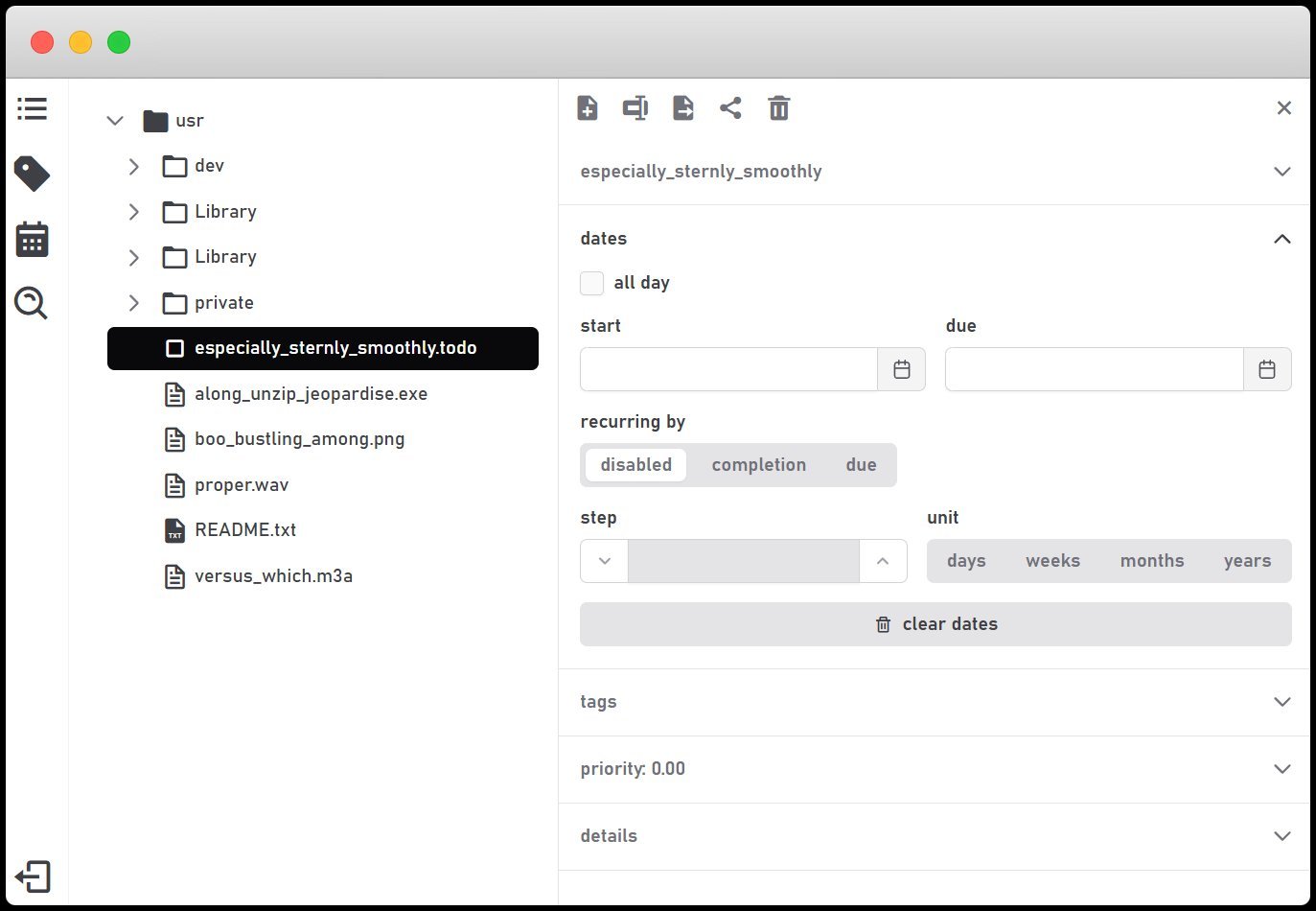 Calystone's interface showing markdown editing and .todo file management (Source: Project Screenshot)
Privacy and Control by Design
Unlike SaaS alternatives, Calystone operates under strict principles:
- Zero Telemetry: The application tracks no user data or file metadata.
- Open Source (MIT Licensed): Freely auditable, modifiable, and distributable.
- Data Longevity: Files remain in open formats (text, markdown) accessible without Calystone.
Melo's motivation is philosophical: "Apps can shut down or become inaccessible... The combination of the file system and open formats is the ultimate remedy." By treating directories as the "real personal database," users retain full ownership—moving files across devices, backing up to thumb drives, or switching tools becomes frictionless.
Why Developers Should Care
This approach resonates with technical users frustrated by:
- SaaS Sprawl: Context fractured across specialized apps.
- Vendor Risk: Data hostage to corporate decisions or pricing changes.
- Format Lock-in: Proprietary exports that complicate migration.
Calystone’s early-stage status means it lacks enterprise-grade guarantees (users should maintain backups), but its vision is compelling: a return to foundational computing principles where files and folders—not apps—form the backbone of digital organization. For developers seeking alternatives to opaque ecosystems, this project offers both practical utility and a manifesto for reclaiming digital autonomy.
Explore the code and contribute on GitHub.
Comments
Please log in or register to join the discussion