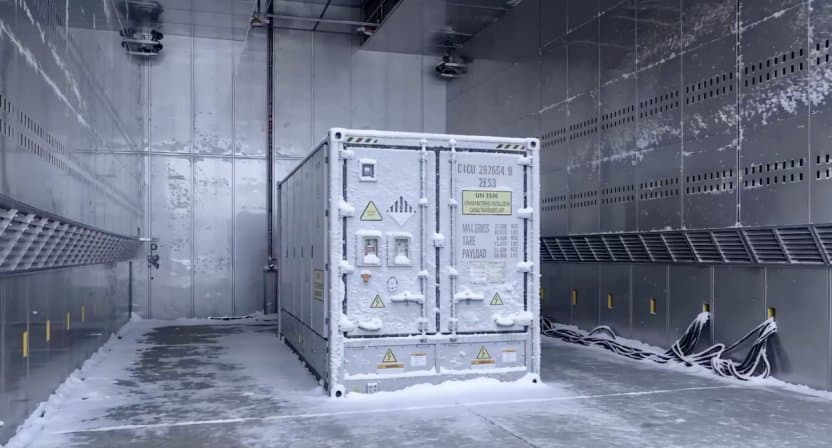
Chinese battery giant CATL has invested RMB3 billion to build a comprehensive 10-hectare energy storage validation center, aiming to elevate industry testing standards beyond component-level validation to full-system performance under real-world conditions.
Chinese battery manufacturer CATL has unveiled its Xiamen Energy Storage Validation Research Institute, a massive facility positioned as the world's largest and most comprehensive one-stop testing and validation platform for the energy storage industry. The sprawling 10-hectare site represents a significant RMB3 billion ($440 million) investment, signaling CATL's commitment to advancing energy storage technology and safety standards on a global scale.
The facility stands out not just for its size but for its comprehensive approach to testing. Rather than focusing solely on individual components, CATL designed the institute to evaluate complete energy storage systems and station-level performance under realistic operating conditions. This shift toward holistic testing could address critical gaps in current validation processes that often fail to capture how different components interact in actual deployment scenarios.
The institute houses five specialized laboratories, each targeting different aspects of energy storage validation:
Grid Integration Laboratory: Tests how energy storage systems interact with power grids, addressing challenges related to grid stability, frequency regulation, and renewable energy integration.
High-Voltage Safety Laboratory: Evaluates safety protocols and performance under high-voltage conditions, critical as energy storage systems scale up in capacity and voltage.
Thermal Safety and Combustion Laboratory: Focuses on understanding and preventing thermal runaway events, a significant concern in battery safety.
Environmental Reliability Laboratory: Assesses how systems perform under various environmental conditions, including temperature extremes, humidity, and contamination.
Electromagnetic Compatibility Laboratory: Tests how energy storage systems interact with other electronic equipment and withstand electromagnetic interference.
"The energy storage industry has reached a critical juncture where component-level testing is no longer sufficient," explained industry analyst Chen Wei. "As deployments grow larger and more complex, understanding system-level behavior becomes essential for safety, performance, and reliability. CATL's approach reflects this industry need."
CATL, which has become the world's largest manufacturer of electric vehicle batteries, has been increasingly focusing on stationary energy storage applications. The company has recognized that as renewable energy adoption accelerates, effective energy storage solutions become crucial for grid stability and reliability. The Xiamen facility appears designed to help CATL and its partners address the technical challenges of scaling up these solutions.
The open, shared platform approach is particularly noteworthy. Rather than keeping the testing capabilities proprietary, CATL has positioned the institute as a resource for global energy storage players. This collaborative model could accelerate innovation across the industry by providing smaller companies and research institutions access to testing infrastructure that would otherwise be prohibitively expensive to develop independently.
The timing of this investment aligns with significant growth in the global energy storage market. According to recent industry reports, the market is expected to grow at a compound annual rate exceeding 20% through the end of the decade, driven by increasing renewable energy deployment, electrification of transportation, and grid modernization efforts.
"Energy storage has moved from being a niche technology to a critical infrastructure component," noted renewable energy researcher Mei Lin. "As we transition to more renewable-based energy systems, the ability to store and dispatch energy efficiently becomes paramount. Facilities like CATL's Xiamen institute will play a crucial role in ensuring these systems are safe, reliable, and performant at scale."
The establishment of such a comprehensive testing facility also comes amid growing concerns about battery safety, particularly as energy storage systems increase in size and capacity. High-profile incidents involving battery thermal runaway have underscored the importance of rigorous testing and validation protocols. By establishing dedicated laboratories for thermal safety and combustion research, CATL appears to be addressing these concerns directly.
The electromagnetic compatibility testing capabilities are particularly relevant as energy storage systems become more interconnected with smart grid technologies and other digital infrastructure. As grids become more complex and digitized, ensuring that energy storage systems can operate harmoniously with other grid components becomes increasingly important.
Industry observers suggest that CATL's investment in this facility reflects a broader trend of increased specialization and sophistication in energy storage technology. As the industry matures, simply having battery cells with high energy density may no longer be sufficient. System-level integration, safety, and performance optimization are becoming differentiators in the market.
The environmental reliability testing capabilities address another critical aspect of energy storage deployment: ensuring systems can perform reliably across diverse geographical regions and climate conditions. As energy storage projects are deployed in increasingly challenging environments, understanding how systems respond to temperature extremes, humidity, and other environmental factors becomes essential for long-term reliability.
"What sets this facility apart is its focus on real-world operating conditions," commented energy storage developer Zhang Wei. "Too much testing occurs in controlled laboratory environments that don't capture the complexity of actual deployment. By testing under conditions that more closely resemble real-world scenarios, CATL's institute could identify failure modes and performance issues that might otherwise go undetected until it's too late."
The grid integration testing capabilities are particularly significant as energy storage becomes increasingly important for grid stability and reliability. As renewable energy sources like solar and wind become more prevalent, energy storage systems play a crucial role in balancing supply and demand. Understanding how these systems interact with existing grid infrastructure is essential for ensuring grid stability as the energy system transforms.
CATL has not specified when the facility will begin full operations or how testing services will be priced and made available to industry partners. However, the company has indicated that the facility will be operational in phases, with certain testing capabilities becoming available as they are validated and calibrated.
The establishment of this facility represents a significant commitment by CATL to advancing the energy storage industry beyond its current state. By providing comprehensive testing and validation capabilities, the company aims to accelerate innovation, improve safety standards, and help the industry address the technical challenges of scaling up energy storage solutions.
As the global energy transition accelerates, facilities like CATL's Xiamen Energy Storage Validation Research Institute could play a crucial role in ensuring that energy storage systems are safe, reliable, and performant at the scale required to support a renewable-based energy future. The investment underscores both the growing importance of energy storage technology and the increasing sophistication required to develop and deploy these systems effectively.
Comments
Please log in or register to join the discussion