MIT’s Priscilla King Gray Center marked 25 years of its IDEAS Social Innovation Incubator with an April 2026 showcase at the MIT Media Lab, highlighting 21 new student-led ventures tackling global challenges in health, climate, and equity, announcing a $150,000 catalytic gift to scale social impact programming, and distributing awards including a top $20,000 prize to assistive tech startup Beyond Words.
On April 15, 2026, over 200 students, alumni, faculty, staff, funders, and community collaborators gathered at the MIT Media Lab for the 25th annual IDEAS Social Innovation Incubator Showcase and Awards, hosted by the Priscilla King Gray (PKG) Center for Social Impact. The event marked a quarter-century of the IDEAS Social Innovation Incubator, which has supported more than 1,200 alumni-led ventures across 60 countries since its 2001 founding, directing MIT technical talent toward urgent challenges in energy, climate, health care, education, and economic development.
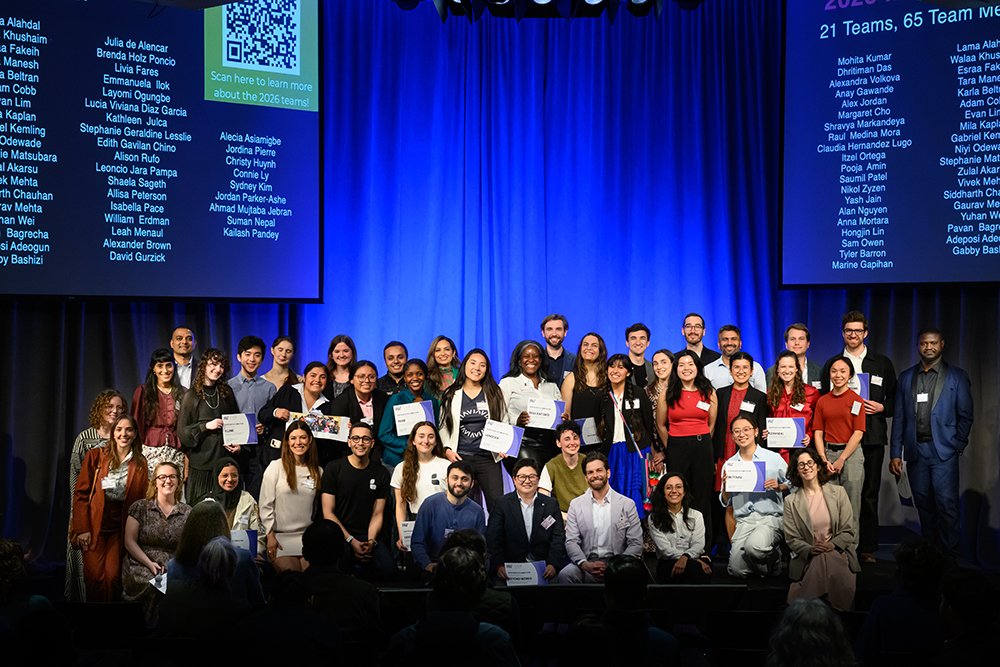
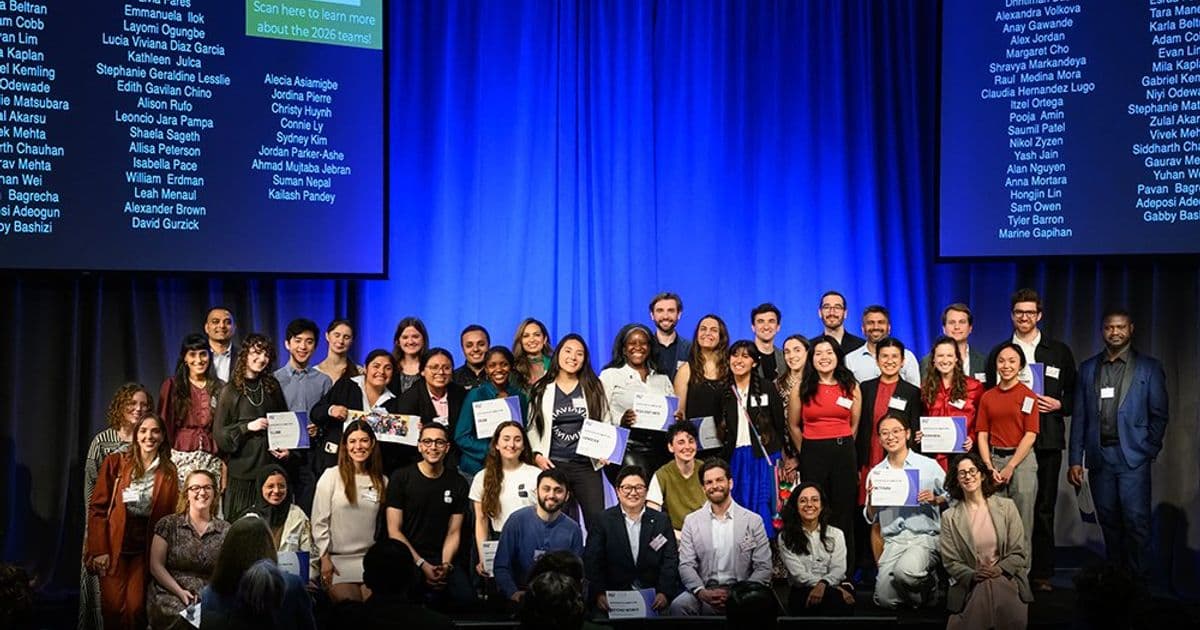
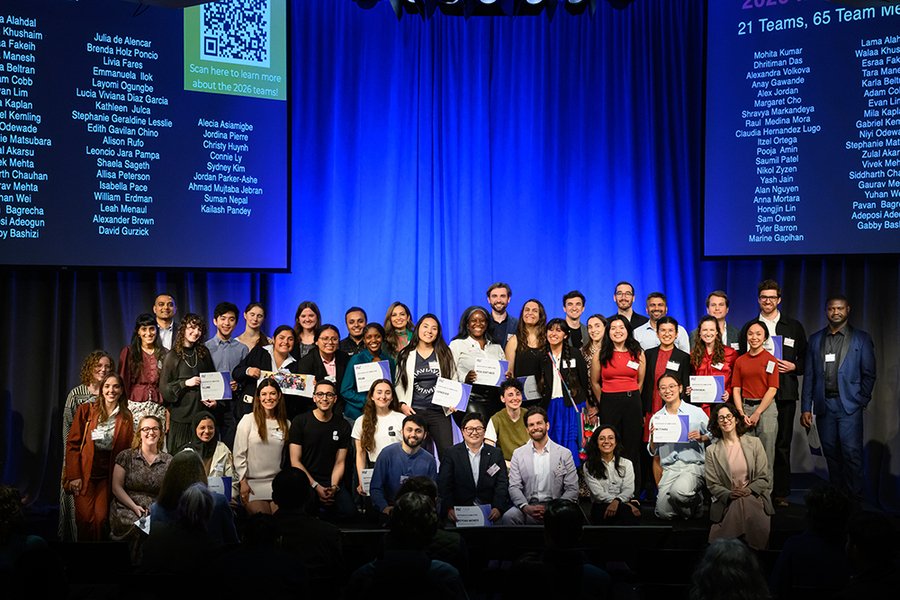
This year’s cohort included 21 MIT student-led teams, all focused on building social impact ventures with measurable community outcomes. A group photo of the full 2026 IDEAS cohort, many members holding completion certificates, captures the scale of this year’s participant group.
“Global and local challenges are increasingly complex and interconnected,” said Lauren Tyger, assistant dean for social innovation at the PKG Center and director of IDEAS. “IDEAS educates technical founders in systems thinking and community-based innovation, helping students develop business models that achieve both measurable social outcomes and financial sustainability.” The program’s focus on pairing technical rigor with community needs aligns with MIT’s broader push to apply research outputs to real-world problems, a priority echoed by campus leadership at the event.
The showcase included a keynote from IDEAS alumnus Bill Thies ’01, ’02, MNG ’02, PhD ’09, who shared his journey building tuberculosis medication adherence tools in India. Thies’ work started with a low-cost electronic pillbox, iterated through multiple prototypes, and eventually contributed to policy shifts in India’s TB treatment protocols. His project evolved into Nikshay, a national electronic medical records platform now supporting 150 million people, which recently transitioned to full government operation.
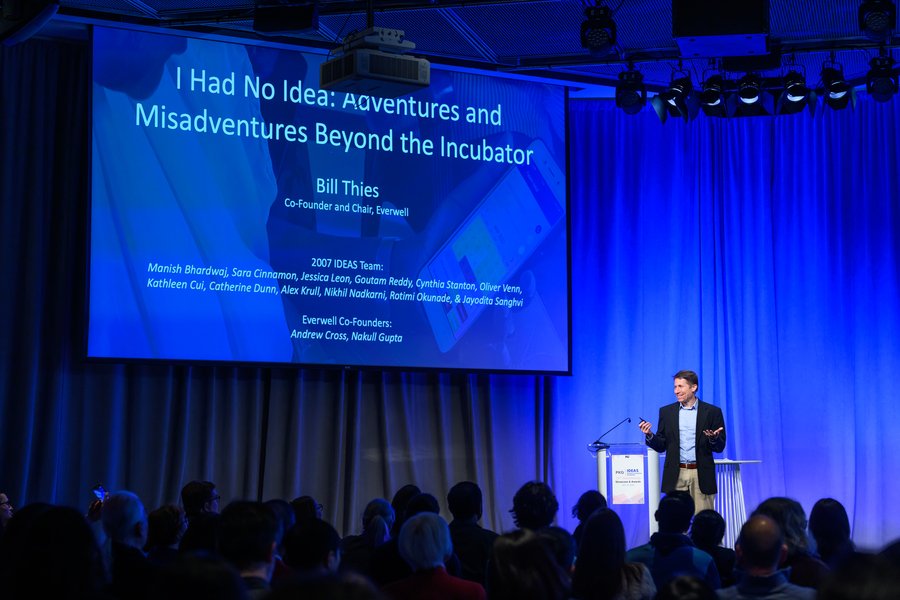
Thies emphasized that technical interventions are only one part of driving systemic change. “Innovations can open doors for much more important changes than the innovations themselves,” he said. He posed questions about policy alignment and human-centered design, noting that technology should act as a bridge to more equitable systems. Reflecting on his time in IDEAS, Thies said, “I always assumed that in IDEAS we were incubating projects. But what I’ve come to realize is that it’s actually the other way around: the projects are incubating us. We are the ones who will ultimately drive the change we hope to see in the world.” The IDEAS 25th Anniversary Impact Report released at the event details similar alumni success stories across sectors.
Chancellor for Academic Advancement Eric Grimson spoke to how IDEAS aligns with MIT’s strategic initiatives, including the MIT Generative AI Impact Consortium (MGAIC), MIT Health and Life Sciences Collaborative (MIT HEALS), and the MIT Climate Project, as well as recent calls from President Sally Kornbluth and Provost Anantha Chandrakasan to accelerate entrepreneurship campus-wide. “Many of the current presidential initiatives naturally include an opportunity for social entrepreneurship,” Grimson said, noting the growing number of alumni building climate, health, and AI-powered social enterprises.
PKG Center director Alison Badgett shared the program’s roadmap for expansion. “As MIT’s only student entrepreneurship program focused solely on social impact, we recognize the need to both scale social entrepreneurship programming at MIT, and to better position our student founders for scale after graduating.” Badgett announced a $150,000 catalytic gift from the Morgridge Family Foundation to support this vision. The funding will help build a social impact investor ecosystem at MIT, connecting student and alumni ventures with funders and normalizing social impact as a viable career path for technical graduates.
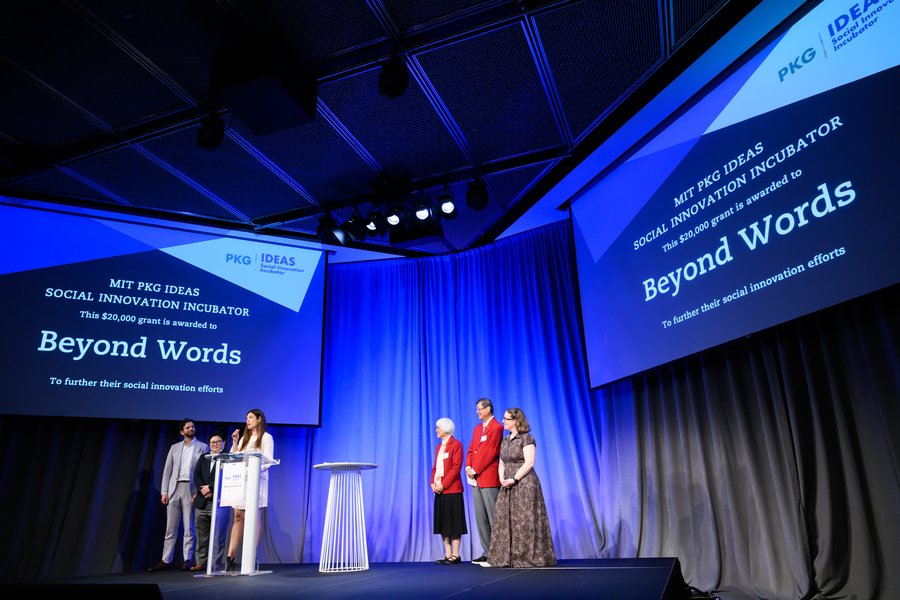
The event’s top $20,000 award went to Beyond Words, an assistive application for iPhone and Apple Watch designed for nonverbal individuals. The app passively captures user biometrics, audio, and location data, then transmits that information to designated caregivers to provide an additional layer of support.
From a technical perspective, the app relies on on-device sensors (accelerometers, heart rate monitors, microphones, GPS) to collect data without requiring active user input, a critical feature for populations with limited verbal or motor communication capacity. Real-world applications include reducing caregiver response times during medical emergencies, tracking daily routine patterns to identify health changes, and providing context for communication attempts. Potential limitations include data privacy risks associated with passive location and audio capture, as well as compatibility constraints limited to Apple’s ecosystem, which may exclude users with lower-cost Android devices.
Other award winners in the main category included:
- AyuConnect ($10,000): A WhatsApp-native, voice-first electronic health record system designed for Indian clinicians. The tool reduces documentation time by processing voice inputs in multiple Indian languages, addressing clinician burnout and expanding care access in resource-constrained settings. Technical trade-offs include reliance on WhatsApp’s API stability and limited functionality for users without consistent internet access.
- PEAR ($7,500): A hands-on STEM research program for Nigerian and broader African secondary students, teaching technical skills to address local community challenges. The program’s in-person model ensures hands-on learning but limits reach to students in areas with partner institutions.
- CommonGround ($5,000): An online platform that connects Boston residents to hyper-local climate action opportunities, replacing vague eco-anxiety with concrete, collective resilience projects. The platform uses geocoding to match users to actions within their neighborhoods, though adoption depends on local municipal partnership to surface accurate opportunity data.
- Sehat Screen ($5,000): An AI-powered cervical cancer screening device designed for use in Afghanistan and other resource-constrained countries. The tool uses computer vision to analyze low-cost microscope images, reducing dependence on specialist pathologists. Limitations include the need for calibrated low-cost microscopes and training for local health workers to operate the device.
- Breakthrough Health ($2,500): A care coordination platform linking hepatitis C patients in recovery centers to ongoing health care services. The platform integrates with existing electronic health records but requires manual data entry at sites without compatible EHR systems.
- Sero ($2,500): A voice-first AI tool that helps rural borrowers in Nepal understand loan contracts in their native languages, with no literacy requirement. The tool uses natural language processing to parse complex legal terms into plain speech, though it currently supports only a limited number of Nepali dialects.
Shane Kosinski, executive director of the Office of the Vice President for Energy and Climate, announced the inaugural Climate Student Innovators awards, funded by the MIT Climate Project and presented annually. “The MIT Climate Project is an all-of-MIT initiative with the ambitious goal to make a measurable difference on climate change within a decade. We reach this global impact not by top down mandates, but by testing good ideas where they are needed most and supporting them to succeed,” Kosinski said. “This vision is also hardwired into the character, history and purpose of PKG IDEAS.”
This year’s climate award winners included:
- Q’ochas Resilientes ($15,000): A team co-designing climate-resilient water technology with communities in the Peruvian Andes, integrating ancestral water management knowledge with modern sensor-based monitoring systems to support agricultural livelihoods. The technical approach uses low-power IoT sensors to track water table levels and soil moisture, but deployment depends on reliable cellular connectivity in remote mountain regions.
- NECTICA ($15,000): A Lagos-based team empowering women-led cooperatives with low-tech sorting bins to separate composite waste for monetization, reducing urban flooding by clearing drainage systems. The mechanical sorting bins use simple mesh gradients to separate plastics, metals, and organic waste, with no electronic components required, making them easy to maintain in resource-constrained settings.
- MittiNav ($15,000): A team building production and supply-chain systems to scale biochar technology, which restores soil health and stores atmospheric carbon. The technical process involves pyrolyzing agricultural waste in low-oxygen environments, with supply chain logistics focused on connecting smallholder farmers to industrial biochar buyers. Challenges include high upfront costs for pyrolysis units and variable biochar quality depending on feedstock type.
- Resilient Grid ($5,000): A team deploying skid-mounted anaerobic digestion platforms to process food waste into biogas for electricity and heat in Caribbean island nations. The modular design allows for rapid deployment, but biogas output depends on consistent food waste feedstock volume, which can fluctuate seasonally in tourism-dependent island economies.
Vice President for Energy and Climate Evelyn Wang noted, “The Climate Project is thrilled to present the first-ever Climate Student Innovators Awards to these teams. We applaud this year’s IDEAS winners for developing systemic interventions in partnership with affected communities.”
Several additional teams received $1,000 awards, including ventures with clear technical applications:
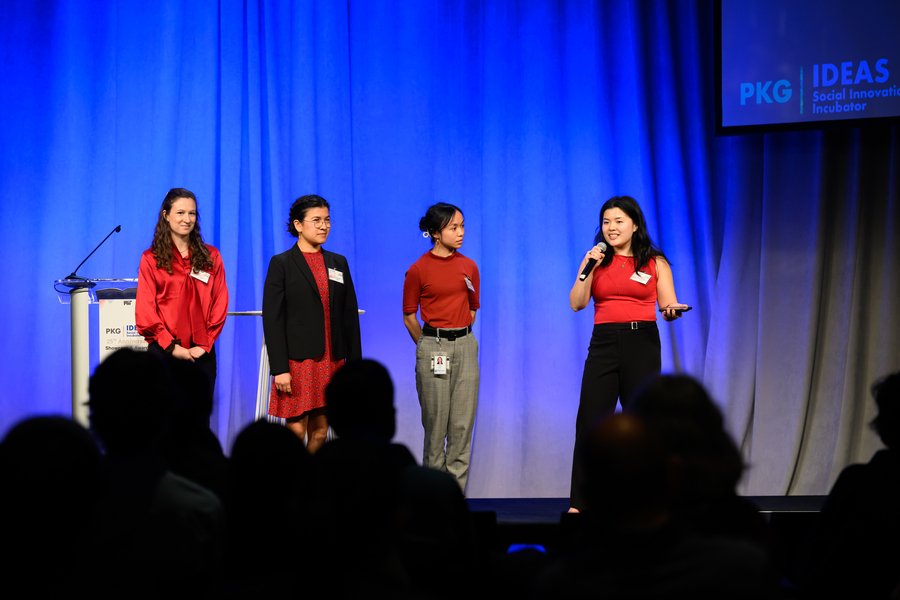
- CerviSeal: A medical device designed to reduce pain, tissue trauma, and infection risk during cervical manipulation for women undergoing hysteroscopy procedures. The device uses a soft, biocompatible seal to maintain uterine pressure, replacing rigid metal instruments that cause more tissue damage.
Regulatory approval for medical devices will be a key barrier to widespread adoption, as the team must complete clinical trials to meet FDA and international medical device standards.
- Homeroom Hero: An AI tool for K-12 teachers that automatically grades short-form assessments, reducing workload without putting technology in front of students. The tool uses natural language processing to evaluate written responses, with accuracy trade-offs for creative or open-ended prompts that fall outside its training dataset.
- Gees Health: A noninvasive, at-home hormone monitor for women with polycystic ovary syndrome, using saliva-based sensors to track hormone levels continuously. The device connects to a companion app that provides personalized health insights, though saliva-based testing can be less accurate than blood draws for certain hormones.
- Opta: An AI talent refinery that upskills low-socioeconomic status students in Brazil for small and medium business roles, using adaptive learning paths to match student skills to local job market needs. The tool’s effectiveness depends on accurate, up-to-date labor market data from Brazilian municipalities.
- Illume: Discreet wearable devices for recovering victims of human trafficking, allowing them to silently contact trusted support network members. The wearables use simple button presses to send pre-set alert messages with location data, with battery life optimized for long-term use without frequent charging.
The event closed with Tyger thanking the network of alumni, mentors, funders, and 104 volunteers who supported this year’s incubator. “IDEAS builds more than social enterprises — we’re building the infrastructure and community needed for alumni and their ventures to achieve long-lasting impact. Our vision is a future where MIT entrepreneurship is not only focused on technical novelty, but fundamentally grounded in social impact.” For more information on the program, visit the PKG Center for Social Impact or review the full list of 2026 IDEAS teams.
Comments
Please log in or register to join the discussion