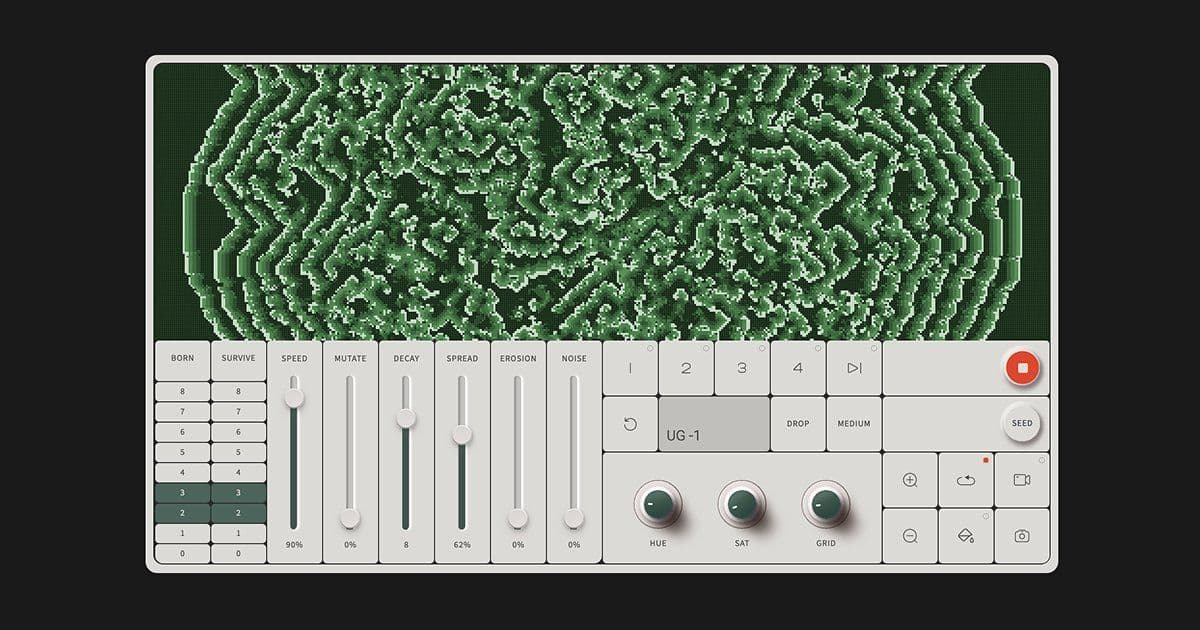
From Conway's Game of Life to AI model simulations, cellular automata demonstrate how simple rules generate profound complexity. This foundational concept continues to reshape computational modeling and artificial intelligence.
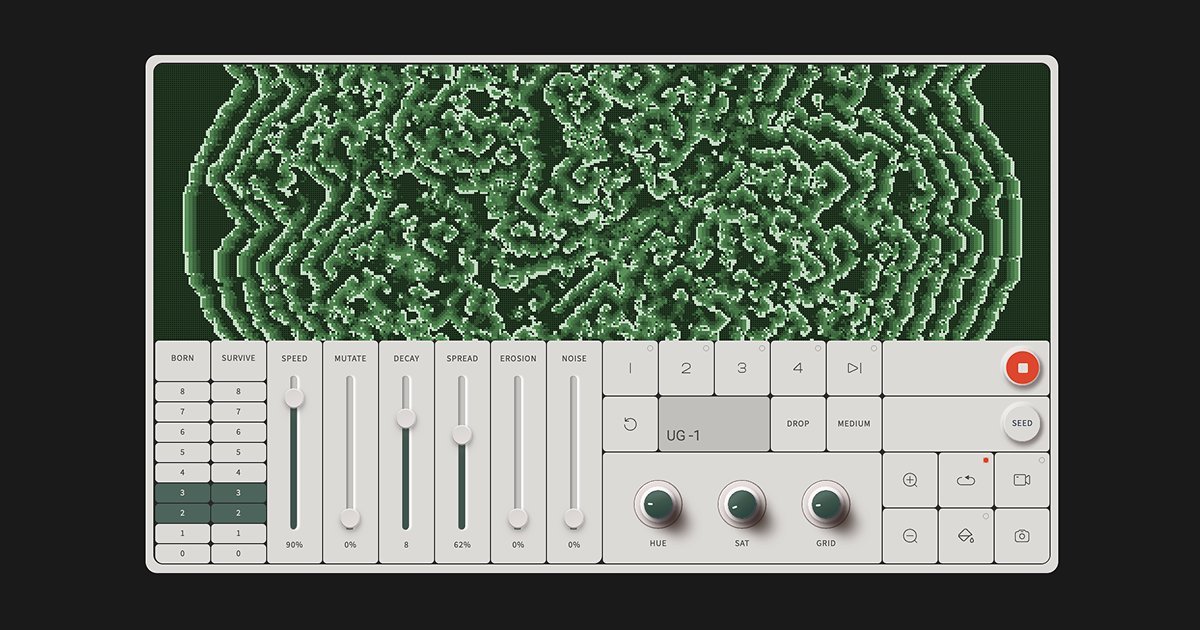
Cellular automata—discrete models governed by local rules—have fascinated mathematicians, computer scientists, and engineers for decades. These systems, consisting of grids of cells evolving through state transitions based on neighboring configurations, reveal how intricate global patterns emerge from elementary local interactions. Their relevance extends far beyond theoretical mathematics, influencing fields from cryptography to artificial intelligence and computational biology.
The concept gained mainstream attention through John Horton Conway's 1970 creation, the Game of Life. Despite its minimalist ruleset—where cells live, die, or multiply based solely on adjacent cell counts—the system produces astonishing complexity: gliders traverse grids, oscillators pulse rhythmically, and even universal Turing machines can be constructed. This demonstrated that computational universality could emerge from astonishingly simple systems.
In modern computing, cellular automata serve as powerful tools for modeling natural phenomena. Fluid dynamics researchers leverage them to simulate turbulence, while materials scientists use them to model crystal growth. In artificial intelligence, they underpin generative adversarial networks (GANs) and provide frameworks for studying swarm intelligence and decentralized decision-making. The principles also appear in blockchain consensus mechanisms, where distributed nodes follow local rules to achieve global system integrity.
Platforms like cellular-automata.studio now democratize exploration of these systems through interactive visualizations. Such tools enable developers to experiment with rule variations and observe emergent behaviors in real-time, accelerating innovation in fields requiring complex simulation.
The enduring significance of cellular automata lies in their demonstration of emergence—where collective behavior transcends individual components. As AI systems grow more sophisticated and simulations demand greater fidelity, these foundational models offer critical insights into designing systems where simplicity begets complexity. They remind us that the most profound computational challenges may yield not to brute force, but to elegant, rule-based elegance.
Comments
Please log in or register to join the discussion