
Top Chinese AI leaders acknowledge significant structural barriers preventing China from surpassing US AI leadership, citing computing limitations and semiconductor restrictions.
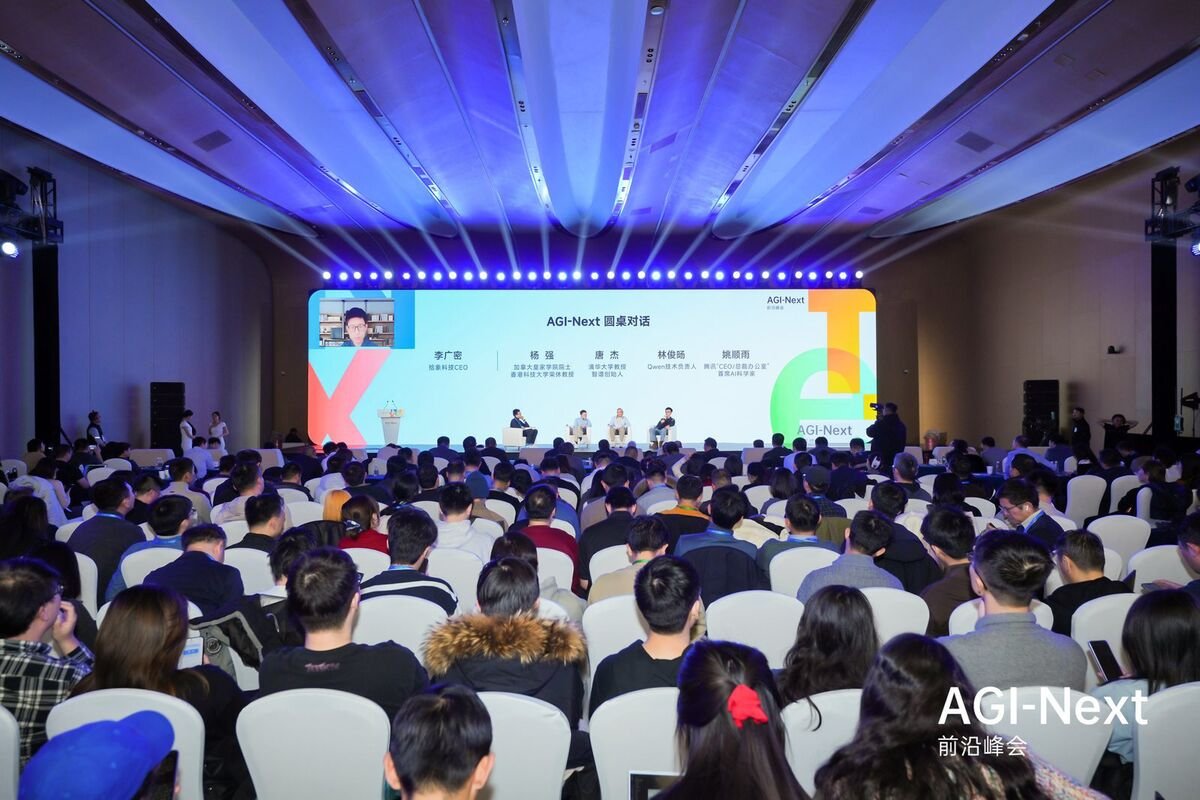
Prominent figures within China's artificial intelligence sector have delivered a sobering assessment of the nation's position in the global AI race. According to executives from leading Chinese AI firms, China faces fundamental constraints that will prevent it from eclipsing US leadership in artificial intelligence development for the foreseeable future. This admission highlights how geopolitical tensions and resource limitations are reshaping technological competition.
The core constraints cluster around two critical areas:
Computing Resource Scarcity: Chinese AI companies report severe limitations in high-performance computing infrastructure essential for training cutting-edge models. "We're operating with one hand tied behind our back," noted an executive at a Beijing-based AI lab speaking anonymously. "Access to sufficient GPU clusters remains our primary bottleneck."
Semiconductor Access Barriers: The US-led export controls on advanced AI chips have significantly hampered China's progress. Restrictions targeting Nvidia's A100/H100 GPUs and subsequent generations have forced Chinese researchers to work with significantly less efficient domestic alternatives. Industry estimates suggest training times for frontier models have increased by 40-60% using sanctioned hardware configurations.
This resource gap manifests in tangible ways across China's AI ecosystem. Where US labs can rapidly iterate on foundation models with near-unlimited compute budgets, Chinese counterparts must prioritize narrow applications over fundamental research. Several generative AI startups have pivoted from pursuing foundational models to developing vertical-specific implementations for manufacturing and healthcare.
The hardware disadvantage extends beyond training limitations. Deployment of large-scale AI applications faces energy infrastructure constraints, with power demands for AI data centers exceeding available capacity in major tech hubs like Shanghai and Shenzhen. Industry analysts note that China's compute-per-researcher ratio remains approximately one-fifth of US levels despite heavy state investment.
While China maintains advantages in surveillance AI and certain industrial applications, executives acknowledge falling behind in the critical frontier of generative AI. "We're not competing on the same playing field," conceded a CTO at a Shenzhen-based AI firm. "When you're rationing GPU hours while competitors operate without constraints, it changes the nature of innovation."
This assessment emerges as Chinese tech giants accelerate investments in semiconductor self-sufficiency through ventures like CXMT's planned $4.2B IPO. Yet even optimistic projections suggest China's domestic chip manufacturing won't reach parity before 2030 for the most advanced AI processors. The current generation of Chinese GPUs like the Biren BR100 still lag Nvidia's flagship chips by approximately two generations in performance benchmarks.
For global enterprises investing in AI ecosystems, these disclosures signal continued US technological primacy while validating diversification strategies. As generative AI shifts from research to deployment, China's hardware constraints may accelerate adoption of hybrid approaches combining Western chips for training with localized inferencing solutions – a technological workaround with significant implementation complexity.
The acknowledgment from industry leaders suggests a pragmatic recalibration of China's AI ambitions. Instead of overtaking US leadership, Chinese firms appear focused on developing specialized applications within their resource constraints while pursuing long-term semiconductor independence – a strategy that concedes the frontier of AI innovation to US labs for at least the current technological cycle.
Comments
Please log in or register to join the discussion