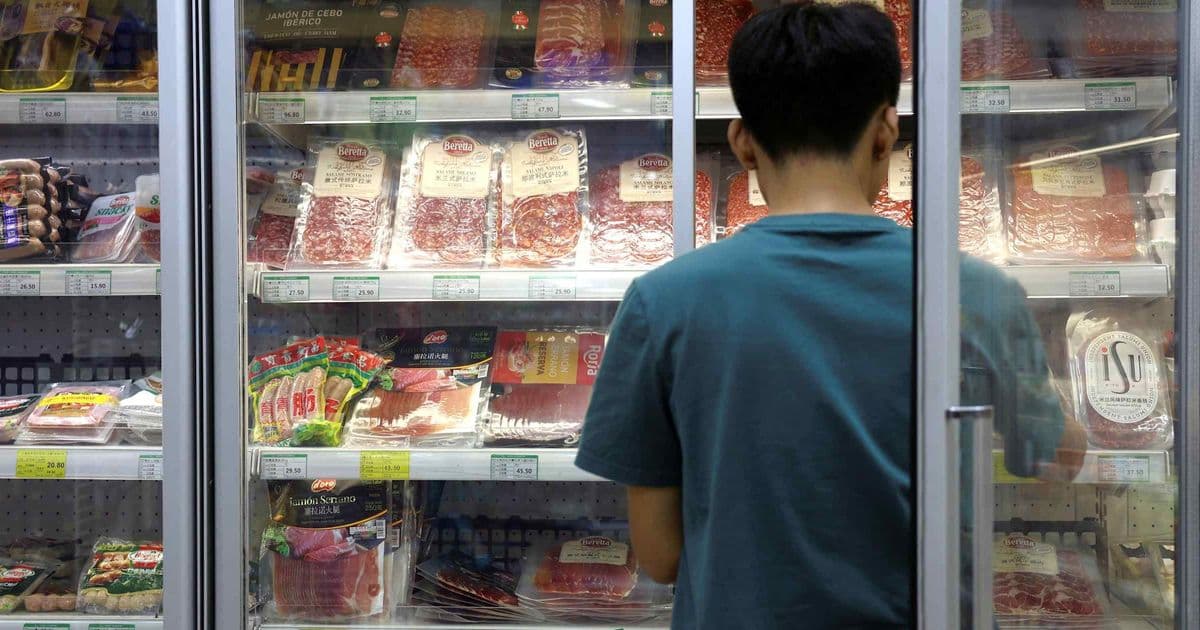
April retail sales in China rose just 0.2% year‑on‑year, far below analysts' expectations and the lowest pace since the pandemic began. The weak demand signals lingering consumer hesitancy despite recent diplomatic overtures between the United States and China, and raises questions about the effectiveness of policy tools aimed at stimulating domestic consumption.
Retail sales data and immediate reaction
China’s National Bureau of Statistics reported that retail sales grew 0.2% in April 2024 compared with the same month a year earlier. The figure missed the consensus forecast of 1.1% and marks the slowest expansion since early 2020, when the pandemic first shut down large‑scale shopping.
The data released on May 18 showed a modest rise in total sales of ¥2.3 trillion, up from ¥2.28 trillion in April 2023. Core categories such as food, beverages and daily necessities posted a small gain of 0.5%, while non‑essential segments—apparel, electronics and auto‑related services—declined by 0.4%.
Market context
The slowdown arrives as Beijing continues to grapple with a post‑COVID consumption slump. Household savings rates remain above 30 % of disposable income, indicating that many families are still prioritising cash reserves over discretionary spending.
At the same time, the recent summit between President Donald Trump and President Xi Jinping generated headlines about tariff reductions and trade‑boosting pledges. However, the retail data suggest that diplomatic goodwill has yet to translate into tangible buying power on the ground.
Comparison with broader macro indicators
| Indicator | April 2024 | Year‑on‑year change | Comment |
|---|---|---|---|
| Retail sales growth | 0.2 % | – | Slowest since 2020 |
| Industrial production | 4.6 % | +0.3 pp | Still above trend |
| Fixed‑asset investment | 5.1 % | +0.2 pp | Slightly stronger |
| CPI (inflation) | 1.8 % | – | Near target |
While industrial output and fixed‑asset investment are holding modestly above trend, retail sales remain the weak link, underscoring an uneven recovery.
What it means for policy and the tech sector
- Consumer‑oriented stimulus may need recalibration – Traditional fiscal tools such as tax rebates on vehicle purchases have limited reach when confidence is low. Targeted vouchers for online platforms or subsidies for smart home devices could stimulate demand in higher‑margin tech categories.
- E‑commerce players face a tighter margin environment – Companies like Alibaba and JD.com reported a slowdown in average order value, pressuring profit margins. The sector may respond by accelerating logistics automation and AI‑driven personalization to extract more value from each transaction.
- Domestic chip and AI firms could see mixed effects – Lower consumer spending may delay upgrades of personal devices, but the government’s “dual circulation” strategy continues to fund enterprise‑level AI adoption, potentially offsetting the retail dip for B2B tech vendors.
- Foreign investors will watch policy signals closely – The modest retail rebound does not yet justify a re‑rating of China’s consumer‑focused equities. Investors are likely to wait for clearer evidence that policy measures are shifting the trend.
Strategic outlook
If retail sales remain below 1 % growth through the next two quarters, analysts expect the People’s Bank of China to consider a modest rate cut or additional liquidity injections. Such moves could lower borrowing costs for small‑ and medium‑sized enterprises, indirectly supporting consumer‑facing tech firms.
Conversely, a sudden uptick in retail sales—triggered perhaps by a new round of consumer vouchers tied to digital services—could accelerate the rollout of 5G‑enabled retail experiences, boosting demand for edge‑computing hardware and cloud services.
Bottom line: April’s 0.2 % retail sales growth signals that consumer confidence remains fragile despite high‑level diplomatic overtures. Policymakers will need more than tariff talks to revive domestic demand, and tech companies should prepare for a near‑term environment where growth is driven by targeted incentives rather than broad‑based spending recoveries.
Comments
Please log in or register to join the discussion