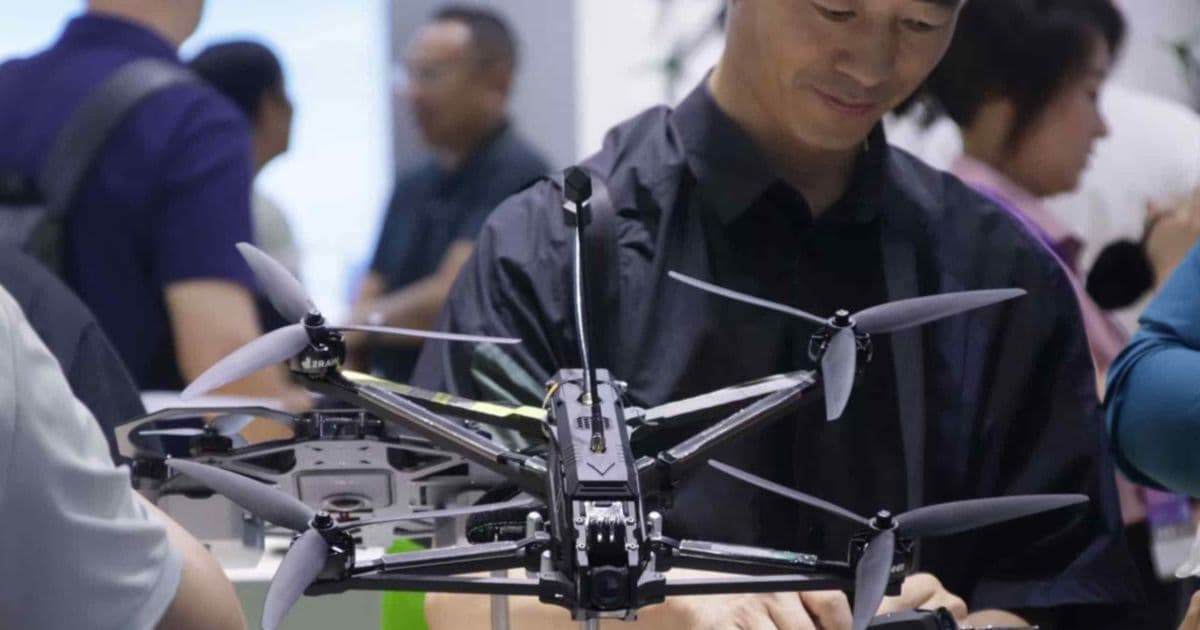
Chinese civilian drone exports fell by more than 45% in the first quarter of 2026 after Beijing imposed new tracking‑device mandates and the United States upheld a ban on DJI products. The slowdown is forcing manufacturers to pivot toward action cameras and industrial imaging, while reshaping global supply chains and raising questions about the future of the consumer‑drone market.
Chinese Drone Shipments Collapse as Domestic Controls Tighten and U.S. Ban Takes Effect
Business news
In the three months to March 2026, shipments of Chinese‑made civilian drones fell 45.7% year‑on‑year, according to data from market‑research firm IDC. The decline follows two decisive policy moves: a domestic regulation requiring every drone sold in China to embed a geofencing and remote‑identification module, and the U.S. Commerce Department’s continuation of the 2024 ban on imports of DJI and several other Chinese brands.
DJI, which held ~78% of the global consumer‑drone market in 2023, reported a $1.2 billion revenue drop for Q1 2026, citing “unforeseen regulatory constraints” in its earnings release. Smaller players such as Autel Robotics and Yuneec posted double‑digit revenue contractions, with Autel’s sales down 38% and Yuneec’s down 52%.
Market context
Domestic restrictions
Beijing’s new “Drone Identification and Management” rule, effective 1 April 2026, mandates that all drones above 250 g carry a hardware‑based transponder that streams real‑time location data to a national monitoring network. The regulation also bans sales of drones capable of flying beyond a 5‑km radius without a government‑issued permit. Analysts estimate compliance costs of $15‑$25 per unit for manufacturers, a margin squeeze for low‑priced models that dominate the Chinese market.
U.S. ban impact
The United States has maintained the Entity List designation for DJI, citing concerns over data security and potential military applications. The ban blocks DJI from selling directly to U.S. consumers and from licensing its technology to U.S. firms. In response, DJI filed a Section 337 complaint with the U.S. International Trade Commission, arguing that the ban violates WTO rules, but the case is unlikely to be resolved before the end of 2026.
Global supply‑chain shifts
With the United States cutting off a major export channel, European and Asian OEMs are scrambling to fill the gap. Parrot (France) and Skydio (USA) announced accelerated production plans, aiming to increase combined output by 30% by Q4 2026. Meanwhile, manufacturers in Vietnam and Malaysia are receiving new orders for “budget‑grade” drones that meet the Chinese tracking requirement but are destined for markets in Africa and Latin America, where the U.S. ban has less reach.
What it means
Revenue reallocation – DJI’s 2026 guidance projects a 15% decline in consumer‑drone revenue, offset by a 22% rise in its action‑camera division, which now includes the Osmo Action 5 series. The shift mirrors a broader trend where drone makers repurpose stabilization and imaging technology for handheld cameras and industrial inspection tools.
Pricing pressure – Compliance costs are being passed to consumers, pushing the average price of a mid‑range Chinese drone from $399 in 2023 to $459 in 2026. Higher prices could accelerate the migration of hobbyists to cheaper alternatives such as smartphone‑based aerial rigs.
Regulatory spillover – Other Asian governments, notably South Korea and Japan, are monitoring China’s approach. Japan’s Ministry of Internal Affairs has proposed a similar remote‑identification system for drones operating in urban airspaces, potentially creating a de‑facto regional standard.
Strategic diversification – DJI’s investment in action‑camera R&D and industrial imaging (e.g., the new Zenmuse L1 LiDAR platform) suggests a long‑term pivot away from pure consumer drones. This diversification may protect the company from future export restrictions but also intensifies competition in adjacent markets.
Supply‑chain resilience – U.S. defense contractors, wary of reliance on Chinese components, are accelerating domestic production of high‑performance UAV subsystems. The Pentagon’s “Drone Secure Supply Initiative” earmarks $850 million for U.S. firms to develop alternative flight‑control chips and secure‑link radios by 2028.
Overall, the confluence of Beijing’s tracking mandate and the U.S. import ban has compressed the once‑robust Chinese consumer‑drone export engine. While manufacturers are scrambling to redeploy assets into cameras and industrial solutions, the episode underscores the growing fragility of global UAV supply chains when geopolitical and regulatory forces intersect.
Sources: IDC Worldwide Drone Market Tracker 2026, DJI Q1 2026 earnings release, U.S. Commerce Department Entity List (2024‑2026), Japan Ministry of Internal Affairs policy brief (May 2026).
Comments
Please log in or register to join the discussion