A new analysis argues that Anthropic's Claude Code isn't just another coding assistant, but a fundamental shift that threatens horizontal software companies built for human consumption.
The argument from Doug OLaughlin at Fabricated Knowledge is stark: Claude Code represents a "ChatGPT moment repeated" and an "extinction-level event" for horizontal software companies. The core thesis isn't about incremental improvements in coding tools, but about a fundamental shift in how software gets built, consumed, and valued.
What's Actually New
Claude Code differs from previous AI coding assistants in its operational model. While tools like GitHub Copilot function as autocomplete on steroids—suggesting snippets within an existing human-driven workflow—Claude Code operates at a higher level of abstraction. It can read entire codebases, execute commands, modify files, and manage complex development tasks through natural language instructions.
This isn't just "faster typing." It's a different paradigm. Traditional development tools assume a human sits at the center, making decisions and translating intent into code. Claude Code inverts this: the AI becomes the primary actor, with the human providing high-level guidance.
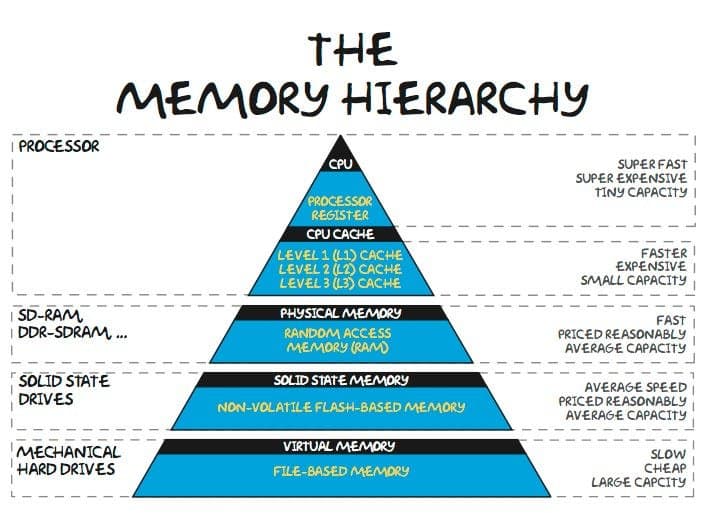
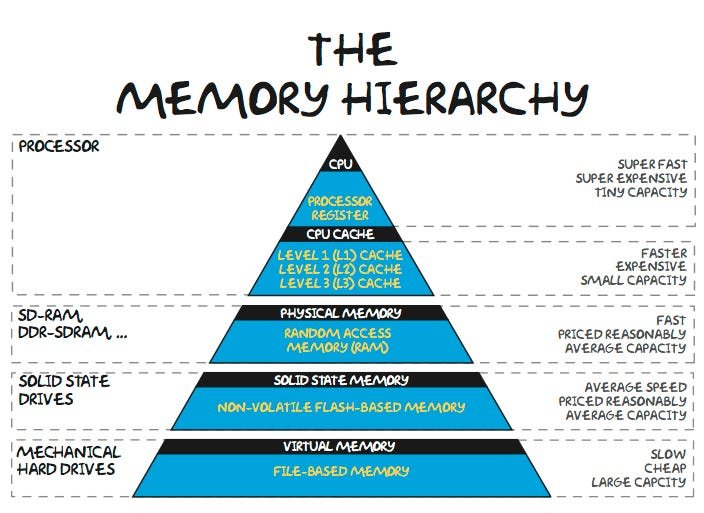
The Memory Hierarchy Analogy
OLaughlin's most useful insight compares this shift to memory hierarchies in computer architecture. Just as we layered cache, RAM, and disk storage to optimize performance, software development is being re-architected:
Layer 1: Human cognition (slow, expensive, error-prone for routine tasks) Layer 2: AI agents (fast, scalable, handling implementation details) Layer 3: Raw infrastructure (compute, storage, networking)
In this model, the value moves away from tools that optimize the human layer (better IDEs, project management dashboards, documentation systems) and toward orchestrating the AI layer.
Why Horizontal Software Is Vulnerable
Companies that sell "human-oriented" software face a specific threat. Consider:
- Project management tools (Asana, Jira, Monday): If AI agents can coordinate themselves and generate status updates automatically, how much human-facing UI is actually needed?
- Documentation platforms (Notion, Confluence): When code can self-document and AI can generate context-aware explanations on demand, static documentation becomes redundant.
- Communication tools (Slack, Teams): If agents handle routine coordination, the volume of human-to-human communication changes.
- Analytics dashboards: Instead of humans logging in to check metrics, AI agents can monitor, alert, and even auto-remediate issues.
The pattern is consistent: software built for human eyes and hands becomes less relevant when the primary actor is an AI agent.
The Markdown Thesis
OLaughlin's line "The age of PDF is over. The time of markdown has begun" captures the format shift. PDFs, complex UIs, and polished interfaces are designed for human consumption. Markdown, APIs, and structured data are designed for machine consumption. When AI agents do the work, the output format that matters is whatever the agent can parse and act upon.
This explains why companies like Anthropic are pushing toward agent-native workflows rather than just better chat interfaces.
Limitations and Counterarguments
This analysis has blind spots worth noting:
1. Regulatory and compliance requirements won't disappear. Many industries require human-readable audit trails, formal documentation, and specific UI standards. AI agents can generate these, but the requirement for human-facing outputs remains.
2. Not all software is horizontal. Specialized vertical software—CAD tools, medical imaging, scientific simulation—requires deep domain expertise that AI agents don't yet possess. The extinction event may be limited to general-purpose business tools.
3. The human layer still matters for oversight. Even if agents do the work, humans need interfaces to understand what happened, why, and whether it aligns with business goals. The interface might change, but it doesn't vanish.
4. Adoption friction is real. Enterprises move slowly. A technical capability doesn't immediately translate to organizational restructuring. The "extinction" might be a slow decline over years, not a sudden event.
What Changes
If OLaughlin's thesis holds, we should expect:
- Consolidation: Smaller tools that optimize human workflows get absorbed into larger agent platforms
- API-first design: Success depends on how well software integrates with AI agents, not how pretty the UI is
- Pricing model shifts: From per-seat subscriptions to per-action or per-outcome models
- New categories: Agent orchestration platforms, AI observability tools, and agent-to-agent communication protocols
The winners won't be companies with the best human interfaces, but those that make their services most useful to AI agents. That's a different game entirely.
Related Reading
- Fabricated Knowledge article by Doug OLaughlin
- Anthropic's Claude Code documentation for technical details
- Memory hierarchy concepts in computer architecture
The fundamental question isn't whether AI will change software development—it already has. It's whether the companies that built their success on human-centric design can adapt to a world where the primary user is an AI agent. For many, that adaptation may be impossible.
Comments
Please log in or register to join the discussion