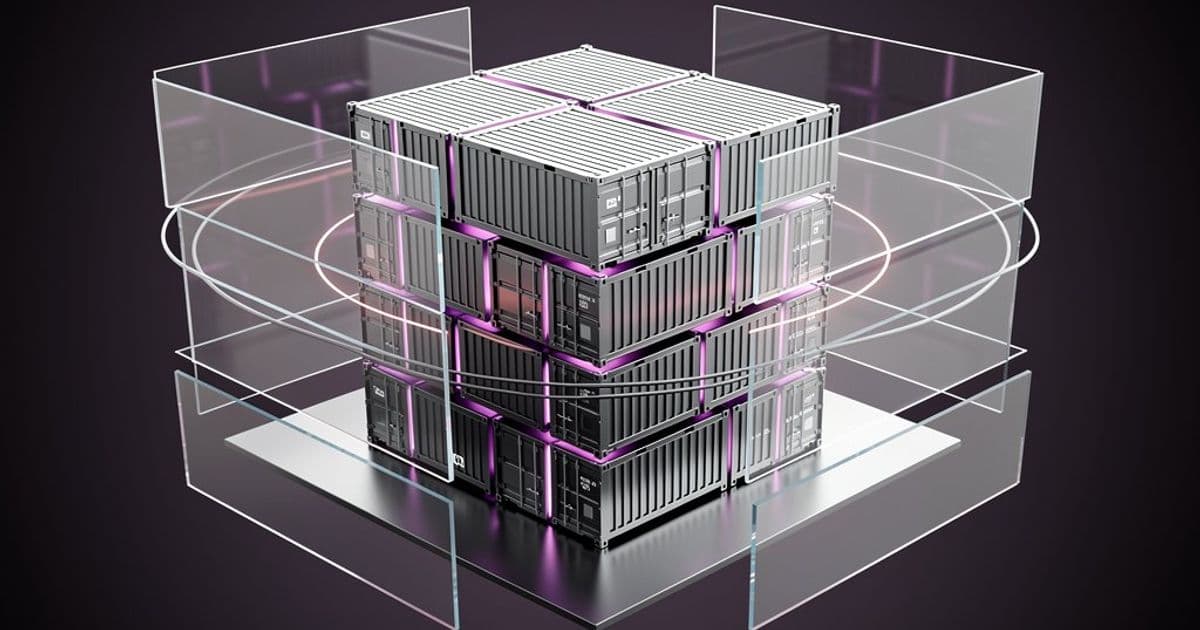
As container adoption transforms application deployment, security challenges intensify in distributed environments where kernel sharing, orchestration complexity, and image vulnerabilities create systemic risks requiring layered countermeasures.
The shift to containerized architectures has fundamentally altered how modern applications are built and deployed, enabling unprecedented scalability and resource efficiency. Yet this distributed paradigm introduces unique security challenges where traditional perimeter defenses fall short. When containers share kernel resources across hundreds of nodes, a single vulnerability can cascade through entire clusters, turning scalability into an attack amplifier.
The Distributed Security Conundrum
Containers operate within a layered stack: host OS, container runtime (Docker, containerd), images, and orchestration platforms like Kubernetes. Each layer introduces distinct attack vectors exacerbated by distributed environments:
- Kernel Sharing Risks: Containers on a host share the same OS kernel. A privilege escalation vulnerability like CVE-2021-4034 in glibc can compromise every container on affected nodes (Linux Kernel Vulnerabilities).
- Orchestration Complexity: Kubernetes API servers become central attack points. Misconfigured RBAC policies or exposed dashboards allow lateral movement across clusters (Kubernetes Security Docs).
- Image Vulnerability Propagation: A compromised base image deployed at scale infects all dependent containers. The 2022 cryptomining attack via malicious Docker Hub images demonstrated this risk (Docker Security Advisory).
- State Consistency Challenges: Enforcing uniform security policies across dynamic, ephemeral containers requires automated synchronization—a complex distributed systems problem.
Strategic Countermeasures
1. Image Integrity as Foundation Container images are the DNA of your deployment. Minimize attack surfaces through:
- Distributed Trust Verification: Implement image signing using Cosign or Docker Content Trust to validate provenance across registries.
- Scalable Vulnerability Scanning: Integrate tools like Trivy into CI/CD pipelines to detect flaws before deployment. Trade-off: Comprehensive scanning adds latency to deployment cycles.
- Immutable Minimal Images: Use multi-stage builds to produce lean containers. Reduces attack surface but complicates debugging.
2. Runtime Isolation at Scale
- Namespacing Enforcement: Leverage Linux namespaces and cgroups to isolate containers. Requires kernel-level coordination across hosts.
- Seccomp/AppArmor Profiles: Restrict system calls using dynamic profiles. Example: Blocking
ptraceprevents process debugging exploits (Seccomp Documentation). Trade-off: Overly restrictive profiles break legitimate applications. - Non-Root Containers: Running as non-root limits blast radius but requires careful uid/gid mapping in distributed environments.
3. Orchestrator Hardening
- API Protection: Secure Kubernetes API servers with network policies and mutual TLS authentication. Use Kyverno for policy enforcement.
- Secrets Management: Avoid Kubernetes Secrets in etcd (vulnerable at rest). Integrate HashiCorp Vault for dynamic secrets distribution.
- Network Microsegmentation: Enforce zero-trust networking with Calico or Cilium. Trade-off: Complex policy management at scale.
4. Distributed Monitoring
- Runtime Threat Detection: Deploy Falco across nodes to detect anomalous behavior like privilege escalation.
- Centralized Logging: Aggregate logs using Fluentd/Elasticsearch for cross-cluster analysis. Trade-off: Increased network overhead.
The Trade-Off Landscape
Implementing these measures introduces operational tensions:
| Security Measure | Performance Impact | Management Complexity |
|---|---|---|
| Kernel Hardening | Low CPU overhead | High (OS-specific) |
| Network Policies | Latency increase | Policy synchronization challenges |
| Image Scanning | Deployment delays | False positive triage |
Organizations must balance security rigor against deployment velocity. As container fleets grow, automated policy enforcement becomes non-negotiable—manual oversight fails at cloud scale.
Future Directions
Emerging technologies aim to resolve these tensions:
- eBPF-Based Security: Tools like Tetragon provide kernel-level visibility with minimal overhead.
- Confidential Containers: Hardware enclaves (Intel SGX, AMD SEV) encrypt container memory during execution.
- Policy-as-Code: Frameworks like Open Policy Agent enable version-controlled, testable security rules.
Container security is a continuous adaptation. As one Kubernetes security engineer noted: 'We're defending a moving city where walls alone are useless. You need sentinels on every corner.' By layering image hygiene, runtime constraints, orchestrator policies, and distributed monitoring, organizations can secure their containerized infrastructure without sacrificing scalability.
Comments
Please log in or register to join the discussion