A personal Wordle loss sparks an exploration into computational strategies that leverage NP-complete problems and entropy to minimize defeat. This analysis reveals optimized word sets and trade-offs between speed, risk, and streak preservation, rooted in probability theory and data from Wordle's solution dictionary.
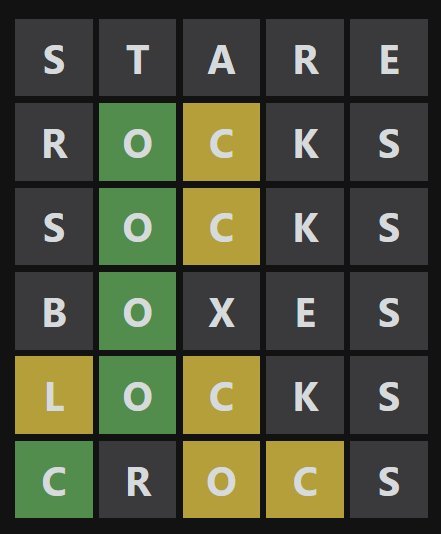
It began with a streak-shattering defeat: the word "COLIC" ended a week-long run of Wordle victories. That frustration ignited a quest to mathematically guarantee success, revealing how algorithmic thinking can transform a simple word game into a lesson in computational optimization.
The Premise: Covering the Alphabet Against All Odds
The core strategy involves finding five words that collectively use 25 unique letters—covering nearly the entire alphabet—to eliminate uncertainty. With 26 letters in English, one letter is always missed, but letter frequency follows a power law. Common letters like E (12.7% frequency) dominate, while Q, J, Z, and X appear in less than 1% of words. This imbalance allows for high-efficiency coverage despite the gap.
Finding such "perfect sets" is a variant of the NP-complete Set Cover Problem, requiring a brute-force search through approximately 3.28 × 10^12 combinations. As computational linguist William J. Buchanan's frequency table shows, prioritizing high-frequency letters minimizes risk:
| Letter | Frequency | Letter | Frequency |
|---|---|---|---|
| E | 12.7020% | M | 2.4060% |
| T | 9.0560% | W | 2.3600% |
| A | 8.1670% | F | 2.2280% |
| O | 7.5070% | G | 2.0150% |
| ... | ... | ... | ... |
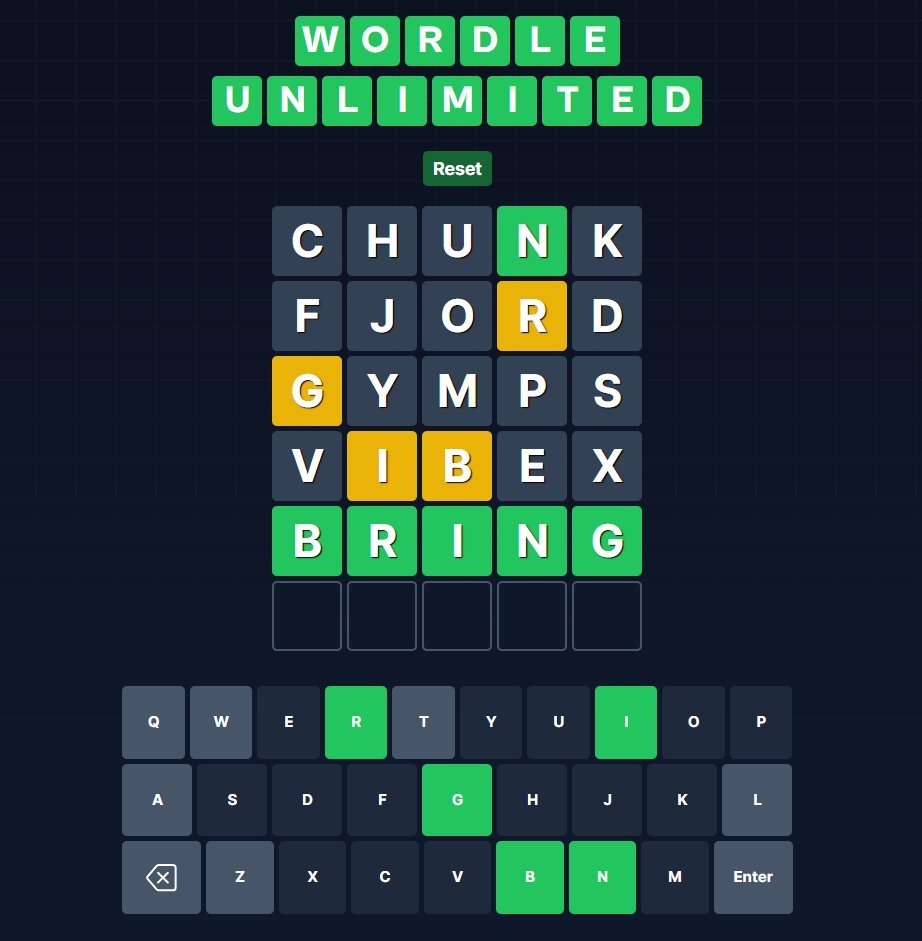
One optimized set—CHUNK → FJORD → GYMPS → VIBEX → WALTZ—uses 25 letters (missing Q), yielding a 96.15% alphabet coverage. Playing these words sequentially, ignoring feedback, gains 10.17 bits of information (near the theoretical maximum of 11.7 bits). After five guesses, only 0.3% of games have multiple valid words remaining.
Strategy Showdown: Safety, Speed, and Consistency
Alternative sets trade off coverage for practicality. The "Matt Parker" set (FJORD → GUCKS → NYMPH → VIBEX → WALTZ) offers slightly better positional entropy, while the "Q Hunter" set (BRICK → GLENT → JUMPY → VOZHD → WAQFS) sacrifices X for Q—increasing loss risk since X appears more frequently. But the real innovation comes in optimizing for expected turns rather than pure win probability.
- 5-Word Safety: Guarantees a win in six turns with a near-zero loss rate (0.001) but sacrifices speed.
- 2-Word Speed: CRANE + TOILS tests 10 letters with 71.17% combined frequency, averaging 3.87 turns but risking a loss every 120 games.
- 3-Word Consistency: SCALE → INTRO → DUMPY covers 15 letters (57.7% alphabet) for balanced performance.
Comparative data underscores the trade-offs:
| Strategy | E[turns] | P(loss) | E[rank] | Variance |
|---|---|---|---|---|
| 5-Word Safety | 6.00 | 0.001 | 3.2 | 0.12 |
| 2-Word Speed | 3.87 | 0.083 | 3.7 | 0.91 |
| 3-Word Consistency | 4.23 | 0.020 | 3.5 | 0.73 |
For long streaks, the math is unforgiving: a 100-day streak has an 89.6% survival rate with 5-Word Safety versus 44.0% with 2-Word Speed. As Shannon entropy dictates, compressing information below 11.17 bits (the minimum for certainty) is impossible—Wordle’s solution space of 2,309 words demands at least 5.6 turns for near-perfect play.
The Algorithmic Truth: No Free Lunch
Analysis of top Wordle solvers confirms a universal truth: optimizing for fewer turns increases loss probability, and vice versa. Players averaging under 4.0 turns face 0.8–1.2% loss rates, while those minimizing losses average 4.8–6.2 turns. This mirrors broader optimization challenges in AI and data science, where elegance often yields to brute-force rigor in edge cases.
In the end, Wordle transcends casual play, embodying principles that resonate across tech—from cybersecurity (covering attack vectors) to machine learning (entropy-based feature selection). As the data shows, sometimes burning guesses to eliminate uncertainty isn't overkill; it's the price of certainty in an unpredictable system. So next time you face a word like "KNOLL," remember: math doesn't lie, but it might just save your streak.
Source: Analysis based on the official Wordle solution dictionary (2,309 words) and acceptable guess dictionary (12,972 words). Original research and methodology from Kuber Studio.
Comments
Please log in or register to join the discussion