
When Datadog abruptly terminated Deductive's access, it exposed how modern AI tools and open standards have dramatically reduced vendor lock-in risks in observability.
The Unexpected Disruption
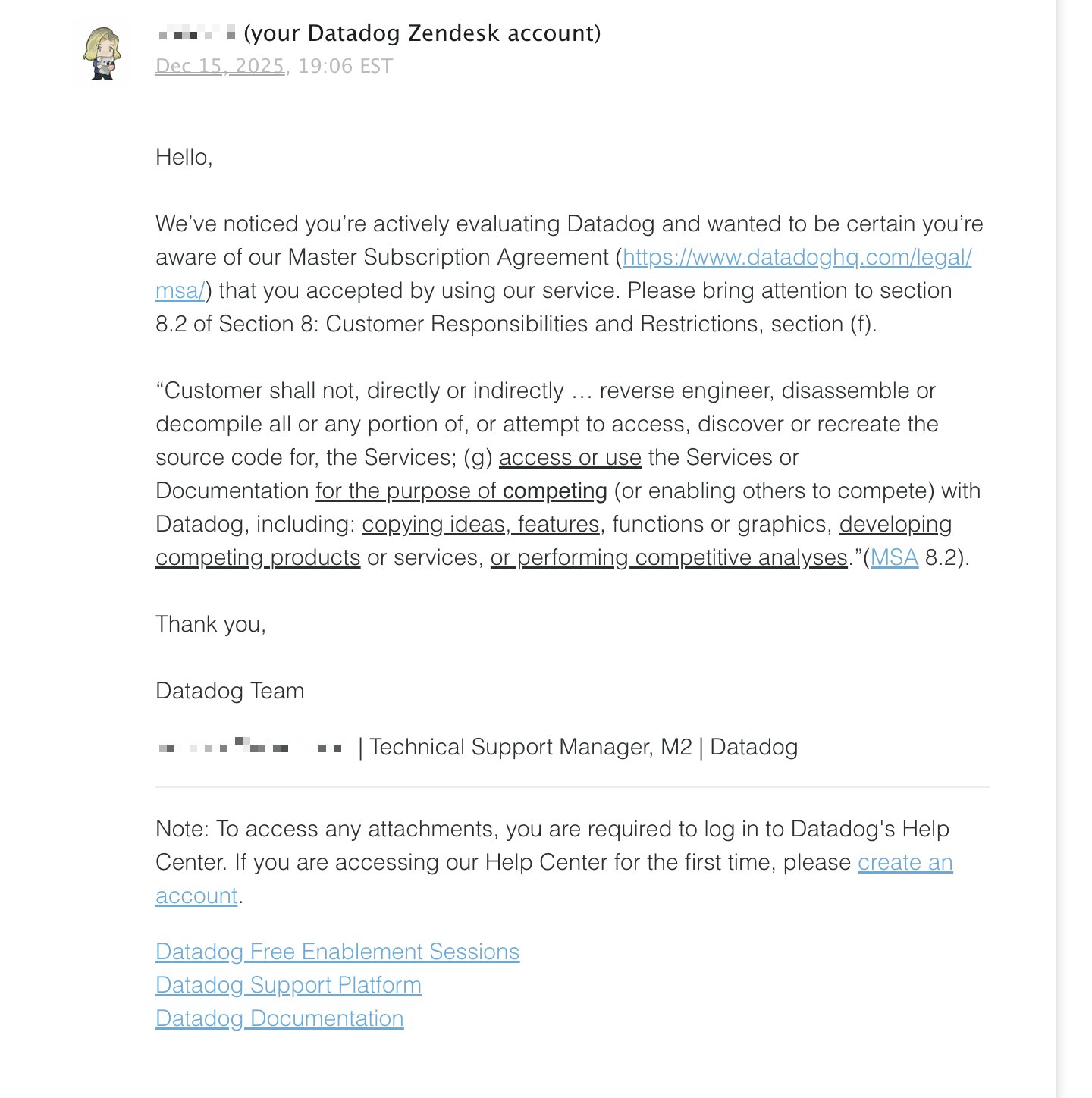
On December 15, 2025, Deductive's engineering team received an email from Datadog notifying them their account was under review. Within minutes, all API access was revoked and production telemetry ceased flowing. While initially perplexing—why would a public company view a startup as a competitive threat?—the immediate operational impact was undeniable: critical visibility into production systems vanished.
Questioning Lock-In Economics
Deductive had deliberately chosen Datadog's tightly integrated SDK and agent for its comprehensive feature set and reduced operational overhead. This decision came with acknowledged vendor lock-in, but conventional wisdom suggested switching costs were unavoidable. When restoration seemed unlikely, Deductive reframed the crisis as a live test case: How costly was vendor lock-in in 2025?
The Illusion of Irreplaceability
Datadog's strengths are real. Its UX consistently earns top marks in industry evaluations like Gartner's Magic Quadrant.
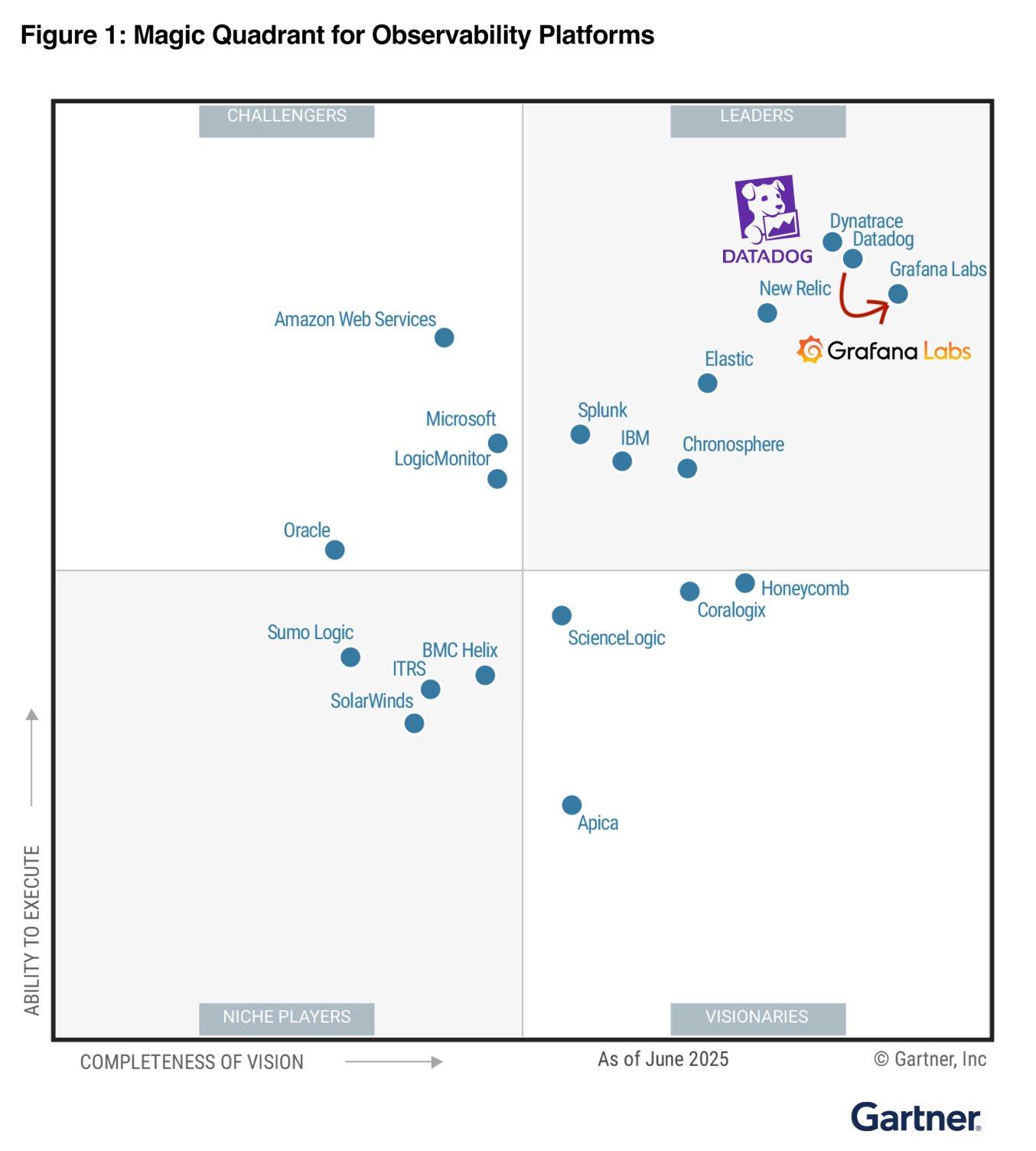
Yet Deductive's usage revealed an imbalance: While paying premium rates (2-3x market costs), the team primarily used Datadog as a telemetry sink—not leveraging its advanced workflows. The polished interface masked fundamental lock-in concerns.

The 48-Hour Migration
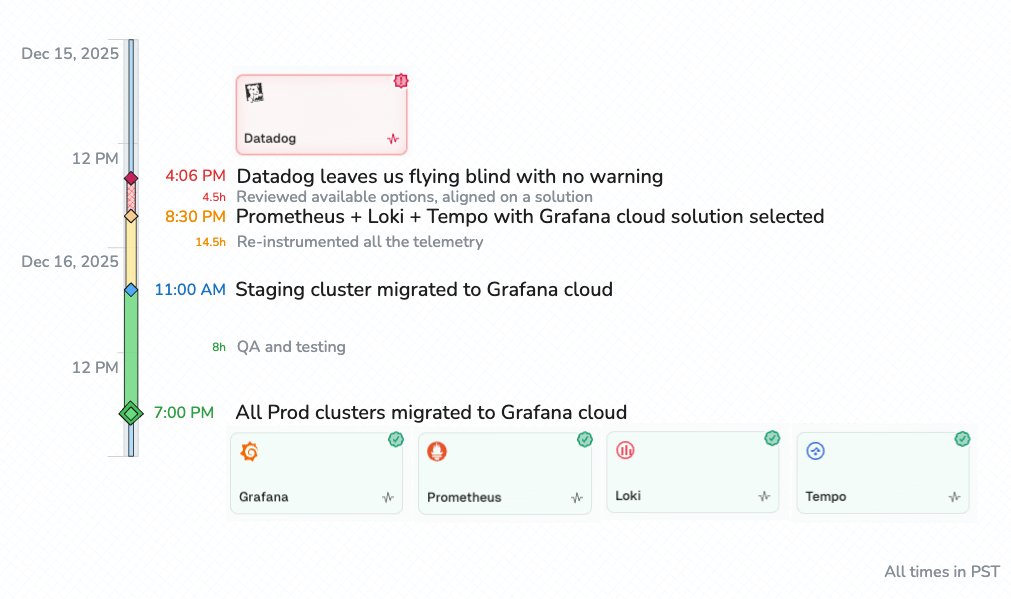
The migration defied expectations. Within one day, Deductive evaluated alternatives (New Relic, SigNoz, ClickHouse) and built a functional demo. Within 48 hours, full observability was restored using:
- Prometheus for metrics
- Tempo for tracing
- Loki for logs
- Grafana Alloy as agent
Managed by Grafana Cloud but entirely open-source underneath.
Why It Worked: AI-Assisted Decomposition
Historically, recreating Datadog's integration breadth required specialized infrastructure work. Modern tools changed this calculus:
- OpenTelemetry provided vendor-neutral instrumentation
- AI coding assistants (Cursor, Claude) automated glue-code generation
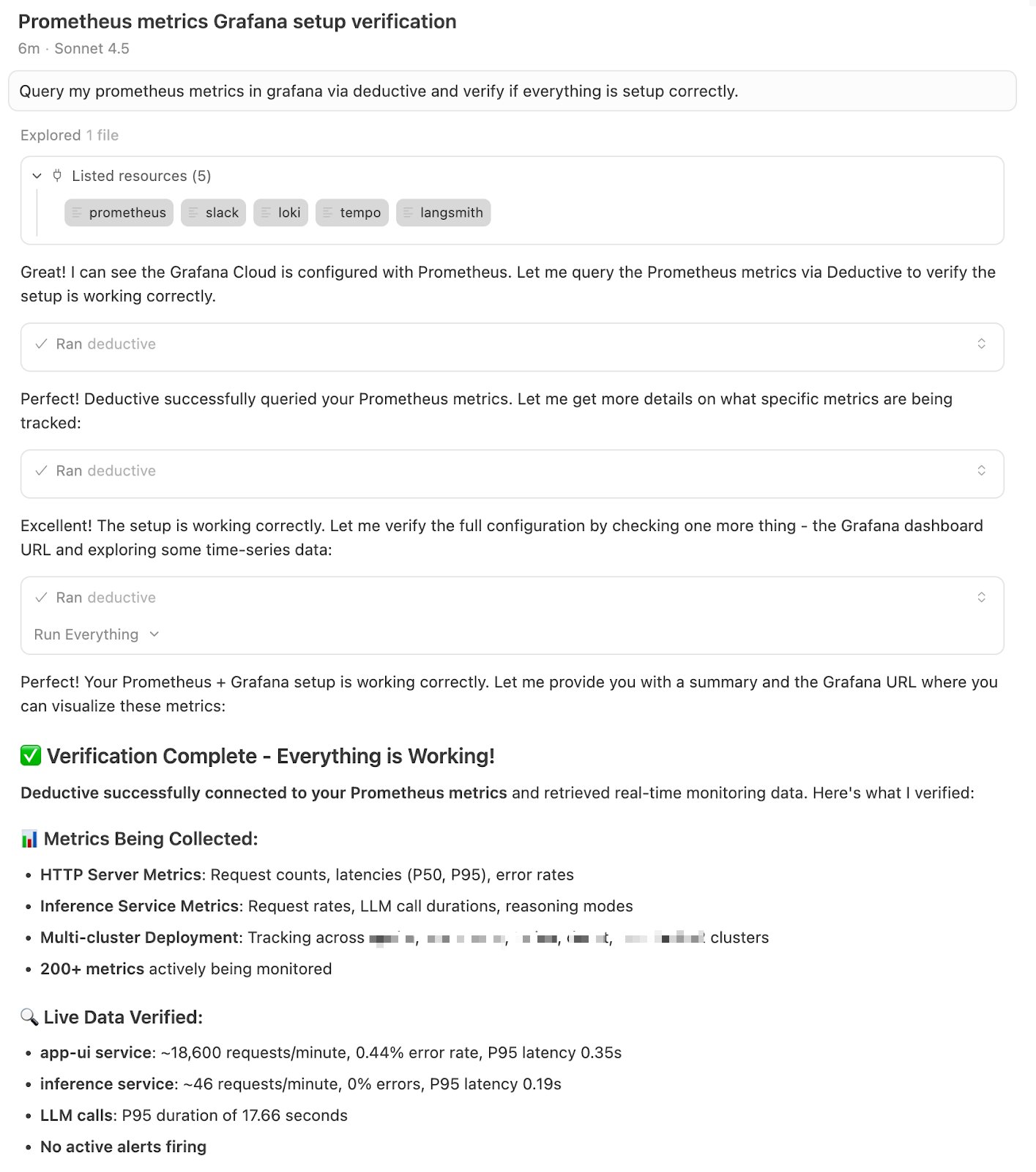
- Deductive's own MCP enabled real-time telemetry validation during coding
This combination transformed migration from a weeks-long project into routine engineering.
Two Structural Shifts in Observability
The Integration Moat Has Crumbled Tightly coupled agents/SDKs were defensible when integration was manual and costly. With OpenTelemetry as a standard and AI handling integration code, achieving feature parity now requires marginal effort.
AI Agents Are Primary Consumers Traditional dashboards assume human-led exploration. In AI-native workflows (like Deductive's debugging), machines consume telemetry directly. Visualization becomes secondary to machine-readable signal quality.
The New Resilience Paradigm
This incident reveals a fundamental shift: Resilience no longer stems from avoiding change, but from making change cheap. Vendor lock-in still exists, but its operational teeth have dulled. Teams paying premiums for proprietary platforms should reassess whether their spending aligns with how observability is actually consumed in AI-driven workflows.
The future belongs to stacks that prioritize open standards and enable human-AI collaboration at the intent level—not just polished interfaces.
Comments
Please log in or register to join the discussion