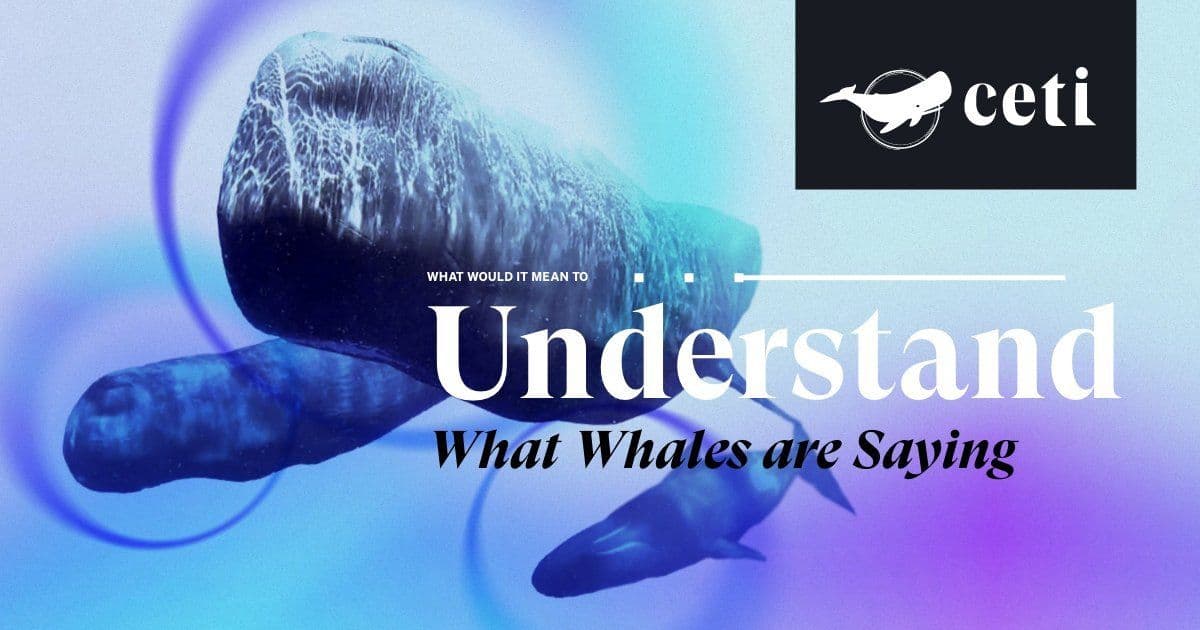
The Cetacean Translation Initiative (CETI) is harnessing advanced AI and robotic drones to create the first large-scale dataset of sperm whale vocalizations, aiming to translate their complex 'coda' clicks. This ambitious project could unlock unprecedented insights into animal intelligence and revolutionize ocean conservation by revealing what whales are saying about their world.
For centuries, sperm whales have communicated through intricate patterns of clicks known as codas, their conversations echoing through the ocean's depths. Now, a groundbreaking initiative is leveraging cutting-edge technology to decode this language, potentially transforming our relationship with the natural world. The Cetacean Translation Initiative (CETI), a nonprofit based in Dominica in the Eastern Caribbean, is pioneering the use of machine learning and state-of-the-art robotics to listen, analyze, and translate sperm whale communication—an endeavor that could redefine interspecies understanding.
At the heart of CETI's mission is a two-pronged technological approach. First, custom-built aerial drones, designed for minimal disturbance, capture high-fidelity acoustic and behavioral data from sperm whale pods. These drones record millions of clicks and movements, creating a massive dataset that feeds into advanced machine learning models. As the project states, 'Our gentle, aerial drones are state-of-the-art,' enabling non-invasive observation in the whales' natural habitat. Second, CETI applies deep learning algorithms to this data, training systems to detect patterns in the codas, which vary across whale groups—hinting at cultural transmission. With sperm whales possessing brains six times larger than humans, the untapped potential for complex communication is vast, and modern AI finally makes deciphering it feasible.
This isn't just an academic curiosity; it's a leap for conservation and AI. Success could yield tools to monitor ocean health in real-time through whale vocalizations, alerting scientists to environmental threats like pollution or climate shifts. Moreover, the project's open-source ethos ensures findings will be shared globally, empowering developers and researchers to build on CETI's work. As one of the team's goals emphasizes, they aim to 'transform human understanding and connectivity,' potentially sparking a movement to protect marine ecosystems. Challenges remain, such as ensuring algorithmic accuracy in noisy underwater environments and ethically validating translations through playback studies. Yet, the convergence of robotics, AI, and bioacoustics here exemplifies how technology can bridge the gap between species—turning the ocean's whispers into actionable insights for a planet in peril.
Source: Project CETI
Comments
Please log in or register to join the discussion