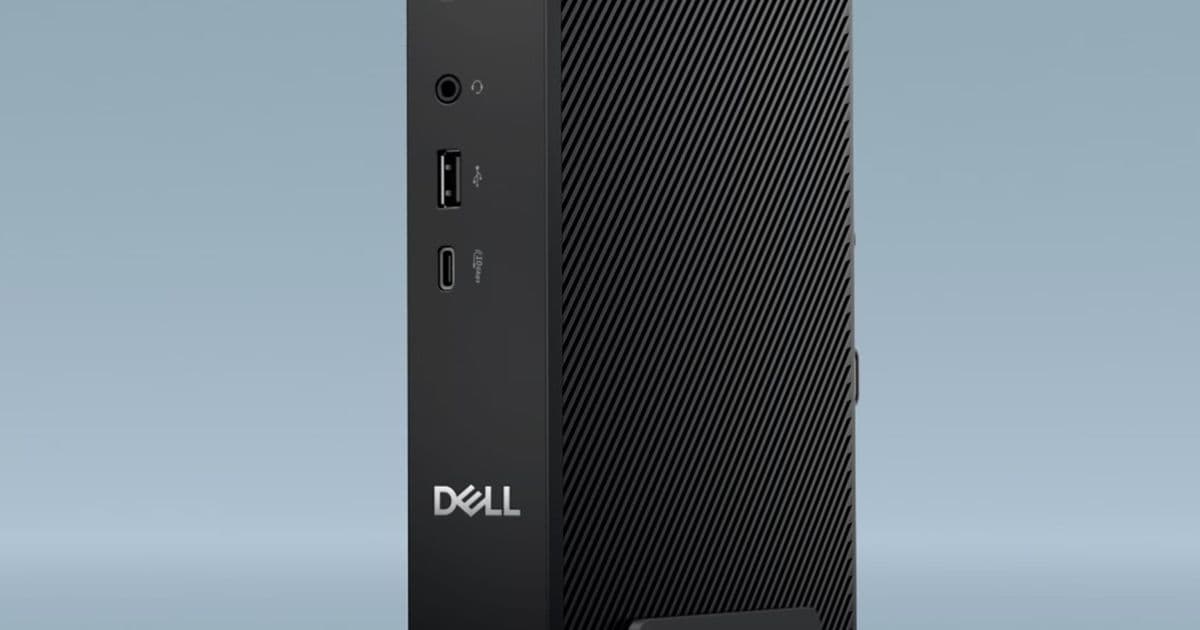
Dell has introduced the Pro Micro Thin Client Q9M1260, a compact business PC featuring Intel Twin Lake processors, passive cooling, and optional 1 GbE Optical Fiber connectivity, targeting enterprise environments where space and connectivity are critical.
What's New
Dell has expanded its Thin Client lineup with the Pro Micro Thin Client Q9M1260, a compact business PC designed for enterprise environments. The device marks Dell's return to the Thin Client division with a focus on energy efficiency and connectivity options. Unlike its predecessor, the QCM1250, the Q9M1260 utilizes Intel's newer Twin Lake processors instead of Arrow Lake, with thermal design power (TDP) ranging up to 7 watts. This low power consumption enables Dell to implement passive cooling, eliminating the need for fans and reducing potential points of failure in business environments.
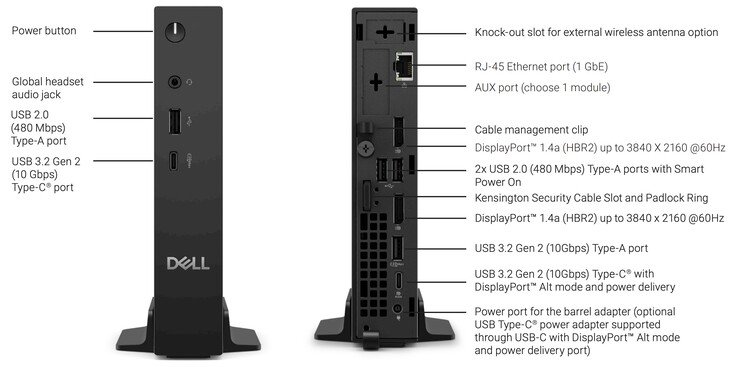
The Q9M1260 comes in a remarkably small form factor, measuring just 182 x 178 x 36 mm, making it ideal for space-constrained deployments. Connectivity is a key highlight, with Dell offering seven optional port modules, including the notable 1 GbE Optical Fiber option. This high-speed optical connectivity provides reliable networking performance, particularly beneficial in environments with electromagnetic interference or where traditional Ethernet cabling is impractical.
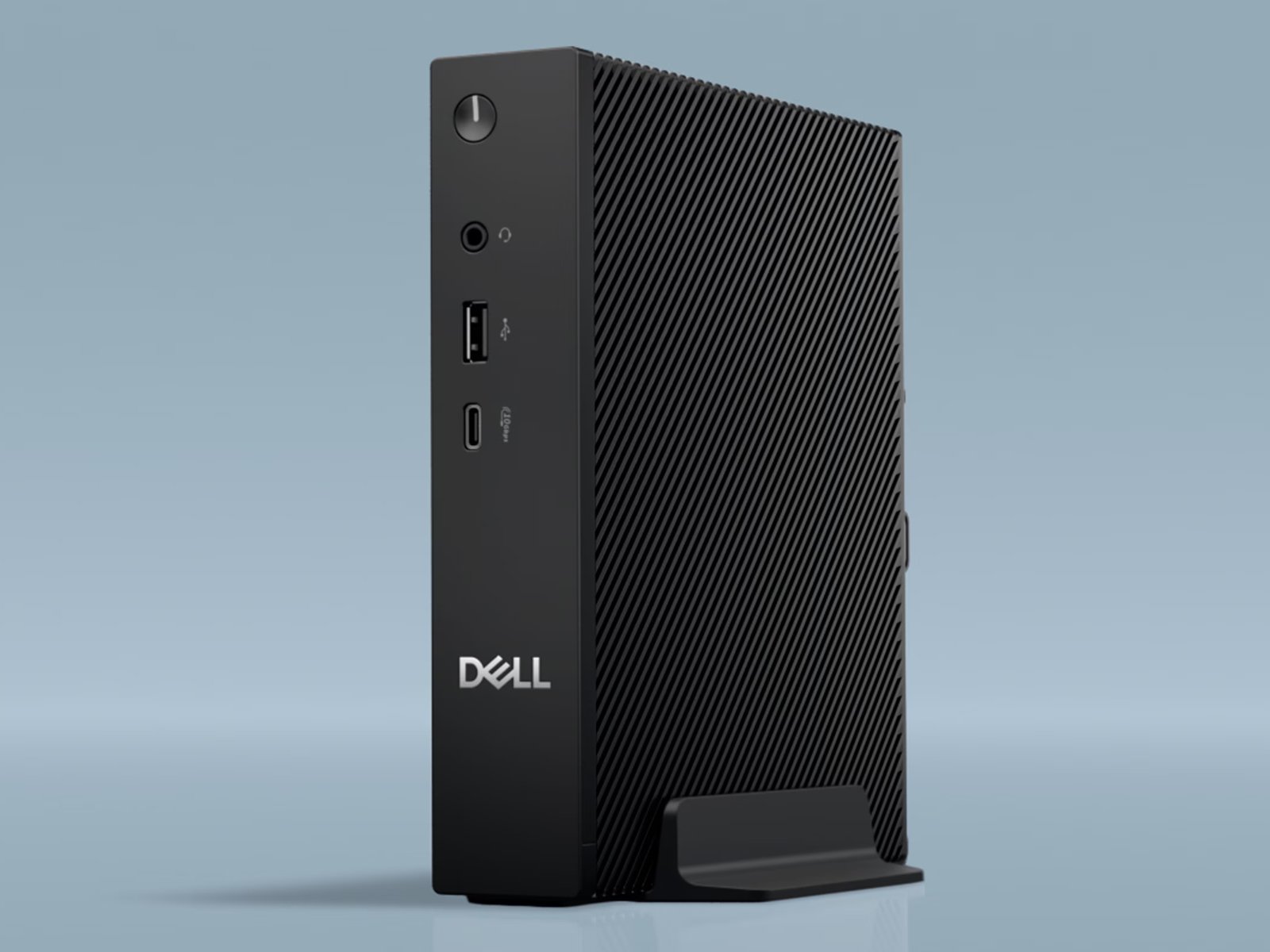
Power delivery is handled through a modern 65W USB Type-C port, eliminating the need for traditional DC power connectors and simplifying deployment. The device supports M.2 2230 storage slots for either PCIe Gen 3 or UFS 2.1 storage, plus a second M.2 2230 slot for Wi-Fi 6E or Wi-Fi 7 cards, ensuring flexible configuration options for various business needs.
How It Compares
The Q9M1260 serves as a less powerful alternative to Dell's existing QCM1250 model, which currently retails for approximately $849 on Amazon. While the QCM1250 features Intel Arrow Lake processors, the Q9M1260 utilizes Intel's newer Twin Lake architecture with a maximum TDP of 7 watts. This power reduction contributes to the passive cooling solution, though it may result in slightly lower processing capabilities compared to the higher-powered QCM1250.
In terms of processor options, the Q9M1260 offers three choices: the entry-level Processor N150, the mid-range Processor N250, and the more powerful Core 3 N350. The Core 3 N350 stands out as the most capable option, featuring twice as many Gracemont E-Cores as the N150 and N250 variants, making it better suited for more demanding workloads.
Memory configurations include 8GB or 16GB of DDR5-5600 RAM, though both options operate in single-channel mode, which may limit memory bandwidth compared to dual-channel configurations found in more consumer-oriented systems. This design choice likely contributes to the device's power efficiency and cost-effectiveness for business use.
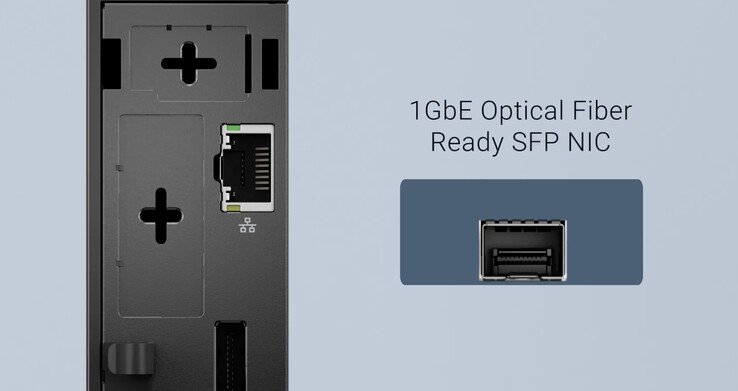
The inclusion of 1 GbE Optical Fiber connectivity represents a significant differentiator in the mini-PC market. While many compact business PCs offer standard Ethernet ports, the optical fiber option provides enhanced performance and reliability in specific enterprise environments. This positions the Q9M1260 as a specialized solution for businesses with specific networking requirements or those operating in challenging physical environments.
Pricing reveals that the Q9M1260 sits in the premium segment of the thin client market, with costs ranging from $966 to $1,748 in the US before adding peripherals. This places it above the QCM1250, suggesting that the newer model commands a premium for its updated processor architecture, optical fiber connectivity options, and enterprise-focused features.
Who It's For
The Dell Pro Micro Thin Client Q9M1260 is specifically designed for enterprise environments where space efficiency, reliability, and specialized connectivity are paramount. Its compact dimensions and passive cooling make it ideal for deployment in areas with limited physical space, such as digital signage, kiosks, or office workstations where traditional desktop PCs would be impractical.
The optical fiber connectivity option positions this device for businesses operating in environments with high electromagnetic interference, such as manufacturing floors, medical facilities, or locations with heavy electrical equipment. The reliability of fiber optic connections in such settings can significantly reduce network downtime and maintenance costs.
IT departments will appreciate the device's centralized management capabilities and security features typical of thin client architectures. By running applications from a central server rather than locally, businesses can enhance security, simplify software updates, and reduce the risk of data breaches. The Q9M1260's low power consumption also contributes to reduced operational costs in large-scale deployments.
The three processor options allow businesses to select appropriate performance levels based on their specific needs. The entry-level N150 processor suffices for basic tasks like document processing and web browsing, while the Core 3 N350 provides adequate performance for more demanding applications such as lightweight virtualization or specialized business software.
For organizations with existing Dell infrastructure, the Q9M1260 offers seamless integration into established ecosystems. The USB Type-C power delivery simplifies deployment and reduces cable clutter, while the modular port design allows for customization based on specific use cases.
The Pro Micro Thin Client Q9M1260 represents Dell's commitment to providing specialized computing solutions for enterprise environments, balancing performance, efficiency, and connectivity options in a compact form factor. While it may not be the ideal choice for consumers or businesses requiring high-performance local computing, it excels in scenarios where space, reliability, and specialized networking are critical considerations.
For more details and configuration options, visit Dell's official product page.
Comments
Please log in or register to join the discussion