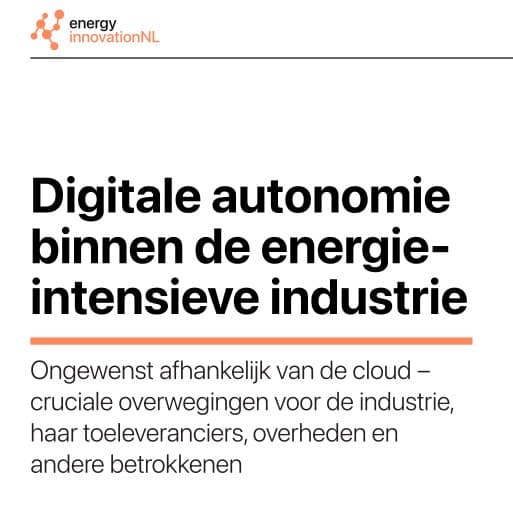
A new report reveals that while critical operational technology in energy-intensive industries remains largely independent of foreign cloud services, the surrounding infrastructure is becoming increasingly vulnerable to cloud dependencies, creating potential operational risks during crises.
The energy-intensive industry sector faces a critical juncture in its digital transformation journey, according to a comprehensive new report commissioned by Energy Innovation NL. The study, titled "Digitale autonomie binnen de energie-intensieve industrie" (Digital Autonomy in Energy-Intensive Industry), reveals a complex landscape where core operational technology remains largely independent, but surrounding systems are becoming increasingly dependent on cloud services.
The Good News: Critical Systems Remain Autonomous
The report brings encouraging news for those concerned about the vulnerability of critical infrastructure. The machines and equipment that could potentially explode or cause catastrophic failures are still being controlled and operated through local computers. This finding suggests that despite the widespread adoption of cloud technologies across various industries, the most safety-critical systems in energy-intensive sectors have maintained their independence from external cloud providers.
This independence is particularly noteworthy given the increasing pressure to connect operational technology (OT) systems to the cloud for various business benefits. The report's author notes that while there may be some "exciting OT installations" secretly controlled via cloud services elsewhere, none of the interviewed companies admitted to such practices. This suggests a strong culture of maintaining local control over critical operations.
The Concerning Trend: Cloud Dependency Creeping In
However, the report identifies a worrying trend: the immediate environment surrounding operational technology is becoming increasingly cloud-dependent. This includes dashboards, documentation systems, communication platforms, and administrative tools that, while not directly controlling the machines, are essential for their operation and maintenance.
The key question raised is whether operators can still effectively understand and control their machines if the familiar dashboards and interfaces become unavailable due to cloud outages. Similarly, can workers access critical documentation when needed if cloud platforms experience disruptions, whether due to technical issues or geopolitical events?
Key Findings and Implications
The report's analysis reveals several critical insights:
Critical Systems Independence: The most crucial systems show (virtually) no dependence on non-European clouds. This is a positive finding that suggests regulatory frameworks or industry practices are effectively protecting critical infrastructure.
Sensor and Device Trends: Equipment suppliers are increasingly delivering less autonomous solutions. More frequently, a cloud connection is (almost) necessary for proper operation, creating a gradual erosion of local control capabilities.
Administrative Dependencies: Logistics and personnel scheduling systems are entirely dependent on multiple foreign clouds simultaneously. While this represents "only" an administrative dependency, production is at risk within a foreseeable timeframe if disruptions occur.
Workforce Capabilities: Unlike other industries struggling to find personnel who can work without cloud systems, the energy-intensive sector generally maintains this capability. However, as experienced workers retire and fewer new hires have these skills, this advantage may diminish.
Communication Vulnerabilities: Internal communication increasingly relies on cloud services. During a crisis where cloud services fail, there's serious doubt whether employees and suppliers could still reach each other effectively.
Crisis-Time Dependencies: Critical documents and plans needed during emergencies are often only available through cloud platforms, creating increased digital dependence precisely when the impact would be greatest.
Internet Assumptions: There's an implicit assumption that the internet will always be available, with little attention paid to operational consequences if all direct cloud services and Software-as-a-Service providers fail simultaneously.
Lack of Long-term Planning: The vast majority of energy-intensive industry has no long-term plan for American cloud outages and no overview of how much time dependencies would take to resolve.
The AI Factor
The report highlights an additional pressure point: the promise of AI is pushing some companies to further increase their dependence on non-European clouds, which is deemed necessary for the economic viability of the business. This creates a tension between operational autonomy and competitive advantage in the emerging AI-driven economy.
Industry Response and Recommendations
While the industry maintains good internal contacts, it has not yet significantly consolidated its efforts to collectively influence suppliers to provide less dependent products. This suggests an opportunity for industry associations or collaborative initiatives to address the growing cloud dependency issue.
Looking Forward
The report serves as a wake-up call for the energy-intensive industry to carefully consider its digital transformation strategy. While cloud services offer undeniable benefits in terms of efficiency, scalability, and advanced analytics, the potential risks during crisis situations cannot be ignored.
For companies in this sector, the findings suggest the need for:
- Maintaining and developing local operational capabilities
- Creating redundancy for critical cloud-dependent systems
- Training new personnel in non-cloud operational methods
- Developing contingency plans for cloud service disruptions
- Engaging with suppliers to ensure autonomous operation options
- Regular testing of crisis response capabilities without cloud access
The full report provides much more background and nuance on these findings and is available for those seeking deeper insights into this critical issue facing the energy-intensive industry.
For media inquiries and further information, contact details are available in the accompanying press release, or direct questions about the report can be sent to [email protected].
Comments
Please log in or register to join the discussion