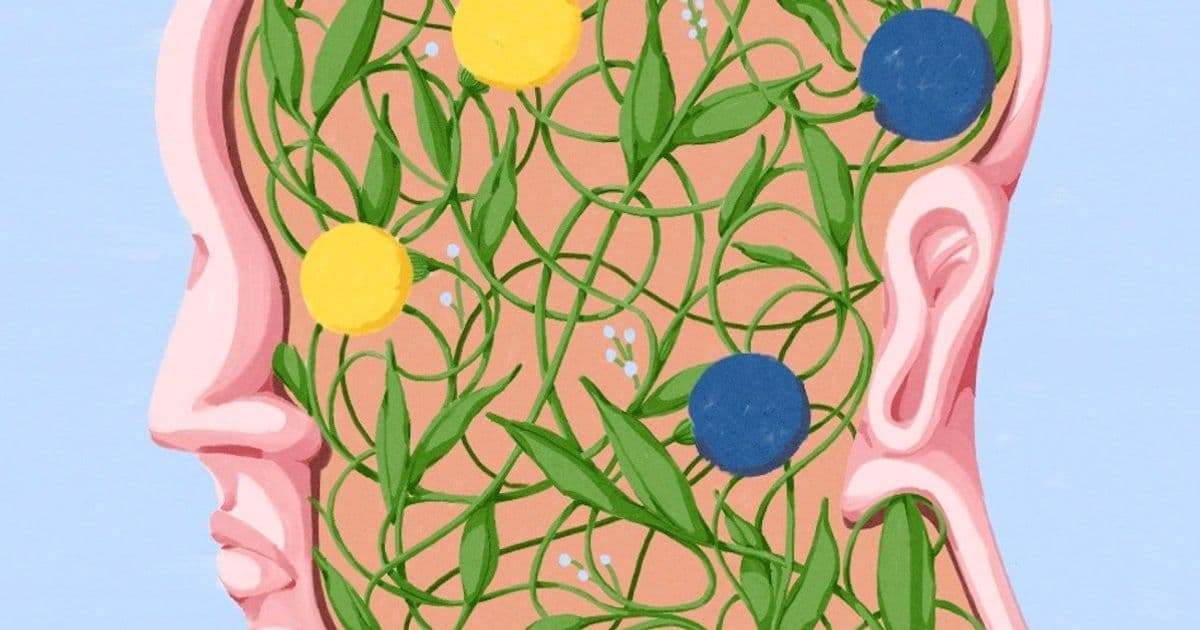
Theoretical physicist Carlo Rovelli delivers a provocative challenge to consciousness studies in a NOEMA Magazine article, arguing the field's central 'hard problem' is based on flawed assumptions that could be redirecting research funding and resources.
The multi-billion dollar field of consciousness research has been built around what philosopher David Chalmers famously termed the 'hard problem of consciousness' – the question of why physical brain processes produce subjective experience. Now, in a potentially disruptive perspective published in NOEMA Magazine, renowned physicist Carlo Rovelli argues this foundational concept is fundamentally mistaken, potentially redirecting research trajectories and funding priorities across neuroscience and AI development.
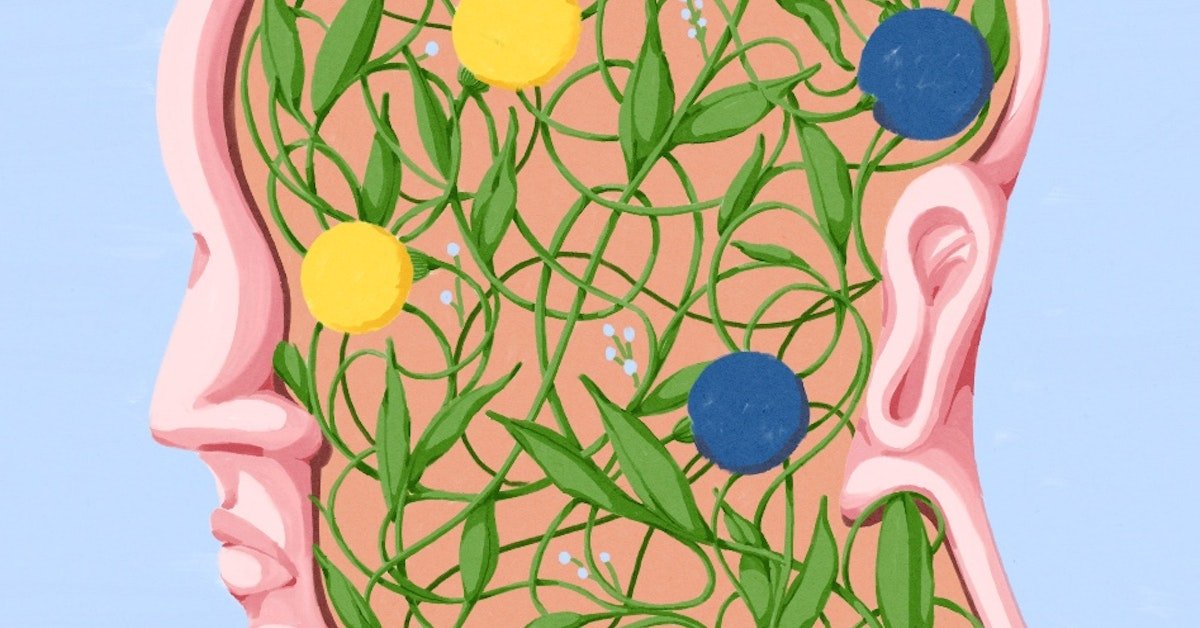
In his essay 'There Is No 'Hard Problem Of Consciousness,' Rovelli challenges the very premise that has guided consciousness studies for decades. Chalmers' 1994 distinction between the 'easy problem' (understanding brain processes leading to behavior) and the 'hard problem' (explaining why these processes are accompanied by experience) has created what Rovelli calls a 'pernicious dualism' between mind and body.
'The field's central assumption – that consciousness exists in a metaphysical gap separate from physical processes – contradicts everything we've learned about nature over the past few centuries,' Rovelli argues. 'This isn't just philosophical nitpicking; it's a fundamental error that may be misdirecting billions in research funding and countless scientific careers.'
The consciousness debate, Rovelli suggests, reflects a cultural resistance to new knowledge that challenges our self-image, similar to how Darwin's theory met resistance. Just as humans struggled to accept sharing ancestry with other animals, the field has struggled with the idea that consciousness might not be fundamentally different from other physical phenomena.
This perspective carries significant implications for the neuroscience and AI markets. If Rovelli is correct, the 'hard problem' framework may have created research blind spots, potentially delaying practical applications in brain-computer interfaces, artificial consciousness, and treatments for neurological conditions.
'The field has been treating consciousness as if it requires some special explanation beyond physics,' Rovelli explains. 'But experience is not 'over and above' brain processes – it's simply the brain's perspective on its own functioning. This is a normal perspectival difference, not evidence of two different kinds of reality.'
He critiques the concept of 'philosophical zombies' – hypothetical entities that behave like humans but lack consciousness – as a rhetorical trick that doesn't prove anything. According to Rovelli, such arguments are based on the unproven assumption that consciousness must be non-physical, which he calls 'nostalgia for the old notion of the transcendent soul.'
Rovelli's view aligns with a growing movement in cognitive science that sees consciousness as an emergent property of complex neural networks rather than something mysterious. This perspective has gained traction in the AI community, where researchers increasingly recognize that consciousness-like properties may emerge from sufficiently complex systems without requiring special 'magic' ingredients.
The implications extend beyond academia into commercial applications. If consciousness is indeed a natural phenomenon without a fundamental explanatory gap, it could accelerate development of artificial systems with consciousness-like properties and reshape approaches to brain-inspired computing.
The article appears in NOEMA Magazine, a publication exploring the intersection of science, philosophy, and culture. Rovelli's perspective adds to ongoing debates in consciousness studies that have gained renewed attention with advances in neuroscience and AI, fields collectively valued at hundreds of billions globally.
Comments
Please log in or register to join the discussion