
A modder has successfully created a fully functional PlayStation 2 Portable using original PS2 silicon on a custom motherboard, complete with modern features and open-source documentation.
A dedicated modder known as tschicki has accomplished what many thought impossible: creating a truly portable PlayStation 2 using original console hardware in a custom handheld form factor. The project represents one of the most ambitious hardware reverse-engineering efforts in recent gaming history, combining original PS2 silicon with modern components and a bespoke 3D-printed shell.
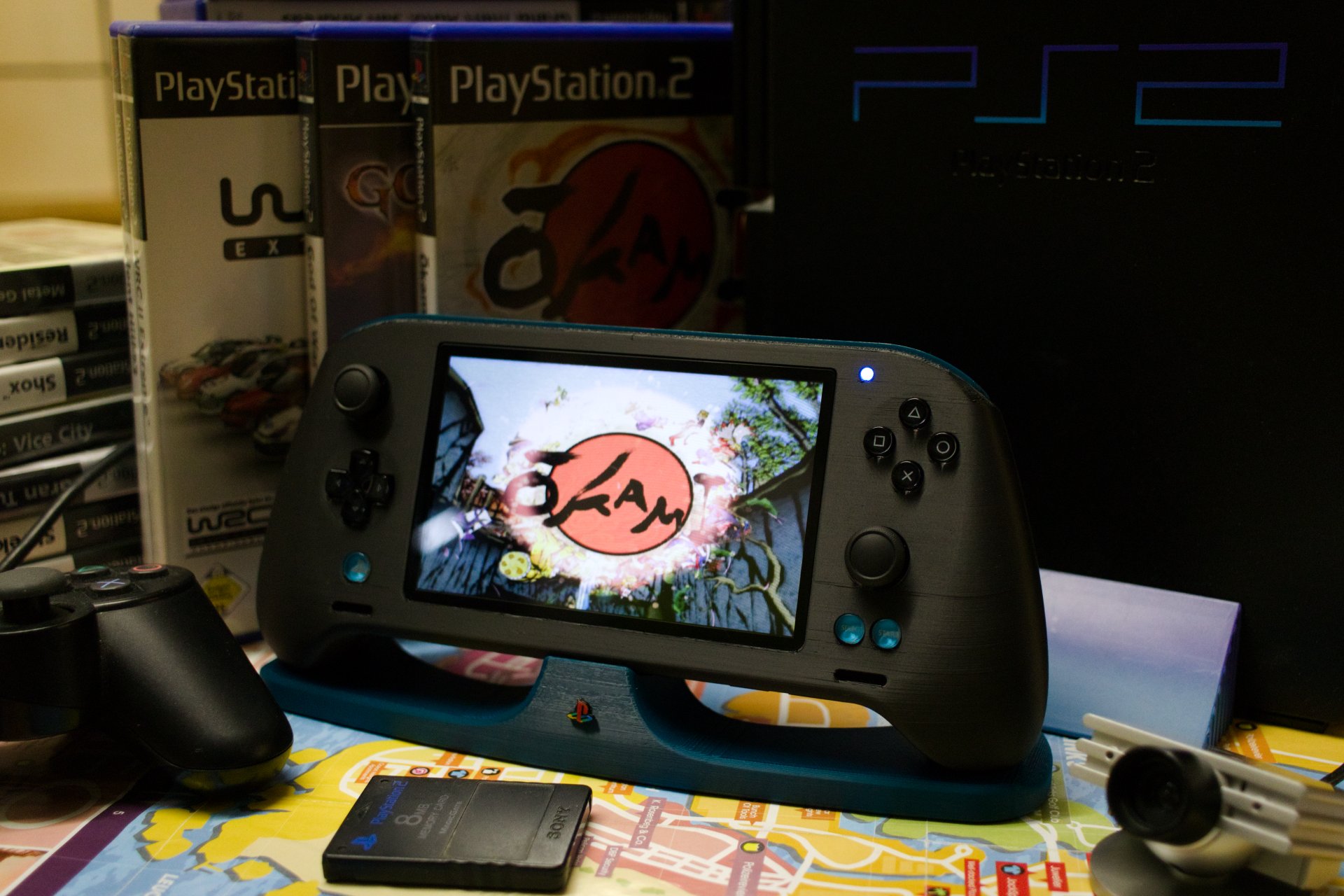
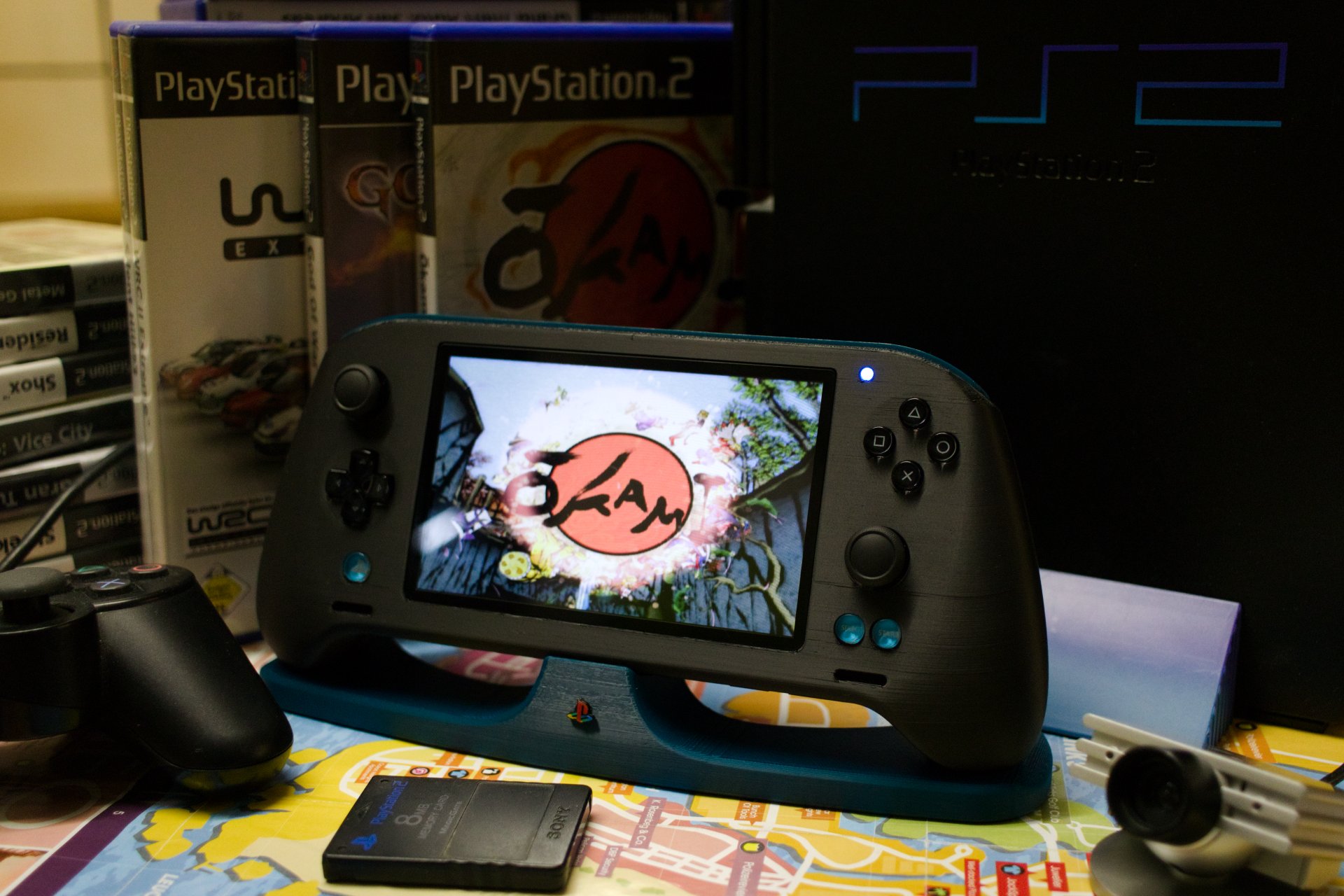
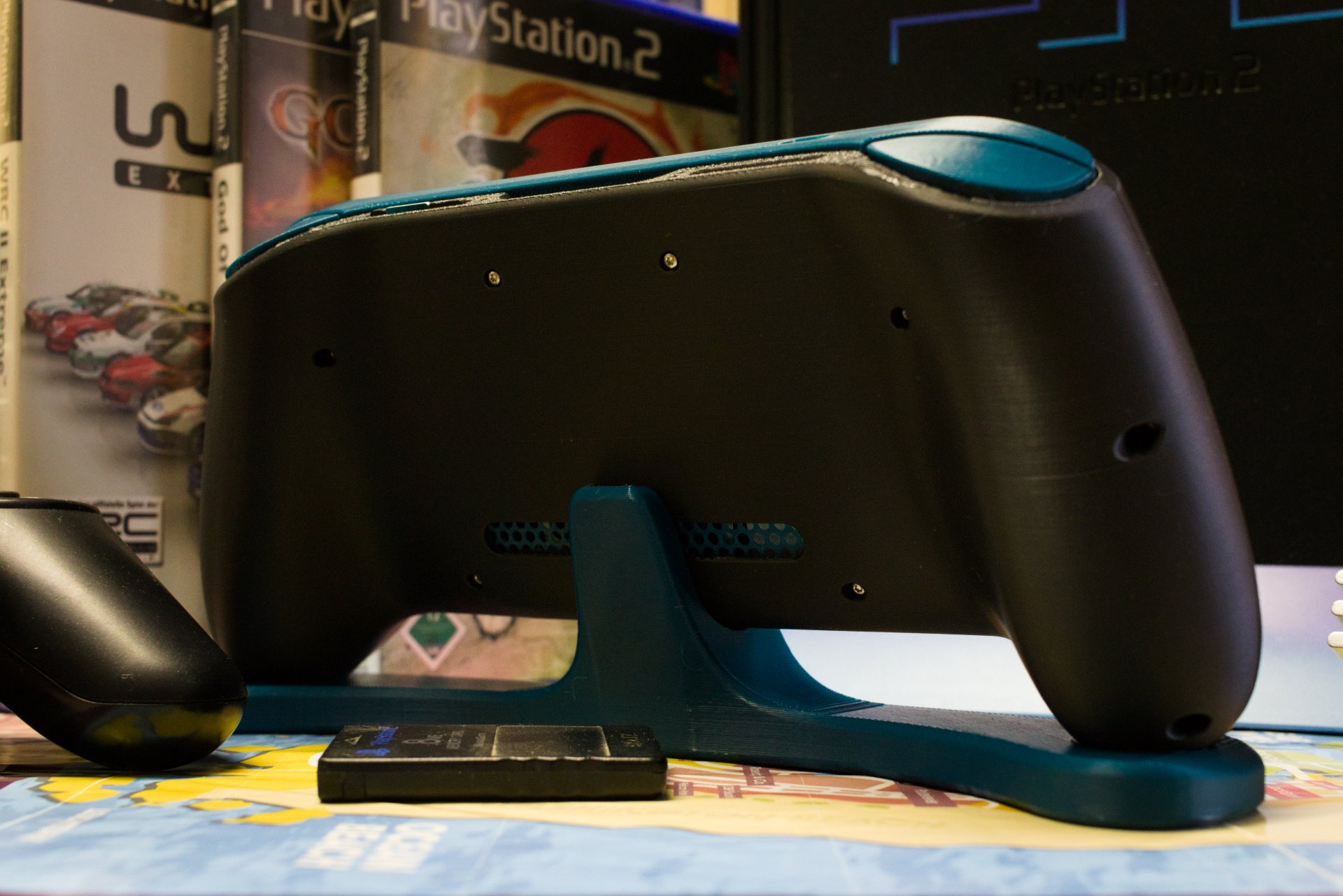
The four-year development process began in 2022 but was only recently made public, showcasing the meticulous attention to detail required for such an undertaking. The final product demonstrates exceptional polish with ergonomic design elements borrowed from contemporary gaming handhelds like the ROG Ally, featuring large grips that house two 5000mAh batteries providing up to 4.5 hours of gameplay per charge.
At the heart of this portable marvel lies a custom motherboard that integrates six original ICs harvested from SCPH-7900x or SCPH-9000x PS2 models. These critical components include the Emotion Engine (EE), Graphics Synthesizer (GS), RAM chips (two separate units), I/O processor, and SP2 audio processor. Rather than attempting to emulate the PS2's architecture, tschicki reverse-engineered the entire circuitry, manually designing a new motherboard layout with completely new traces, video routing, and power management systems.
The processing architecture combines original PS2 silicon with modern microcontrollers. While the donor chips handle the core processing tasks, two RP2040 microcontrollers manage secondary functions including thermal monitoring, control input processing, audio handling, and power management. This hybrid approach preserves the authentic PS2 experience while adding modern conveniences.
Video output represents one of the project's most impressive technical achievements. Instead of routing through an analog-to-digital converter that would degrade image quality, tschicki implemented a custom FPGA-based video processor that extracts direct digital video from the Graphics Synthesizer. The display is a 5-inch 480x800p IPS LCD running at 60 Hz, with the RP2040 converting button and joystick inputs into native DualShock 2 signals complete with rumble functionality.
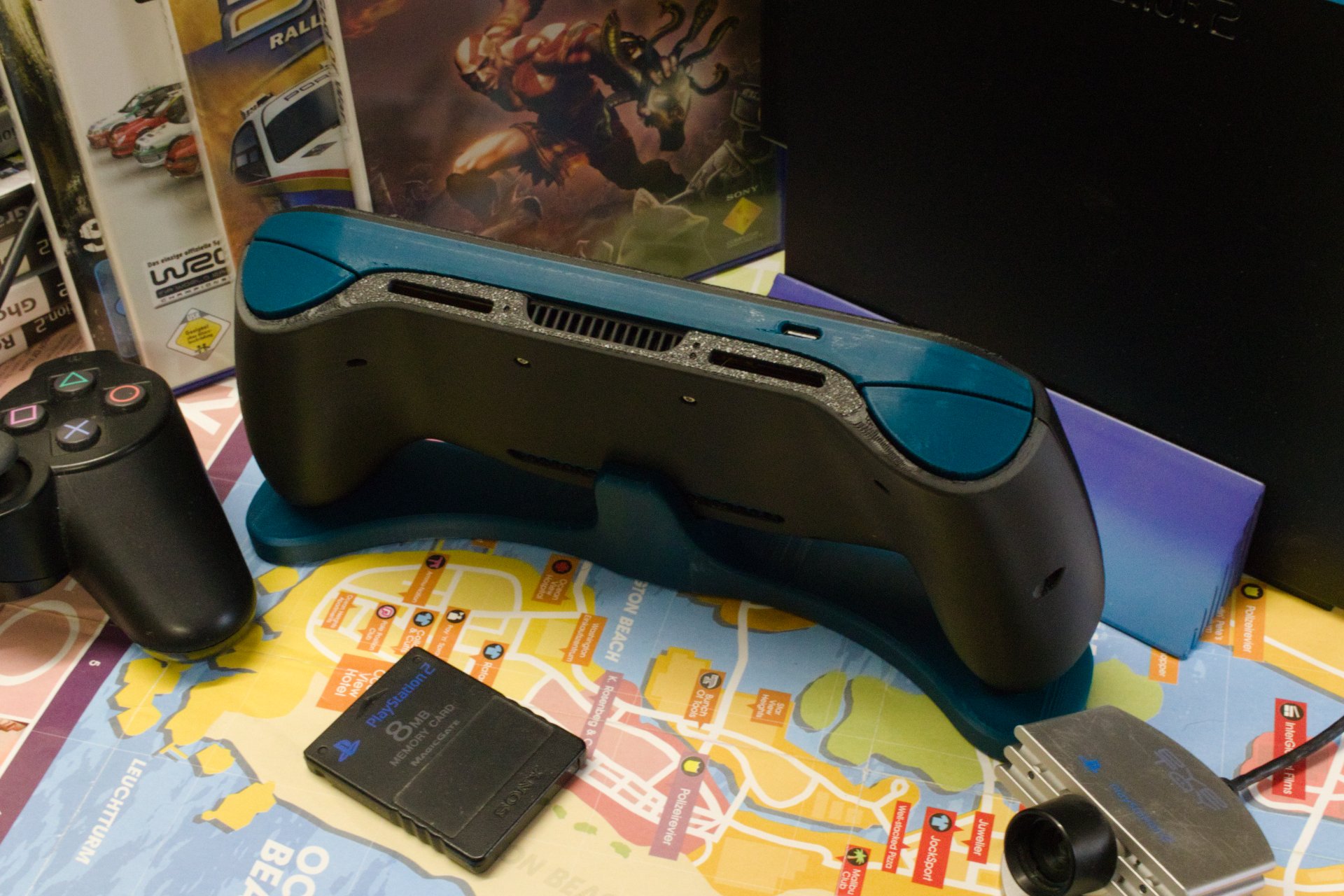
Power management incorporates USB-PD charging capabilities, supporting 5V, 9V, or 12V operation for both fast charging and "charge and play" functionality. This represents a significant upgrade over the original PS2's power requirements and showcases how modern power delivery systems can be integrated with legacy hardware.
Storage solutions demonstrate clever engineering adaptations. The device features two microSD card slots: one that connects directly to the PS2 Memory Card's data lines, tricking the system into thinking an 8MB memory card is attached (useful for boot files and saves), and another that uses the open-source MX4SIO standard to bypass the PS2's memory controller entirely for direct storage access.
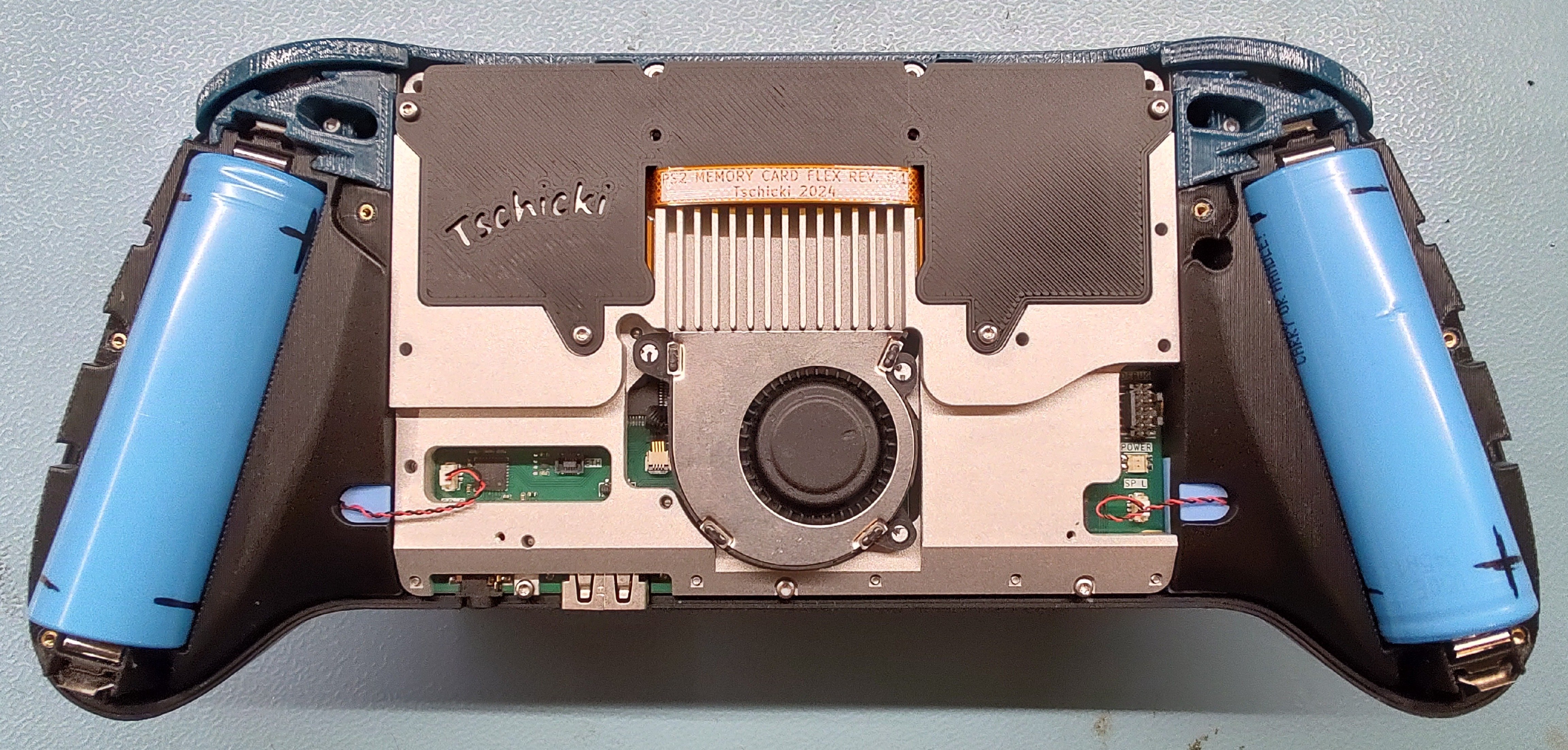
The cooling system utilizes a custom heatsink paired with the fan from a Switch Lite, demonstrating how off-the-shelf components can be adapted for specialized applications. The entire assembly is split into just two main sections that screw together, with vents positioned for optimal airflow across the critical components.
Perhaps most remarkable is the complete open-source nature of the project. All resources—including 3D printer files (STLs), PCB schematics, FPGA code, and firmware—are available on GitHub. The documentation spans ten detailed guides, though tschicki explicitly warns that this is not a beginner-friendly project, requiring expert-level soldering and programming skills.
From a technical perspective, this project highlights several important concepts in hardware preservation and reverse engineering. The successful integration of original silicon demonstrates that maintaining authentic hardware performance remains preferable to software emulation for certain applications. The use of FPGAs for video processing shows how modern programmable logic can interface with legacy systems without compromising signal integrity.
The market implications extend beyond gaming preservation. This project demonstrates the growing trend of community-driven hardware innovation, where enthusiasts with specialized skills can create products that commercial manufacturers might not deem viable. The open-source nature of the project also contributes to knowledge preservation, ensuring that understanding of these systems continues even after production ceases.
For those interested in attempting similar projects, the GitHub repository provides comprehensive documentation, though the complexity should not be underestimated. The project serves as both an inspiration and a cautionary tale about the dedication and expertise required for advanced hardware modification.
The PlayStation 2 Portable stands as a testament to the enduring appeal of classic gaming hardware and the remarkable capabilities of the modding community. By combining original silicon with modern design principles and open-source collaboration, tschicki has created something truly unique in the world of portable gaming.
Comments
Please log in or register to join the discussion