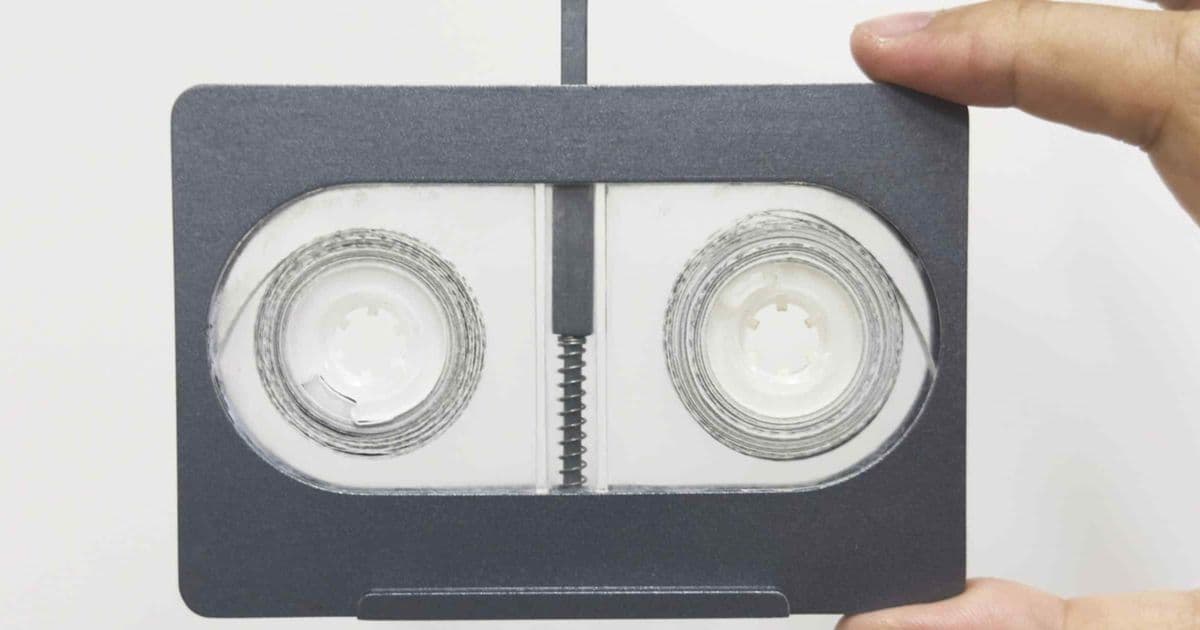
Researchers in China and elsewhere are developing ultra‑high‑density storage media—DNA‑based cassettes and diamond quantum memories—to address the looming data‑storage shortage driven by AI and social media. The technologies promise petabyte‑scale capacity in compact, durable formats, but face steep scaling, cost, and ecosystem challenges before they can impact the $150 billion global storage market.
Business news
A wave of research projects targeting exotic storage media is gaining momentum as the volume of digital information approaches 200 zettabytes worldwide, a figure projected to double by 2030. Chinese scientists at the Southern University of Science and Technology have demonstrated a DNA cassette capable of encoding roughly 3 billion songs—equivalent to about 150 petabytes—in a gram‑scale substrate. In parallel, a consortium led by Diamond Quantum Technologies in the United States has unveiled a prototype diamond‑based quantum memory that can retain data for decades without power, while supporting read/write speeds comparable to modern SSDs.
Both approaches aim to circumvent the physical limits of silicon‑based NAND flash and magnetic hard drives, which are already under pressure from the explosive growth of generative AI models, high‑resolution video streaming, and IoT telemetry. The International Data Corporation (IDC) estimates that global data‑center storage capacity will need to increase by 4.5 exabytes per year through 2027, a rate that outpaces the current $150 billion memory market’s ability to supply new hardware.
Market context
- Supply constraints – The semiconductor shortage that began in 2022 has extended to memory chips, with DRAM and NAND prices hovering 20‑30 % above 2021 levels. Major players such as Samsung, SK Hynix, and Micron have announced capacity expansions, yet analysts at Gartner warn that memory‑chip fab utilization will stay above 85 % through 2027.
- Capital intensity – Building a commercial DNA‑storage pipeline requires costly synthesis and sequencing infrastructure. Current per‑gigabyte cost sits at roughly $10,000, far above the sub‑dollar target needed for data‑center economics. However, the cost curve is steep; a 2025 study by the University of Washington projected a 70 % reduction in synthesis cost per year as automation improves.
- Regulatory and security considerations – Storing data in biological material raises bio‑security questions. The U.S. Department of Commerce’s Bureau of Industry and Security has placed DNA‑synthesis equipment under export‑control review, potentially limiting cross‑border technology transfer.
- Emerging competitors – Aside from DNA, other high‑density media such as holographic storage, phase‑change materials, and diamond quantum memories are attracting venture funding. Diamond Quantum raised $120 million in Series B financing, citing a path to 10 petabytes per wafer and intrinsic resistance to radiation—an advantage for satellite and edge‑computing deployments.
What it means
- Strategic diversification for cloud providers – Companies like Amazon Web Services, Microsoft Azure, and Google Cloud will likely experiment with hybrid storage stacks, pairing conventional SSDs with pilot DNA‑or diamond‑based tiers for archival workloads. Early adopters could achieve up to 80 % lower total cost of ownership (TCO) for cold‑storage data that is accessed infrequently.
- Potential disruption of the memory supply chain – If synthesis costs fall to $0.10 per gigabyte by 2030, the economics could shift investment away from traditional fab expansions toward biotech facilities. This would reshape the capital‑expenditure profile of the storage industry, favoring firms with expertise in synthetic biology and quantum optics.
- New revenue streams for biotech firms – Companies such as BGI and Twist Bioscience are already positioning themselves as data‑storage service providers, offering “DNA‑as‑a‑service” platforms. Their 2025 revenue forecasts now include a $500 million line‑item for enterprise data archiving, reflecting growing client interest.
- Risk of fragmentation – Until standards emerge, customers may face vendor lock‑in and interoperability challenges. Industry bodies like the Storage Networking Industry Association (SNIA) are convening working groups to define APIs and durability metrics for non‑silicon media.
Overall, the push for DNA cassettes and diamond memories underscores a broader shift: as AI‑driven workloads flood the cloud with petabytes of model parameters and training data, the economics of storage will increasingly depend on breakthroughs outside traditional semiconductor manufacturing. Companies that can integrate these novel media into existing data‑center architectures stand to capture a share of the $150 billion storage market that is currently dominated by a handful of chipmakers.
Comments
Please log in or register to join the discussion