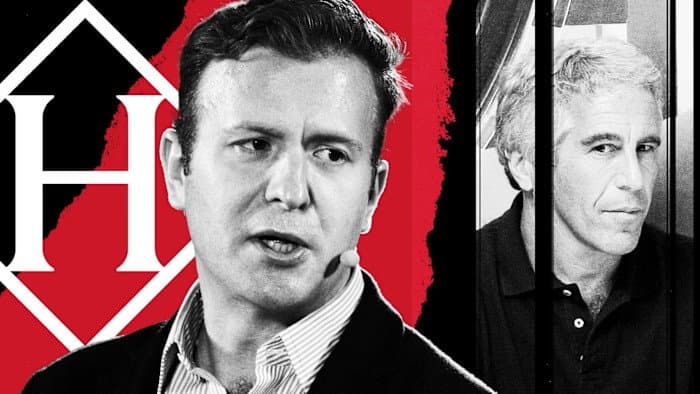
Newly released DOJ emails show Jeffrey Epstein helped establish London-based tech fund Hedosophia after founder Ian Osborne offered to help clean up Epstein's image in 2011, raising questions about connections between convicted sex offenders and tech investment circles.
The Department of Justice has released emails revealing that Jeffrey Epstein played a role in establishing the London-based tech fund Hedosophia after its founder Ian Osborne reached out to help Epstein rehabilitate his public image in 2011. The correspondence, obtained through a Freedom of Information Act request, shows Osborne contacted Epstein offering assistance with his public relations challenges, which subsequently led to Epstein's involvement in the creation of Hedosophia.
According to the emails, Osborne wrote to Epstein expressing his willingness to help "clean up" Epstein's image, which had been tarnished by previous allegations and investigations. In response, Epstein allegedly provided introductions and support that helped Osborne launch Hedosophia, a venture capital firm that has since invested in numerous tech startups.
The revelation has sparked renewed scrutiny of the connections between convicted sex offenders and the tech investment community. Hedosophia, which manages billions in assets and has invested in companies like Virgin Galactic and Palantir, has not publicly commented on the newly disclosed relationship.
This development comes as part of a broader pattern of Epstein's post-conviction efforts to maintain influence in elite financial and technology circles. The emails suggest that Osborne's offer of image rehabilitation services was part of a quid pro quo arrangement that helped launch one of Europe's most prominent tech investment vehicles.
Industry observers note that the case highlights ongoing concerns about due diligence and ethical standards in venture capital, particularly regarding the backgrounds of fund founders and their associates. The timing of the emails, coming just months after Epstein's 2008 conviction, raises questions about how he was able to maintain such extensive networks despite his criminal history.
The DOJ's release of these emails follows years of legal battles and public pressure for greater transparency regarding Epstein's post-conviction activities. The documents provide new insight into how Epstein leveraged his remaining connections to maintain influence in the tech sector, even as he faced increasing scrutiny from law enforcement and the media.
Financial analysts are now examining whether Hedosophia's success and its ability to attract high-profile investments may have been influenced by Epstein's involvement in its founding. The fund's portfolio includes investments in space technology, artificial intelligence, and other cutting-edge sectors that have attracted significant capital in recent years.
This revelation adds another layer to the ongoing investigation into Epstein's networks and the extent to which his criminal activities were enabled by his connections in finance, technology, and other elite sectors. The emails suggest that efforts to rehabilitate Epstein's image were not merely defensive but were actively traded for business opportunities and influence in the tech investment world.
The case has prompted calls for greater transparency in venture capital funding and more rigorous background checks on fund founders and their associates. Industry groups are likely to face increased pressure to establish clearer ethical guidelines and disclosure requirements for tech investment firms.
As the tech industry continues to grapple with questions of ethics and accountability, the Epstein-Hedosophia connection serves as a stark reminder of how criminal networks can infiltrate even the most innovative and seemingly progressive sectors of the economy. The full implications of these revelations for Hedosophia's portfolio companies and investors remain to be seen, but the case is likely to fuel ongoing debates about the intersection of ethics, finance, and technology in the modern economy.
The DOJ emails represent one of the most concrete pieces of evidence linking Epstein's post-conviction activities to the tech investment world, providing a clearer picture of how he maintained influence despite his criminal convictions. The case continues to raise difficult questions about the responsibilities of investors, founders, and the broader tech community in preventing the exploitation of their networks by individuals with criminal histories.
Comments
Please log in or register to join the discussion