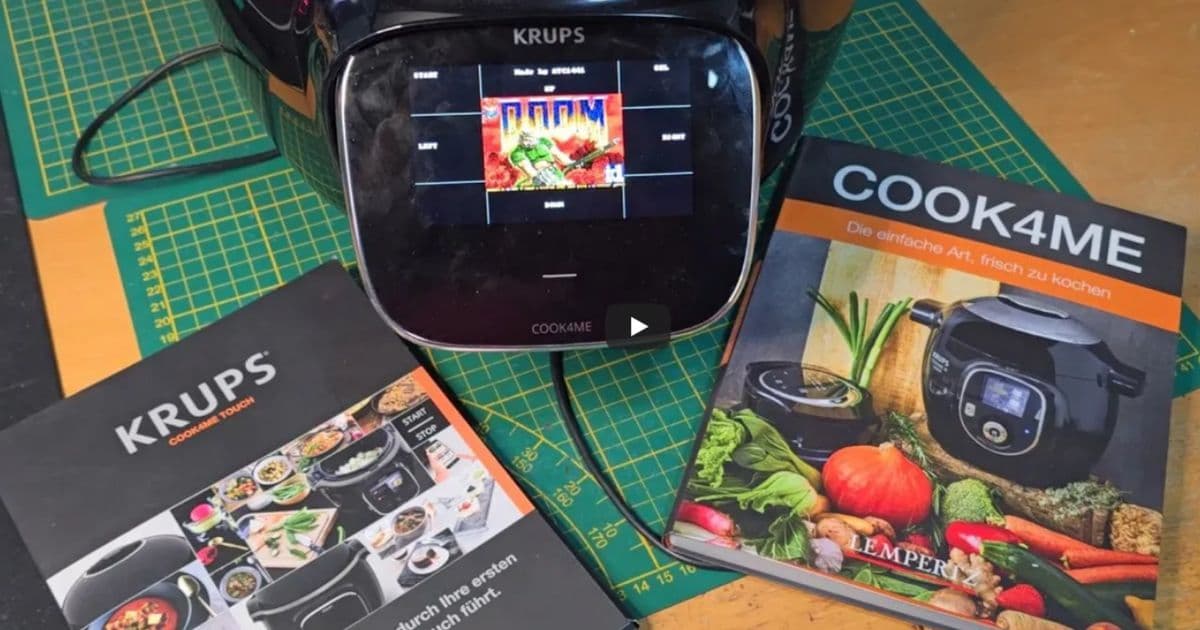
A YouTuber successfully ported Doom to a Krups Cook4Me smart pressure cooker by reverse-engineering its firmware, revealing the architectural separation between cooking safety systems and the powerful interface hardware that powers the device's touchscreen and connectivity features.
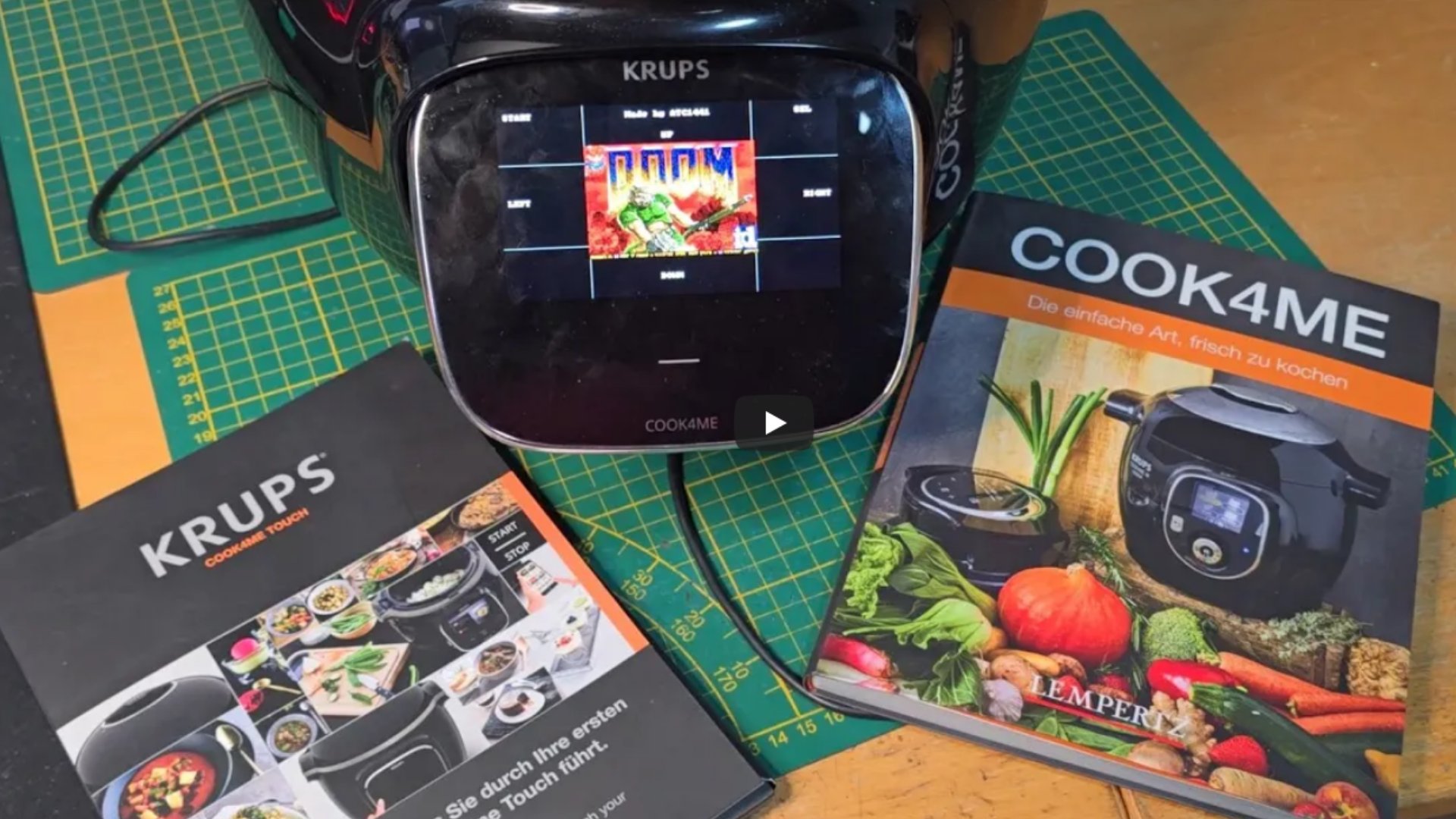
The Krups Cook4Me smart pressure cooker now joins the ranks of toasters, ATMs, and pregnancy tests as another unlikely device capable of running Doom. In a detailed teardown and reverse-engineering project documented on YouTube, developer Aaron Christophel dumped the firmware from the appliance's touchscreen module, built a custom firmware environment, and successfully ported the classic 1993 shooter to run locally on the cooker's display.
Hardware Architecture Reveals Design Philosophy
The project began with an observation about the Cook4Me's Wi-Fi capabilities. While examining the settings menu, Christophel noticed the first three bytes originated from Espressif, strongly suggesting an ESP32 microcontroller handled wireless connectivity. This prompted a complete disassembly of the unit.
The teardown revealed a split hardware architecture common in modern smart appliances. The lower section contains the actual cooking hardware: a temperature sensor, heating element, safety switch, and a simple STM microcontroller board that manages the heating relay, temperature measurement, and critical fail-safe cutoffs. This isolation ensures that even if the interface system fails, the core cooking functions remain protected.
Connected by a basic four-wire cable, the front touchscreen assembly houses significantly more sophisticated electronics. The Wi-Fi module confirmed as an ESP32, while the main processor on the display board is a Renesas R7S721031VZ. This Arm-based chip features substantial GPIO capabilities and processing power for a smart appliance interface. The board also includes 128MB of flash storage, 128MB of RAM, capacitive touch controller, display driver, beeper, external EEPROM, and an unpopulated SD card slot—hardware specifications that rival some single-board computers.
Firmware Extraction and Reverse Engineering
The ESP32's flash memory was initially encrypted, with logs suggesting cloud connectivity through AWS MQTT using private key authentication. However, access to the main Renesas processor came through SWD (Serial Wire Debug) interface. By connecting an SWD flasher to the appropriate pins, Christophel successfully dumped the complete flash contents.
Bootloader logs provided crucial insights into how the LCD display initializes, enabling the construction of custom firmware. This process involved understanding the display initialization sequence, touch input mapping, and creating appropriate wrappers for the Doom engine to interface with the hardware.
Doom on a Dinner Device
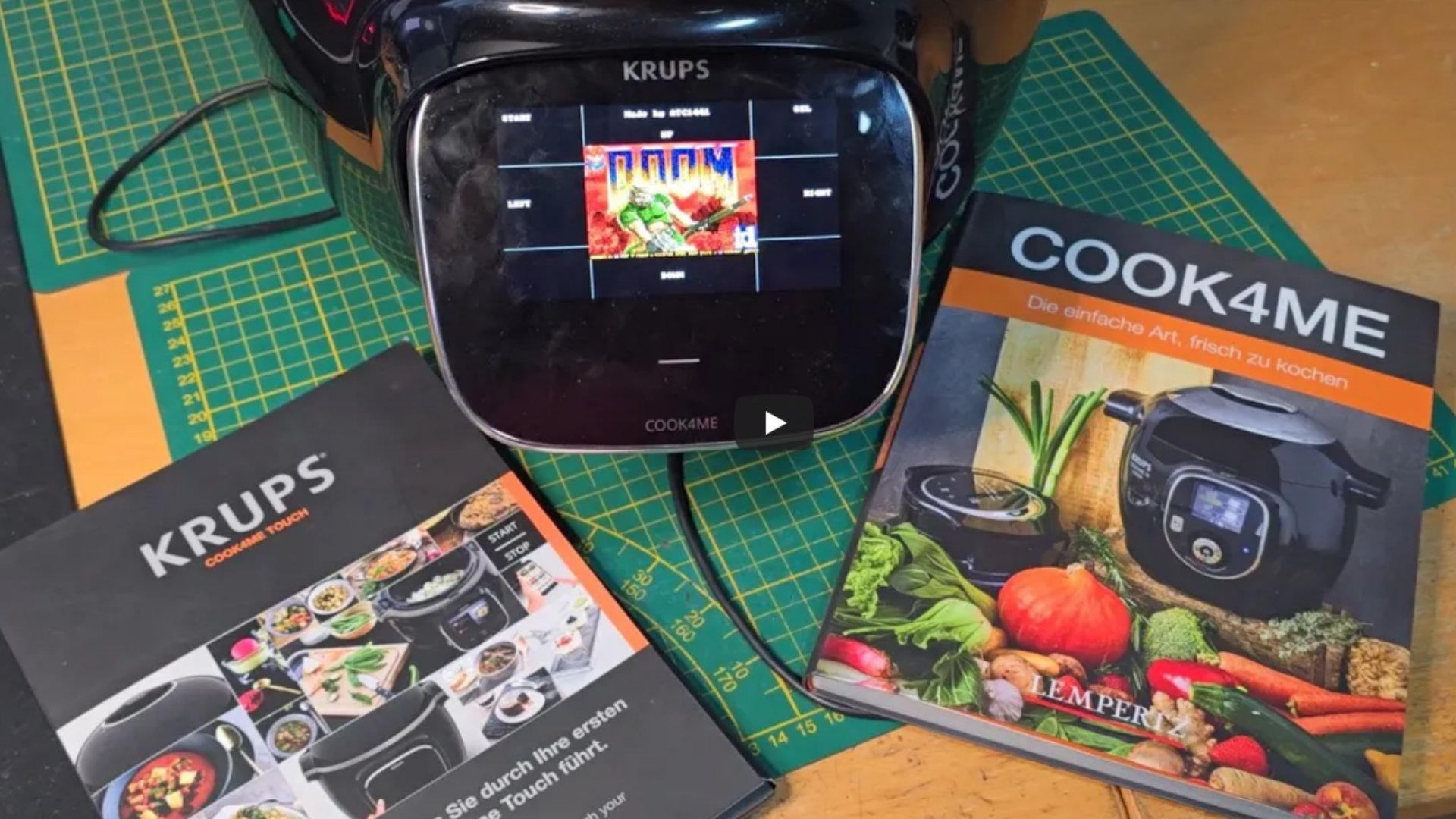
After writing sufficient wrapper code and porting Doom to the custom firmware environment, the game runs smoothly on the pressure cooker's display. The touchscreen is mapped to different regions functioning as game buttons, delivering what Christophel describes as "a quite nice frame rate."
The project highlights an important architectural pattern in modern connected devices: the separation between safety-critical cooking logic and the more complex interface/networking stack. This design allows manufacturers to use proven, simple microcontrollers for core functions while leveraging powerful processors for user experience features. It also creates opportunities for hobbyists to repurpose the interface hardware without affecting the underlying safety systems.
Broader Implications for Smart Appliance Security
This reverse-engineering effort demonstrates both the accessibility and potential security concerns of modern smart appliances. The presence of unencrypted flash dumps, debug interfaces, and cloud connectivity credentials reveals that manufacturers often prioritize functionality over security hardening. While Christophel's project is benign, it illustrates how determined individuals can extract firmware, understand hardware architectures, and potentially modify device behavior.
The Cook4Me's architecture—split between a simple STM microcontroller handling safety-critical operations and a more complex Renesas/ESP32 combination for interface and connectivity—represents a pragmatic approach to smart appliance design. The cooking logic remains isolated on the simpler controller, while networking and user interface are handled by the more capable embedded computer. This separation made it possible to run Doom without affecting the pressure cooker's primary functions.

As smart appliances continue to proliferate, this project serves as both an entertaining demonstration and a reminder that the "smart" components of these devices are essentially general-purpose computers. The same hardware that displays cooking timers can, with sufficient effort, run classic video games, process network requests, or potentially execute malicious code if security vulnerabilities exist.
The Internet's tradition of porting Doom to increasingly absurd devices shows no signs of stopping. From space stations to pregnancy tests to now pressure cookers, each project reveals something about the underlying hardware capabilities and design decisions in modern electronics. The Cook4Me's capable interface hardware, designed to provide a smooth cooking experience, proves more than adequate for delivering classic 90s shooter action right in the kitchen.
Comments
Please log in or register to join the discussion