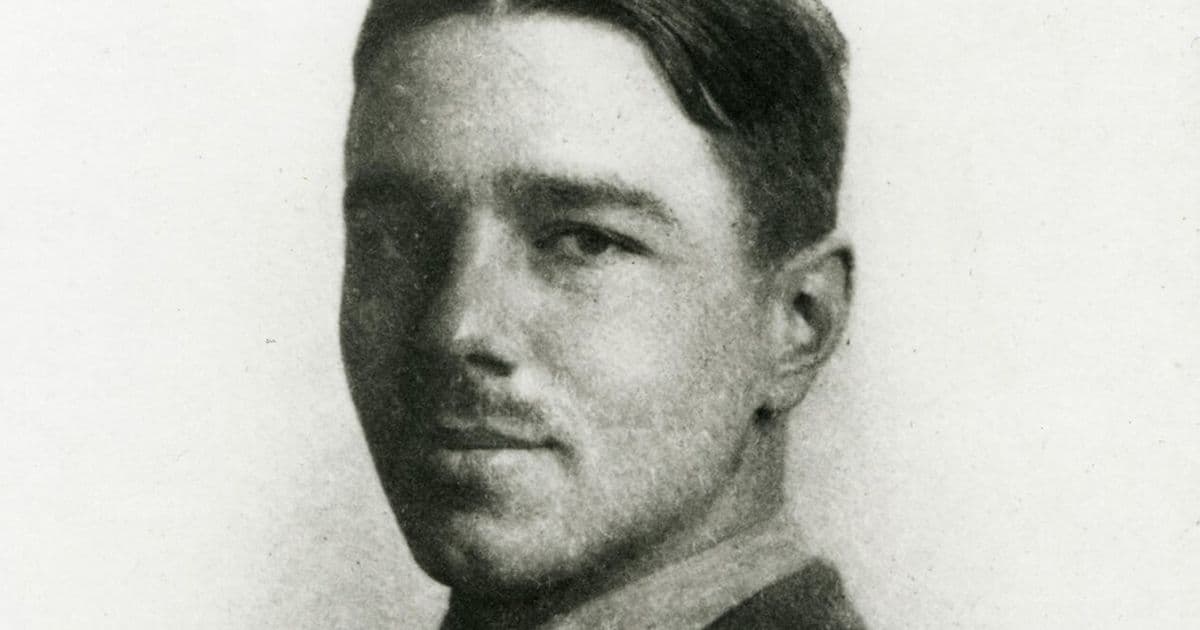
Wilfred Owen's 'Dulce et Decorum Est' remains one of the most powerful anti-war poems ever written, exposing the brutal reality of World War I through vivid imagery and personal experience.
Wilfred Owen's "Dulce et Decorum Est" stands as one of the most powerful anti-war poems ever written, exposing the brutal reality of World War I through vivid imagery and personal experience. Published posthumously in 1920, the poem dismantles the patriotic ideal that it is sweet and honorable to die for one's country—the Latin phrase from which the title derives.
The Poem's Structure and Imagery
The poem opens with soldiers described as "Bent double, like old beggars under sacks," immediately subverting the traditional image of proud, upright warriors. Owen's use of similes comparing soldiers to beggars and hags emphasizes their physical degradation and the toll that war takes on the human body. The soldiers are "knock-kneed, coughing like hags," moving through mud and sludge, their former military bearing replaced by exhaustion and illness.
Owen employs a variety of sensory details to convey the horror of war. The "haunting flares" and "gas-shells dropping softly behind" create an atmosphere of constant threat. The famous gas attack scene uses visual imagery of "thick green light" and "misty panes" to describe the deadly chlorine gas, comparing it to "a green sea" through which the narrator watches a fellow soldier drown.
The Gas Attack: A Turning Point
The poem's central moment comes with the cry of "Gas! GAS! Quick, boys!" This sudden shift in pace and tone captures the chaos and panic of a chemical weapons attack. Owen describes the "ecstasy of fumbling" as soldiers struggle to put on their gas masks, with the repetition of "Gas" mimicking the urgent shouts of the moment.
One soldier fails to secure his mask in time. Owen's description of this man's death is particularly harrowing: "He plunges at me, guttering, choking, drowning." The use of participles creates a sense of ongoing, unending suffering. The narrator is haunted by this image, which recurs in his dreams "before my helpless sight."
The Poem's Conclusion: A Direct Challenge
The final stanza represents a direct address to the reader, particularly those who promote war to young men. Owen describes the aftermath of the gas attack, watching the dying soldier being transported in a wagon, his eyes "writhing" and his face "like a devil's sick of sin."
The graphic details of the soldier's death—"the blood / Come gargling from the froth-corrupted lungs"—are compared to "obscene as cancer" and "bitter as the cud / Of vile, incurable sores." These comparisons to disease emphasize the unnatural and horrific nature of the death.
Owen concludes with a bitter denunciation of the patriotic lie that encourages young men to go to war. The final lines, "My friend, you would not tell with such high zest / To children ardent for some desperate glory, / The old Lie: Dulce et decorum est / Pro patria mori," directly challenge those who would glorify war without experiencing its realities.
Historical Context and Owen's Experience
Wilfred Owen wrote this poem during World War I, having experienced the conflict firsthand. He served as a second lieutenant in the Manchester Regiment and was treated for shell shock at Craiglockhart War Hospital, where he met fellow poet Siegfried Sassoon, who encouraged his writing.
Owen was killed in action on November 4, 1918, just one week before the Armistice. His poetry, including "Dulce et Decorum Est," was published posthumously, edited by Sassoon. The poem's publication in 1920 came at a time when the full horrors of the war were becoming apparent to the public.
Literary Techniques and Devices
Owen employs several poetic techniques to enhance the poem's impact:
- Alliteration: "Men marched asleep," "watch the white eyes"
- Assonance: "Bent double, like old beggars"
- Onomatopoeia: "guttering, choking, drowning"
- Simile: Multiple comparisons throughout the poem
- Metaphor: The gas attack as a "green sea"
- Irony: The contrast between the poem's title and its content
The poem's irregular rhyme scheme and meter contribute to its unsettling effect, avoiding the sing-song quality that might make such horrific content more palatable.
The Poem's Legacy
"Dulce et Decorum Est" has become one of the most studied and anthologized poems about war. Its graphic depiction of the realities of combat challenged the romanticized view of war that was common in early 20th-century literature and propaganda.
The poem's influence extends beyond literature into cultural attitudes toward war. It has been referenced in numerous works of art, music, and film, and continues to be taught in schools as an example of effective war poetry and as a cautionary tale about the costs of armed conflict.
Critical Reception and Analysis
Critics have praised Owen's technical skill and emotional power. The poem's effectiveness lies in its combination of vivid, specific imagery with universal themes about the human cost of war. Some scholars have noted the poem's connection to earlier war poetry, particularly the work of Siegfried Sassoon, with whom Owen shared ideas and influences.
The poem has also been analyzed for its psychological aspects, particularly the narrator's trauma and the recurring nightmares described in the third stanza. This focus on the psychological impact of war was relatively new in war poetry and has influenced subsequent generations of writers.
Conclusion
"Dulce et Decorum Est" remains a powerful indictment of war and a testament to the experiences of those who fought in World War I. Through its vivid imagery, technical mastery, and emotional honesty, Wilfred Owen created a poem that continues to resonate with readers more than a century after it was written. The poem's central message—that the glorification of war is a dangerous lie—remains relevant in contemporary discussions about conflict and its human costs.
The poem's enduring power lies in its ability to make the abstract horror of war concrete and personal, forcing readers to confront the reality that lies behind patriotic slogans and romantic notions of battlefield glory. In doing so, Owen achieved what he set out to do: to tell the truth about war, no matter how painful that truth might be.
Comments
Please log in or register to join the discussion