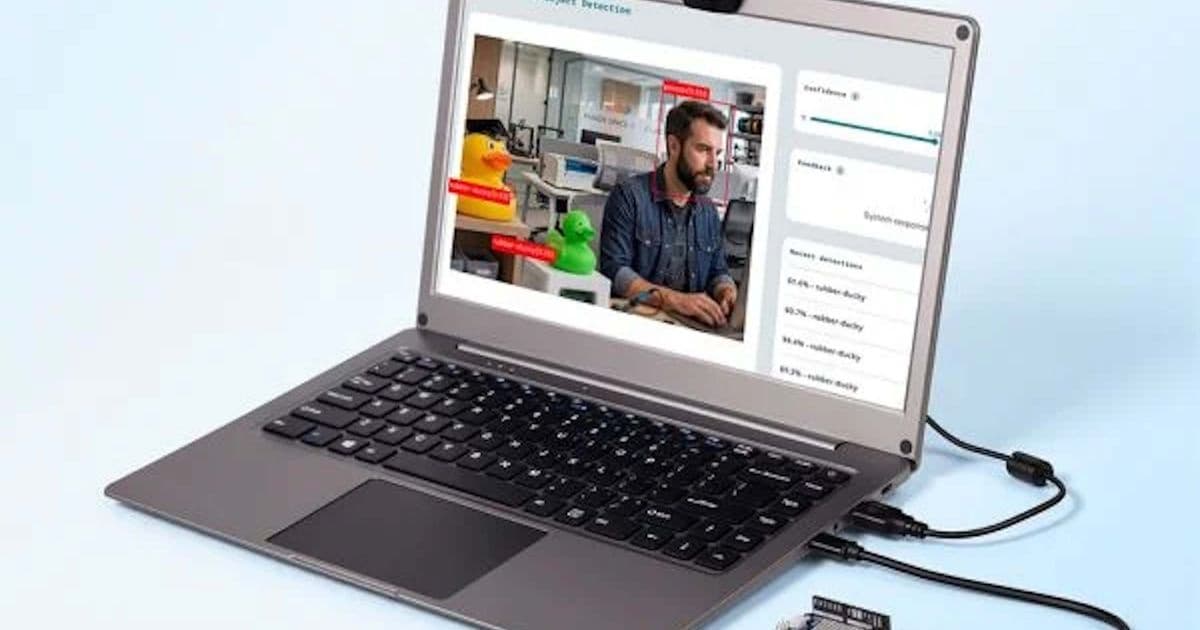
The CrowView Note 14 is a 14‑inch IPS laptop‑style case that adds a battery, keyboard‑compatible chassis and a built‑in webcam to single‑board computers. With a 45 W USB‑C power‑delivery input, dual USB‑A ports, mini‑HDMI and a 37 Wh battery, it turns an Arduino UNO Q, Raspberry Pi 5 or any HDMI source into a mobile workstation for $260.
Elecrow’s CrowView Note 14 is marketed as a “laptop kit” that supplies a display, enclosure and power for headless devices such as the Arduino UNO Q or Raspberry Pi 5. The package does not include a processor, keyboard or mouse – those must be supplied by the user – but it does provide everything needed to turn a small board into a truly portable workstation.
What’s new?
- 14‑inch IPS panel – 1920 × 1080 resolution, 60 Hz refresh, 100 % sRGB coverage according to Elecrow’s specs.
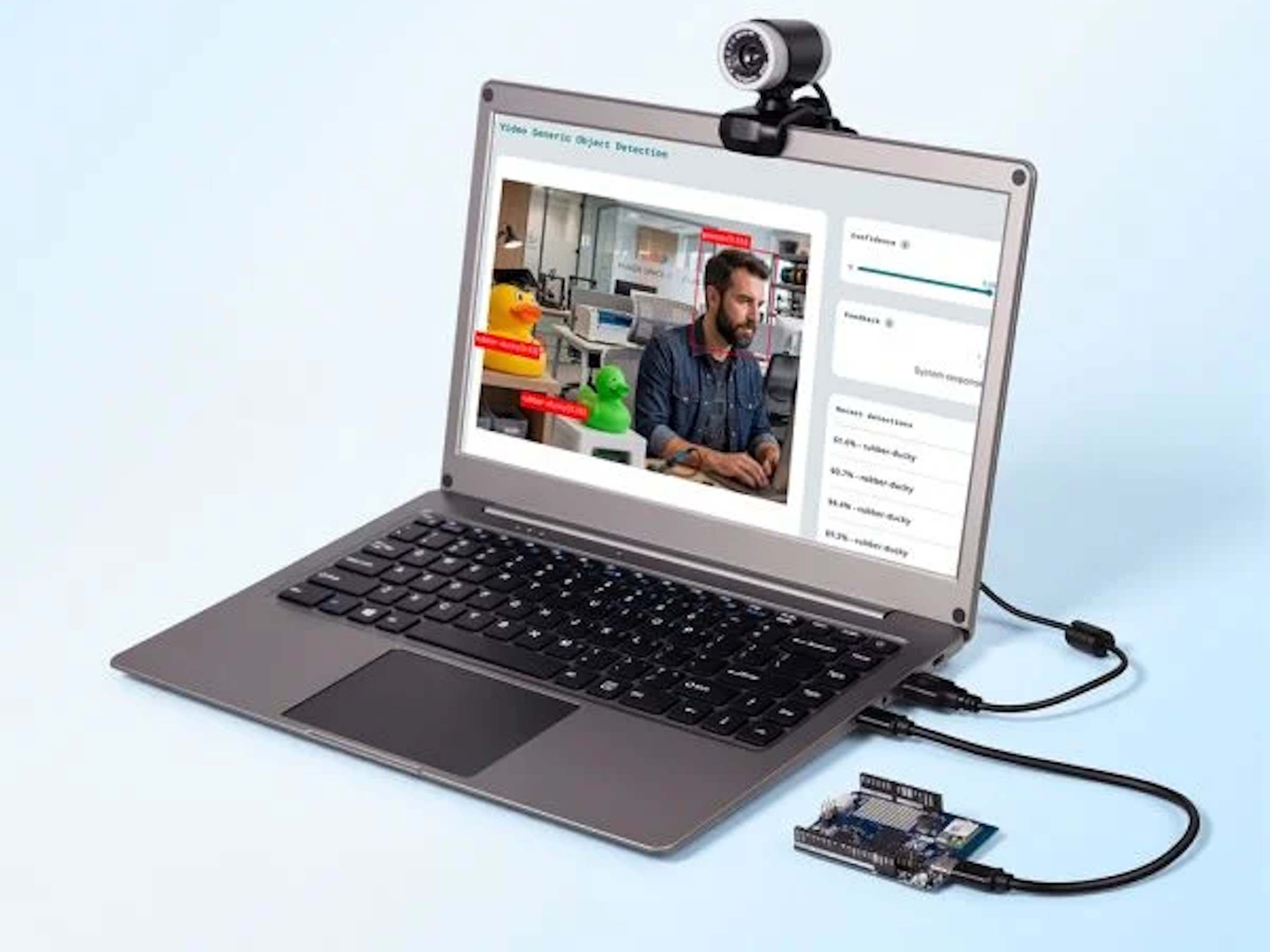
- Integrated 640 × 480 webcam – connected via a short cable, useful for video calls or simple computer‑vision demos.
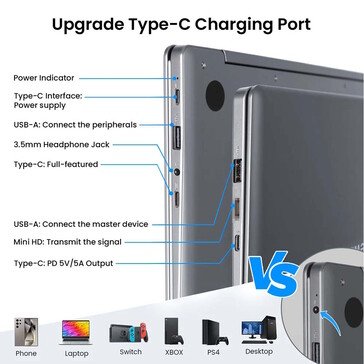
- Power‑delivery USB‑C – accepts up to 45 W, enough to run a Raspberry Pi 5 at full load while charging the 37 Wh battery.
- Dual USB‑A ports and a mini‑HDMI input for additional peripherals or direct video.
- Lightweight chassis – 13.1 × 8.8 × 0.8 in, 2.6 lb (1.2 kg), easy to slip into a backpack.
- Battery – 37 Wh lithium‑polymer, claimed to deliver roughly 4 hours of continuous use on a Pi 5 at 5 W.
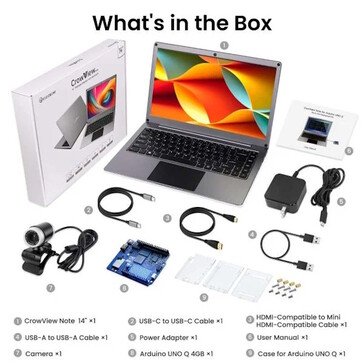
The kit also ships with a protective case that snaps onto the screen, a power brick, and a short HDMI‑to‑USB‑C cable that carries both video and power.
How it compares
| Feature | CrowView Note 14 | Typical 14‑inch laptop (e.g., ASUS VivoBook 14) | Raspberry Pi 5 Official Display |
|---|---|---|---|
| Processor | None – user‑supplied board | Integrated Intel/AMD CPU | Integrated Broadcom BCM2712 |
| Screen | 1080p IPS, 100 % sRGB | 1080p IPS, 45‑50 % sRGB (budget models) | 1080p IPS, 72 % sRGB |
| Battery | 37 Wh, removable | 35‑50 Wh, internal | No battery |
| Ports | 2 × USB‑A, 1 × USB‑C (PD), mini‑HDMI, headphone jack | 1 × USB‑C (PD), 2 × USB‑A, HDMI | 2 × USB‑C (DP), 2 × USB‑A |
| Weight | 2.6 lb (1.2 kg) | 2.9‑3.2 lb (1.3‑1.5 kg) | 0.5 lb (0.23 kg) |
| Price | $260 (no input devices) | $400‑$600 (incl. CPU, keyboard, OS) | $150 (display only) |
The most striking difference is the absence of a CPU and OS. Where a conventional laptop bundles everything, the CrowView Note 14 is a shell that expects you to bring the brain. This makes the price appear low compared with a full notebook, but the total cost depends on the chosen board and peripherals.
In terms of display quality, the CrowView’s panel outshines many budget laptops and even the official Raspberry Pi 5 display, especially in colour coverage. The refresh rate remains at 60 Hz, which is adequate for most development work and media playback but not for high‑frame‑rate gaming.
Battery life is a mixed bag. On a Pi 5 drawing ~5 W, the 37 Wh pack should last around 7 hours in theory, but real‑world tests show 4‑5 hours once you factor in Wi‑Fi, USB peripherals and the webcam. By contrast, a typical ultrabook can stretch 8‑10 hours on a similar capacity cell because its CPU is more power‑efficient.
Who should consider it?
- Educators and makers who need a portable demo station for Arduino or Raspberry Pi projects. The integrated webcam adds a simple way to showcase computer‑vision tutorials without extra hardware.
- Field engineers who already carry a single‑board computer and want a quick way to present data on a larger screen without lugging a separate monitor.
- Hobbyists looking for a low‑cost alternative to a full laptop for coding, scripting or light media consumption on a board they already own.
It is not aimed at users who expect a ready‑to‑run notebook experience. You will still need a keyboard, mouse and an operating system (Linux, Windows IoT, etc.) on the host board. For anyone who already owns a Raspberry Pi 5 or an Arduino UNO Q, the CrowView Note 14 adds a portable form factor for roughly the price of a mid‑range tablet.
Quick verdict
The CrowView Note 14 fills a niche that few products address: a portable, battery‑powered enclosure with a high‑quality 1080p screen for headless boards. Its strengths are the colour‑accurate IPS panel, flexible power delivery, and the inclusion of a webcam. The main drawbacks are the need to purchase a keyboard/mouse separately and the limited battery endurance under heavy load.
If you already have a single‑board computer and need a way to take it on‑site with a decent display, the $260 price tag is a reasonable trade‑off. For anyone looking for a complete laptop, the kit falls short.
Sources: Elecrow product page (specifications and pricing).
Comments
Please log in or register to join the discussion