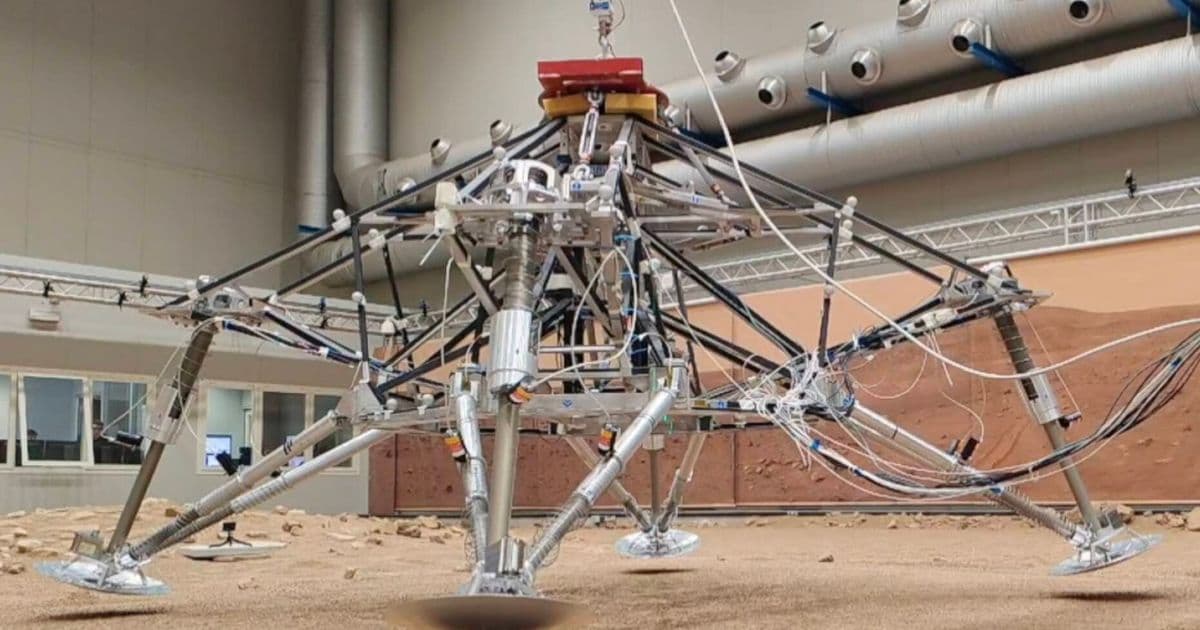
The European Space Agency has successfully completed full-scale structural tests of the ExoMars lander platform, a crucial milestone for the long-delayed mission now targeting a 2028 launch. The tests verify the stability and shock absorption systems that will protect the Rosalind Franklin rover during its final descent to Mars.
The European Space Agency (ESA) has taken a significant step toward reviving its flagship Mars mission by conducting full-scale drop tests of the ExoMars lander platform. The successful tests, completed in January 2026, validate the structural integrity and stability systems that will protect the Rosalind Franklin rover during its final descent to the Martian surface in 2030.
The Engineering Challenge of Martian Landings
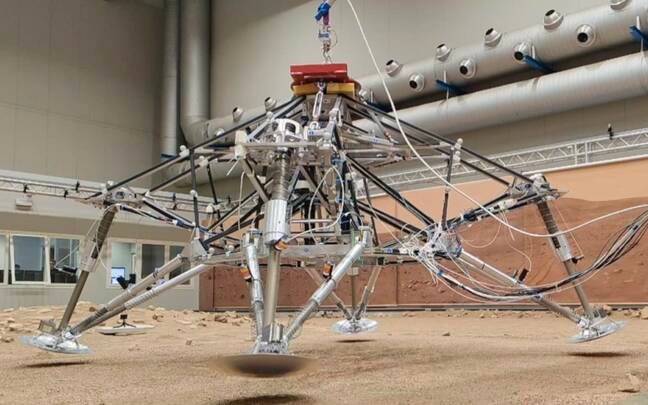
The ExoMars lander platform features four legs equipped with sophisticated shock absorbers and sensors designed to trigger engine shutdown at the precise moment of touchdown. This timing represents one of the most critical aspects of the landing sequence. "The last thing you want is for the platform to tip over when it reaches the Martian surface," explained Benjamin Rasse, ESA's team leader for the ExoMars descent module. "These tests will confirm its stability at landing."
The engineering challenge involves multiple failure modes. If the engines shut down too early, the lander could impact the Martian surface with excessive force, potentially damaging the rover. If they continue running too long, the exhaust could blast Martian soil into sensitive components. There's also the risk of tipping over if the lander touches down at an angle or encounters a rock. The platform's four-legged design must maintain stability across all these scenarios.
Testing Methodology and Validation
Teams from Thales Alenia Space and Airbus, which is providing the landing platform, spent more than a month dropping a full-scale structural mock-up onto various surfaces. These tests simulate the final moments of descent, verifying that the shock absorption systems work as intended and that the platform remains stable upon contact.
The testing program will continue with more complex scenarios. Next, engineers will drop the mock-up onto a moving sledge at higher speeds to simulate angled landings and more challenging surface conditions. This progressive testing approach ensures the system can handle the unpredictable nature of Mars' terrain, from smooth plains to rocky outcrops.
Mission History and Current Status
The ExoMars mission has faced numerous setbacks over the past decade. Originally planned for a 2020 launch, the mission was delayed due to technical problems. A 2022 launch attempt was canceled when Russia's invasion of Ukraine led to the suspension of cooperation with Roscosmos, which had been providing the launch vehicle and lander.
In 2025, Airbus UK secured a £150 million contract to complete the rover's landing system, taking over the role previously filled by Russian partners. NASA has since rejoined the project, committing to provide the launch vehicle, heater units, and additional rockets to assist with the landing. The mission now targets a launch window between October and December 2028 from Kennedy Space Center in Florida, with arrival at Mars expected in 2030.
NASA's involvement has been particularly turbulent. The agency withdrew from the partnership after budget cuts, prompting Roscosmos to join. After Russia's withdrawal, NASA signed on again in 2024. Despite concerns about proposed budget cuts under the Trump administration, ESA Director General Josef Aschbacher confirmed in late 2025 that NASA's contribution would proceed as planned.
Technical Specifications and Scientific Goals
The Rosalind Franklin rover is designed to search for signs of past life on Mars. It carries a drill capable of reaching two meters below the surface, where organic compounds might be preserved from the harsh radiation and oxidation at the surface. The rover's scientific payload includes instruments for analyzing soil and rock samples, searching for biomarkers, and studying the Martian environment.
The landing platform, once the rover has deployed, will serve as a stationary science platform. It carries additional instruments that will analyze the Martian atmosphere and surface composition, providing context for the rover's findings.
Broader Context of Mars Exploration
The successful testing comes at a pivotal time for Mars exploration. NASA's Perseverance rover continues its mission, recently completing its first sample collection campaign. China's Tianwen-1 mission has also demonstrated successful Mars orbiting, landing, and rover deployment. The ExoMars mission represents Europe's first attempt at landing a rover on Mars, making these tests particularly significant for the continent's space ambitions.
The testing program's success offers relief to ESA managers, but it also underscores the substantial work remaining before the 2028 launch window. The lander must undergo further integration testing with the rover, and the entire spacecraft stack must be prepared for launch. Each step represents another opportunity for delays, given the mission's history.
Looking Ahead to 2028
With the lander platform tests complete, the ExoMars team will shift focus to system integration and final preparations. The 2028 launch window is tight, and any further delays could push the mission into the next available window, which wouldn't occur until 2030. The engineering teams at ESA, Thales Alenia Space, and Airbus must now ensure that all components work together seamlessly.
The successful drop tests represent a critical validation of the landing system's design. They provide confidence that the platform can safely deliver the Rosalind Franklin rover to the Martian surface, where it will begin its search for evidence of past life. For ESA, this mission represents not just a scientific endeavor but a demonstration of Europe's capability to conduct complex interplanetary exploration independently.
As the 2028 launch approaches, the ExoMars program moves from testing and validation into the final preparation phase. The challenges ahead are significant, but the successful lander tests mark a crucial milestone in turning this long-delayed mission into reality.
Comments
Please log in or register to join the discussion