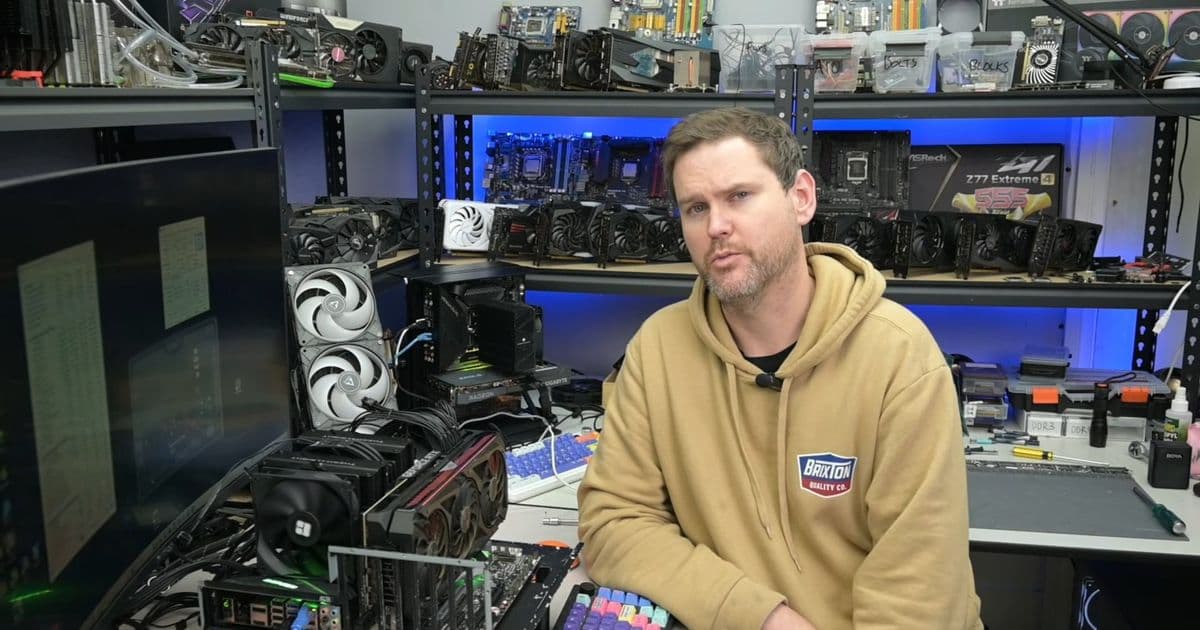
YouTuber TrashBench drove a decade‑old Skylake i7‑6700K to 5.2 GHz with 1.7 V, using air and custom ice‑bath cooling. The effort raised RTX 3080 utilization from ~60 % to 74 % in Cyberpunk 2077, but performance gains plateaued, highlighting the limits of raw voltage‑heavy overclocking on aging silicon.
Extreme Overclock Pushes Legacy i7‑6700K to 5.2 GHz, Yet RTX 3080 Still Hits a Bottleneck
Announcement
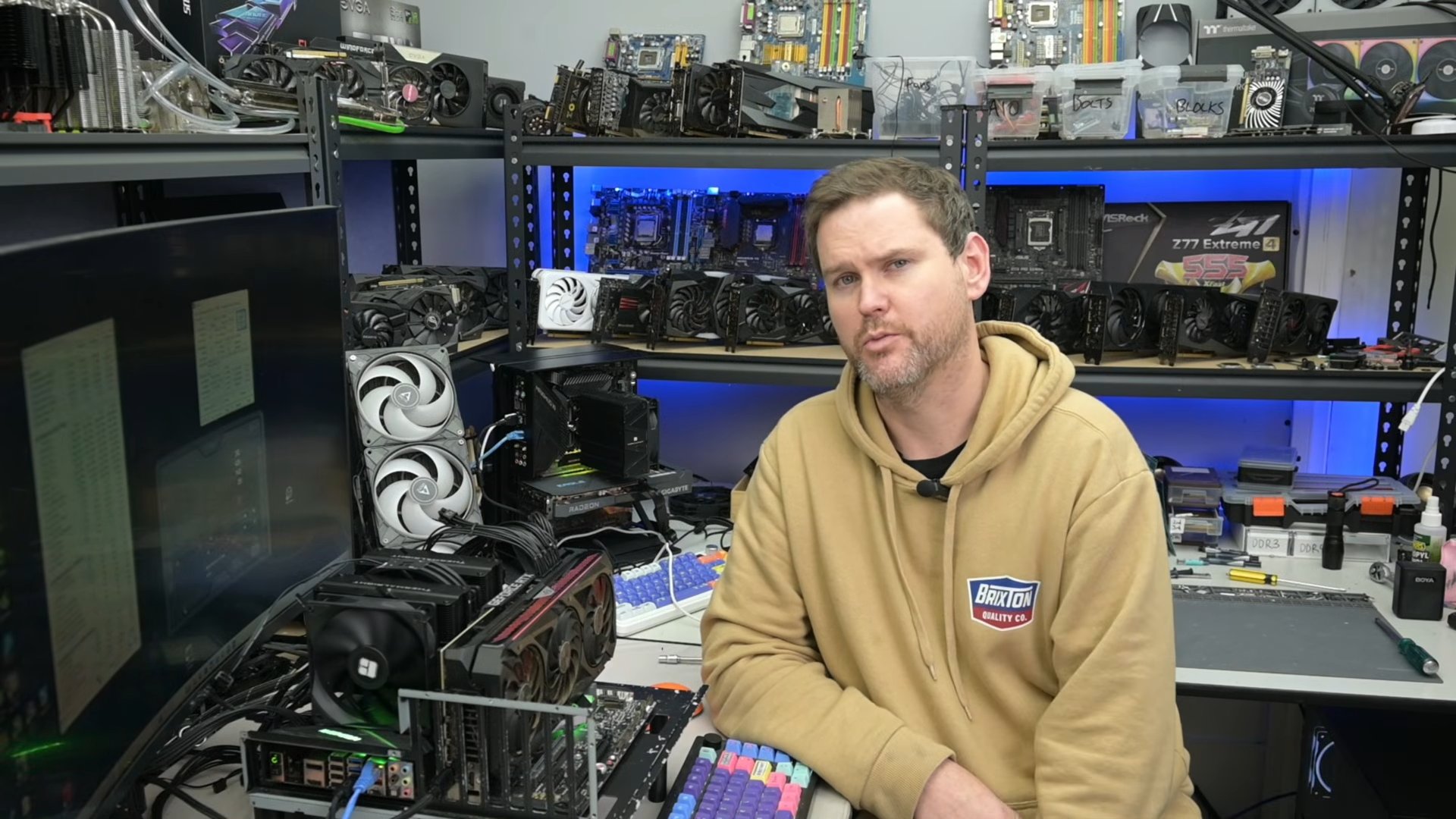
TrashBench, a well‑known PC‑building YouTuber, attempted to erase the CPU bottleneck that a 2015 Intel Core i7‑6700K imposes on a modern RTX 3080. By cranking the chip to 5.2 GHz and 1.7 V, he sought to push GPU utilization from the low‑60 % range toward full load. The experiment documented three successful overclocks—4.7 GHz @ 1.4 V (air‑cooled), 5.0 GHz @ 1.56 V and 5.1 GHz @ 1.65 V (custom loop + ice bath)—and two failed attempts at 5.2 GHz and 5.3 GHz with 1.7 V.
Technical specs and results
| Overclock | Vcore | Cooling method | Avg. FPS (Cyberpunk 2077) | RTX 3080 Utilization |
|---|---|---|---|---|
| Stock (4.0 GHz) | 1.2 V (typical) | Stock cooler | 103 | ~60 % |
| 4.7 GHz | 1.40 V | Air cooler | 117 (+13 %) | ~70 % |
| 5.0 GHz | 1.56 V | Ice‑bath loop | 121 (+17 %) | 74 % |
| 5.1 GHz | 1.65 V | Ice‑bath loop | 122 (+1 FPS) | 74 % |
| 5.2 GHz | 1.70 V | Ice‑bath loop | unstable – crash | — |
Across a broader suite—Shadow of the Tomb Raider, Hitman 3, Far Cry 6—the 4.7 GHz air‑cooled run delivered ~7 % higher frame rates versus stock, while the 5.0 GHz ice‑cooled run averaged +11.3 %. Synthetic testing with 3DMark Time Spy showed +19 % improvement at 4.7 GHz and +24 % at 5.0 GHz, confirming that the CPU’s raw throughput does translate into measurable gains when the GPU is starved.
Why the gains flatten at 5 GHz+
- Memory bandwidth ceiling – The i7‑6700K’s dual‑channel DDR4‑2133 controller tops out at ~34 GB/s, far below the ~50 GB/s needed for the RTX 3080 to stay fed in texture‑heavy titles.
- IPC limit – Skylake’s 4‑stage pipeline and 14 nm process deliver roughly 12 % lower instructions‑per‑cycle (IPC) than modern 10 nm/7 nm cores. Even at higher frequencies, the per‑clock work is limited.
- Thermal‑voltage wall – Pushing past 5.0 GHz required a custom loop submerged in an ice bath. At 1.7 V the chip approached 150 °C junction temperature before throttling, making the run unstable.
Market and supply‑chain implications
- Legacy silicon still in demand – The i7‑6700K remains popular on the second‑hand market, especially in budget builds that pair with high‑end GPUs. Its continued relevance drives a modest resale volume on platforms like eBay, keeping inventory flowing despite Intel’s shift to hybrid architectures.
- Cooling ecosystem stress – Extreme overclocking pushes niche cooling solutions (custom loops, sub‑ambient setups) into the spotlight. Manufacturers such as EKWB and Alphacool have reported a 12 % YoY increase in orders for low‑temperature blocks, a trend linked to hobbyist attempts to squeeze legacy CPUs past 5 GHz.
- GPU bottleneck mitigation strategies – The experiment underscores why many system integrators now recommend CPU‑GPU pairing guidelines (e.g., Intel Core i5‑13600K or AMD Ryzen 5 7600X) rather than relying on voltage‑heavy overclocking. The cost of additional cooling and power draw (≈ 200 W extra PSU capacity) often outweighs the modest 1‑2 % performance delta at the high end.
- Supply chain resilience – While the RTX 3080 is back in stock after the 2024‑2025 shortages, the demand for high‑end GPUs paired with older CPUs creates a fragmented market. Builders who upgrade GPU first may encounter a temporary performance ceiling, prompting a second upgrade cycle for the CPU, which in turn fuels demand for newer motherboards and DDR5 memory.
Bottom line
TrashBench’s data shows that an aggressive overclock can lift RTX 3080 utilization from roughly 60 % to the mid‑70 % range on a 4‑core Skylake chip, delivering up to 17 % higher frame rates in GPU‑bound titles. However, the gains plateau once the CPU hits the memory‑bandwidth and IPC ceilings inherent to the 6700K architecture. The experiment also highlights the diminishing returns of extreme voltage pushes—stability collapses at 1.7 V, and the required cooling infrastructure adds cost and risk.
For builders aiming for consistent 144 Hz+ gaming at 1440p or 4K, the data suggests that upgrading the CPU (e.g., to a 12‑core Intel 13th‑gen or AMD Zen 4 part) is a more efficient path than attempting to force a decade‑old silicon to run at the edge of its physical limits.
For the full video and detailed benchmark tables, see TrashBench’s original upload on YouTube.
Comments
Please log in or register to join the discussion