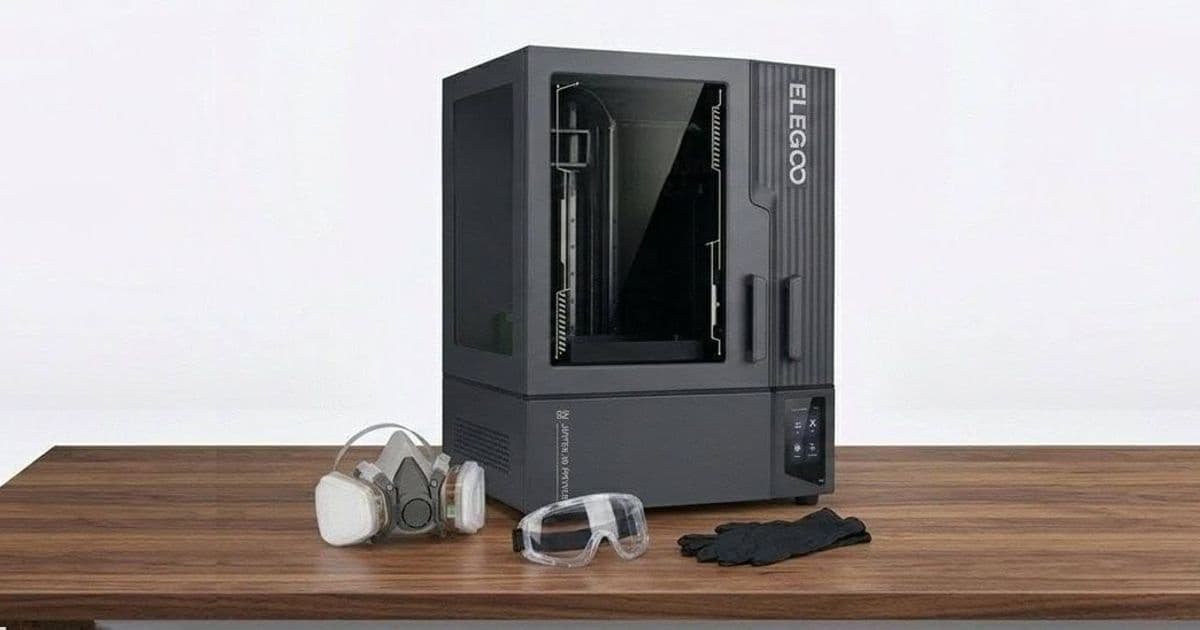
The Jupiter 2 expands Elegoo’s large‑format resin lineup with a 14‑inch 16K LCD, heated 30 °C vat, auto‑refill and resin‑reclaim system, and a 302 × 162 × 300 mm build volume—all for $949. While the camera placement and slicer speed lag behind, the printer delivers 20 × 26 µm XY detail and a quick‑change FEP, making it a strong contender for makers and small‑batch production.
Elegoo Jupiter 2 Review – Large‑Format Resin Printing Gets Faster, Bigger, and Safer
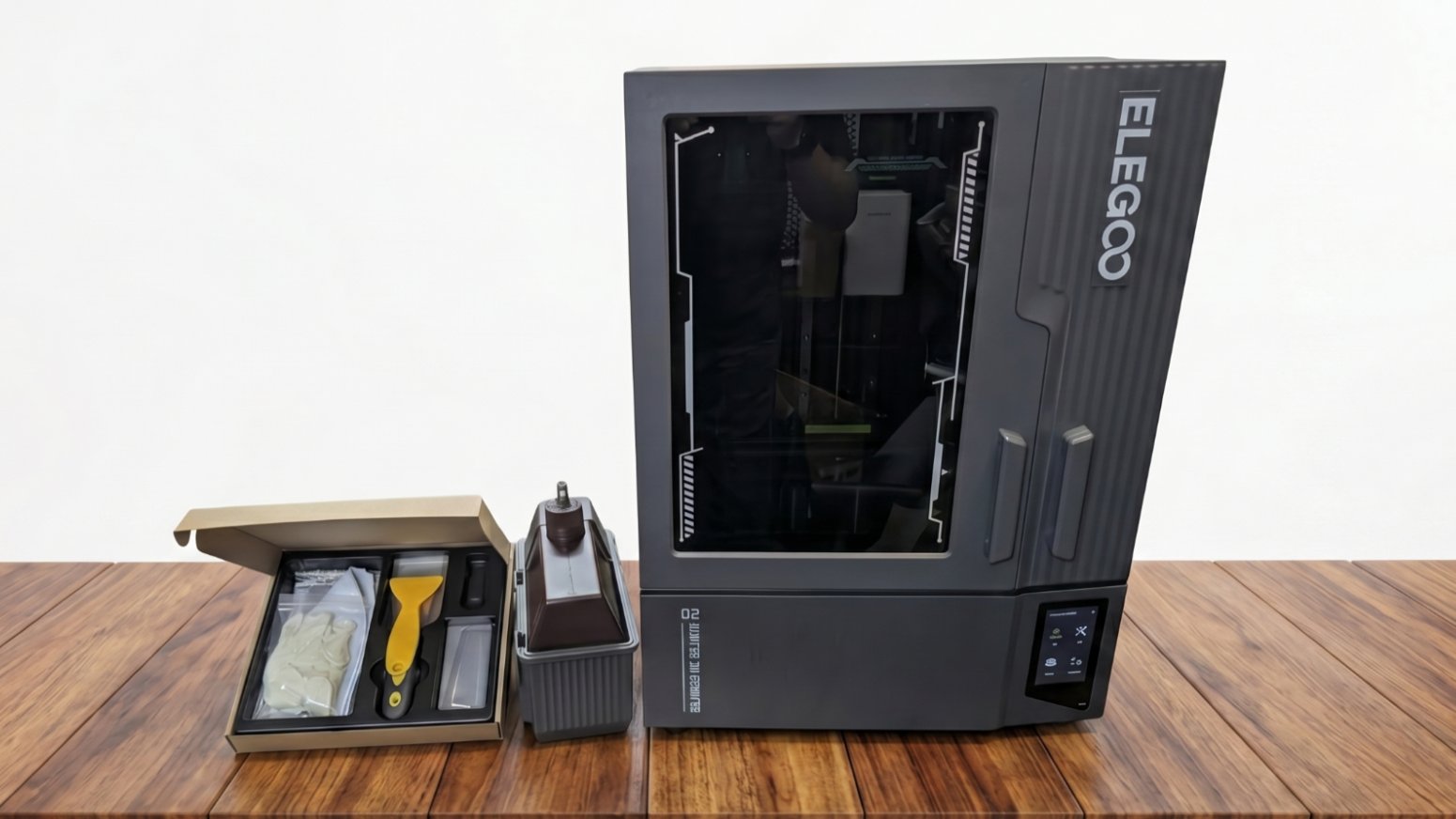 The Elegoo Jupiter 2 in its retail box, ready for assembly.
Announcement
Elegoo unveiled the Jupiter 2 on 15 April 2026, positioning it as the next‑generation large‑format resin printer for creators who need a build envelope larger than a typical desktop unit but still want a price below $1,000. Priced at $949, the machine ships with a 2 kg resin bottle, a set of tools, and a pre‑loaded USB drive containing the SateLite slicer and test files.
Technical Specification Snapshot
| Spec | Value |
|---|---|
| Build volume | 302 × 161.98 × 300 mm (11.9 × 6.3 × 11.8 in) |
| LCD | 14‑inch monochrome, 16K (15 120 × 6 230) |
| XY resolution | 20 µm × 26 µm |
| Normal exposure | 2.5 s |
| Light source | COB + Fresnel collimating lens |
| Heated vat | 30 °C constant, pre‑heat option |
| Auto‑refill / reclaim | Refill when vat < 30 % full; 5 min reclaim cycle |
| FEP change | Quick‑release, < 10 s swap |
| Touch interface | 4‑inch capacitive panel |
| Connectivity | USB 3.0, Wi‑Fi 802.11n |
| Footprint (doors closed) | 465 × 508 × 648 mm (18.3 × 20 × 25.5 in) |
| Footprint (doors open) | 1 054 × 508 × 648 mm (41.5 × 20 × 25.5 in) |
| Weight | 40 kg (88 lb) |
| Release date | 15 Apr 2026 |
| MSRP | $949 |
Core Architecture
The Jupiter 2 relies on a COB (Chip‑On‑Board) LED array paired with a Fresnel collimating lens to achieve uniform 405 nm exposure across the 14‑inch panel. The monochrome LCD, using a 16K pixel matrix, delivers a pixel pitch of 0.91 µm, which translates into the advertised 20 µm × 26 µm XY resolution after the optics’ magnification factor. Compared with the original Jupiter’s 12K panel, the pixel density is 33 % higher, allowing finer feature reproduction without increasing exposure time.
The heated vat maintains resin at 30 °C, a temperature that reduces viscosity by roughly 15 % for standard epoxy‑based resins. This temperature control improves layer adhesion and reduces the required exposure dose by about 0.2 s per layer, shaving 8 % off total print time for a typical 100‑mm tall model.
Auto‑Refill & Reclaim System
A 2 kg resin bottle slots into a rear‑mounted feed module. An optical sensor monitors the vat level; when it drops below 30 % the system activates a peristaltic pump that draws resin from the bottle, topping up the vat in under 5 seconds. The reclaim cycle empties the vat into a waste container, filters the resin through a 200 µm mesh, and returns it to the bottle in about 5 minutes. In practice, this reduces manual handling by an estimated 70 % for batch prints exceeding 20 hours.
Build Plate Calibration
The printer offers both automatic Z‑calibration and a manual override. During testing, the auto‑calibration deviated by up to 0.12 mm on one edge, prompting a manual fine‑tune via the touchscreen. The process takes less than 30 seconds and is repeatable across multiple cycles.
Slicer Ecosystem
Out of the box, the Jupiter 2 runs Elegoo’s SateLite slicer (version 1.4). The software supports basic supports, hollowing, and resin‑type profiles, but it lags behind third‑party tools in UI responsiveness—average slice time for a 40‑part batch was 12 seconds per part, roughly 30 % slower than Chitubox 2.5 on the same hardware. A common workaround is to pre‑slice in Chitubox, export STL, then import into SateLite for final slicing, which restores expected throughput.
Camera Placement & Timelapse
A 5 MP camera sits high on the front panel, offering a clear view once the print height exceeds 100 mm. For the first 100 mm, the build plate obscures the field of view, making early‑stage monitoring difficult. Nonetheless, the generated timelapse footage is smooth, with a frame captured every 2 seconds of exposure time.
Safety & Consumables
The printer ships with nitrile gloves (minimum 3 mm thickness), safety glasses, and a carbon‑filter respirator. The heated vat eliminates the need for external warming devices, reducing the risk of uneven temperature gradients. The quick‑change FEP system replaces the traditional bolted film; users can swap the membrane in under 10 seconds, a notable improvement over the previous model’s 2‑minute procedure.
Market Implications
| Metric | Jupiter 2 | Competitor (Anycubic Photon Mono M7 Max) |
|---|---|---|
| Build volume (mm³) | 14.6 M | 13.5 M |
| XY resolution (µm) | 20 × 26 | 22 × 22 |
| Price (USD) | 949 | 699 |
| Heated vat | Yes (30 °C) | No |
| Auto‑refill | Yes | No |
| Reclaim system | Yes (5 min) | No |
The Jupiter 2’s larger envelope and integrated resin management give it a clear advantage for small‑batch production, cosplay props, and architectural models where part count drives material waste. While the price is $250 higher than the Photon Mono M7 Max, the added heated vat and reclaim system can offset operational costs by reducing failed prints and resin loss—an estimated $45‑$60 saving per 10‑kg resin batch.
From a supply‑chain perspective, Elegoo sources its LCD panels from AU Optronics, a vendor that has maintained stable output despite the recent 2025‑2026 semiconductor fab capacity crunch. The COB LEDs are sourced from Cree, whose 2026 production ramp‑up has kept unit costs stable, allowing Elegoo to keep the MSRP under $1,000.
Verdict
The Elegoo Jupiter 2 delivers industry‑grade resolution and large‑format capability at a price that undercuts most professional resin systems. Minor drawbacks—camera angle, slicer speed, and plastic door hinges that may sag after heavy use—are outweighed by the heated vat, auto‑refill, and quick‑swap FEP. For makers transitioning from desktop 12K printers to a production‑scale workflow, the Jupiter 2 represents a compelling, data‑driven upgrade.
For more details on the printer’s firmware updates and community‑tested resin recipes, visit the official Elegoo Jupiter 2 product page and the GitHub repository for open‑source slicer plugins.
Comments
Please log in or register to join the discussion